

 Add us on Google
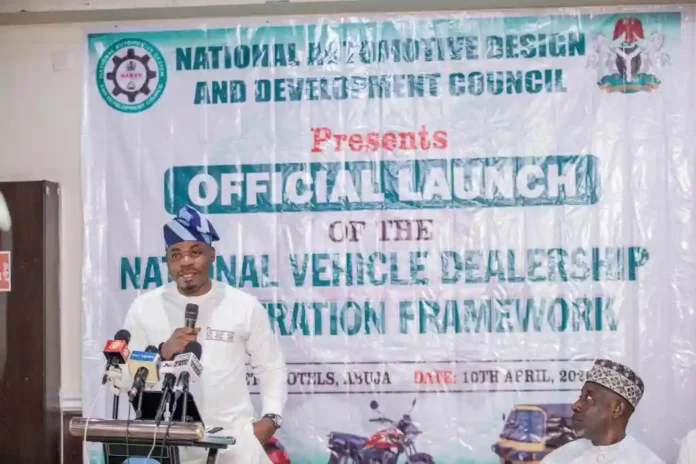
The National Automotive Design and Development Council (NADDC) has launched a National Vehicle Dealership Registration Framework aimed at transforming Nigeria’s automotive sector through improved regulation, transparency and access to financing.
The initiative, unveiled on Friday, at Ibeto Hotels in Abuja, marks a shift from policy formulation to full-scale implementation in the industry. Speaking at the launch, NADDC Director-General, Oluwemimo Joseph Osanipin, described the framework as a critical step toward sanitising dealership operations and creating a structured, professional ecosystem.
According to him, the framework introduces a digital platform that will standardise dealership registration nationwide, improve compliance, and enable the government to build a reliable database of operators. He noted that the initiative followed extensive stakeholder consultations held across Uyo, Lagos, Kano and Bauchi, with key contributions from the Automobile Dealers of Nigeria (AMDON).
Osanipin explained that the framework aligns with the National Automotive Industry Development Plan 2023–2033, positioning Nigeria to emerge as a competitive automotive hub within Africa. He added that registered dealers would gain improved access to financing from institutions such as the Bank of Industry, while also becoming eligible for government procurement opportunities and protection under the Nigeria First policy.
The NADDC DG further stated that the framework is expected to enhance Nigeria’s participation in the African Continental Free Trade Area by promoting uniform standards and strengthening trust in locally registered dealerships.
In his remarks, AMDON President, Ajibola Adedoyin, commended the council’s leadership for addressing longstanding challenges faced by dealers over the past decade. He noted that the registration system would help formalise the sector, protect genuine operators, and improve credibility across the automotive value chain.
Analysts say the reform could boost investor confidence and deepen formal sector participation, particularly as Nigeria seeks to expand local vehicle assembly and reduce reliance on imports.
With collaboration between regulators and industry players, the framework signals a new phase for Nigeria’s automotive industry—one focused on data-driven regulation, standardisation and sustainable growth.

