

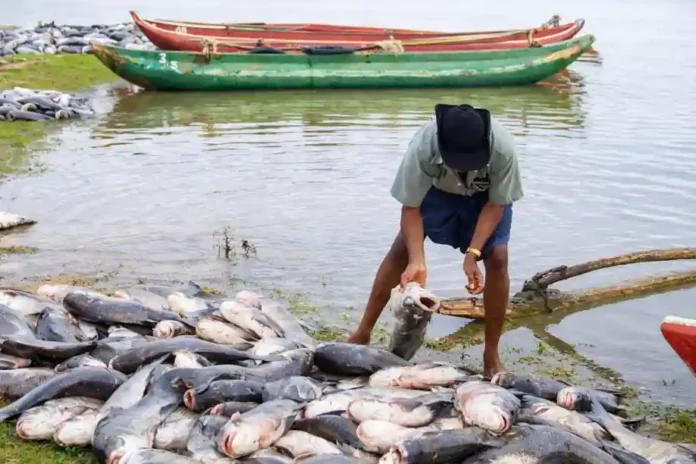
The Federal Government has moved to create more jobs through the fisheries and aquaculture sector by supporting women and youth with skills, strengthening the fisheries value chain and expanding opportunities across the industry.
This formed the focus of the Nigeria National Fisheries Stakeholders Forum Programme organised by the Ministry of Marine and Blue Economy to drive development in the sector and increase employment opportunities.
The two-day forum, themed ‘Strengthening Inclusive and Sustainable Fisheries, Aquaculture and Blue Economy for Job Creation in Nigeria’, brought together stakeholders to explore ways of improving productivity and creating sustainable livelihoods within the fisheries ecosystem.
The programme is led by the African Continental Free Trade Area (AfCFTA) Secretariat in partnership with TradeMark Africa and funded by the Mastercard Foundation.
Speaking during the forum, the Permanent Secretary of the Ministry of Marine and Blue Economy, Mrs Fatima Mahmood, said the initiative is designed to strengthen the participation of young people and women who play major roles in the fisheries sector.
According to her, the engagement will help identify challenges within the sector while developing practical solutions that will improve job creation and expand opportunities.
“The essence of this stakeholders’ forum is to engage with fisheries stakeholders in Nigeria to see how we can simplify and enable the participation of youth and women in the fisheries subsector,” Mahmood said.
She noted that women and young people are key actors within the fisheries ecosystem across Africa.
“Women and youth are the main actors in the fisheries subsector. Across Africa, the story is the same and we are being supported by these partners to enhance the participation of these players,” she added.
Also speaking, the Head of the Private Sector Unit at the AfCFTA Secretariat, Mr Themba Khumalo, said strengthening Africa’s food production systems has become necessary as global economic and geopolitical pressures continue to affect supply chains.
He explained that initiatives such as the IMAP project are designed to build capacity within fisheries and aquaculture while supporting countries to become more self-sufficient in food production.
According to Khumalo, improving productivity within the fisheries sector will help reduce the continent’s dependence on food imports while creating employment opportunities.
Director of Business Competitiveness at TradeMark Africa, Ms Anataria Uwamariya, said the programme will run in Nigeria for four years.
She noted that the initiative aims to strengthen the capacity of women and youth involved in fisheries and aquaculture while improving opportunities within the value chain.

