

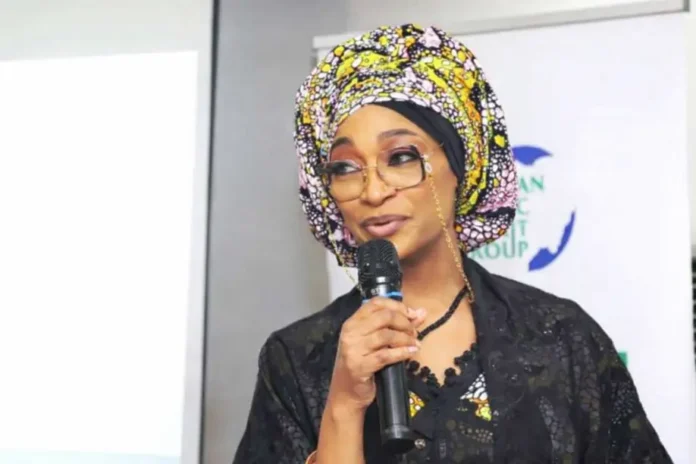
The Federal Government has outlined fresh plans to empower women as key drivers of Nigeria’s creative economy, placing strong emphasis on improving access to finance, expanding skills development, and opening up leadership opportunities across key sectors.
The Minister of Art, Culture, Tourism and the Creative Economy, Ms Hannatu Musa Musawa, made this known during a keynote address at the International Women’s Day conference organised by Access Bank Plc in Lagos. The event drew over 5,000 participants from across the public and private sectors, reflecting growing national attention on the role of women in economic development.
According to the minister, the government is deliberately repositioning women at the centre of the country’s creative and cultural industries, recognising their growing influence in business, innovation and societal transformation. She noted that women are no longer just participants but are increasingly leading the charge in shaping Nigeria’s economic future.
Musawa highlighted three critical pillars driving the government’s approach — culture, capital and courage — describing them as essential factors influencing women’s participation in national development. She stressed that culture, in particular, must be seen not only as a source of identity but also as a viable economic asset capable of generating income and opportunities.
“Across Nigeria, women have always been the invisible architects of our culture, yet their contributions have been underrepresented and undervalued,” she said.
To address this gap, the ministry is rolling out targeted initiatives aimed at strengthening women’s roles within the creative economy. These include the development of creative hubs, structured skills training programmes, and enterprise support schemes focused on sectors such as film, fashion, digital media and tourism.
A major component of the government’s plan is improving access to finance for women-led businesses. Despite women owning about 40 per cent of small and medium enterprises in Nigeria, many continue to face significant barriers when seeking funding. The minister pointed out that this financing gap has limited the growth potential of many promising ventures.
“Too many ideas remain small not because they lack potential, but because they lack access to capital,” Musawa stated.
She explained that the government is working on unlocking targeted funding streams specifically designed for women entrepreneurs, while also strengthening market access and improving data systems to better support their growth. In addition, efforts are being made to ensure that women are more actively included in leadership roles and policy-making processes, giving them a stronger voice in shaping economic decisions.
Stakeholders at the event echoed the importance of these plans, noting that empowering women goes beyond social inclusion and directly impacts national productivity and economic stability. Chairman of Access Bank Plc, Mrs Ifeyinwa Osime, emphasised that investing in women should be viewed as a strategic economic decision rather than an act of charity.
“When we speak of giving, it is about expanding access to finance, markets, knowledge and platforms that enable women to build sustainable businesses,” she said.
Osime pointed out that women own about 39 per cent of businesses in Nigeria and contribute nearly 40 per cent of new enterprises, making them a critical force within the economy. She added that small and medium enterprises account for about 48 per cent of the country’s Gross Domestic Product and provide over 80 per cent of employment, further highlighting the importance of supporting women within this space.
However, she also acknowledged that persistent funding gaps continue to limit women’s productivity and business expansion, describing it as a major constraint on economic growth.
“No economy can optimise its potential while underinvesting in half of its population,” she said.
Former Minister of Education, Dr Oby Ezekwesili, also reinforced the need for deliberate policies that prioritise women’s inclusion. She noted that meaningful societal transformation only occurs when key issues, such as gender inclusion, are treated as priorities.
“There is no other way societies have transformed than when people who care make an issue a priority,” she said.
Ezekwesili stressed that removing structural barriers that restrict women’s participation could unlock significant economic gains. She cited research indicating that agricultural output could increase by up to 30 per cent if women had equal access to resources and inputs as men.
She further noted that limited access to finance has forced many women into low-productivity ventures, restricting their ability to scale and compete effectively. While commending ongoing private sector interventions, she described financing, training, technology and market access as critical tools for expanding women-led businesses.
The Federal Government’s renewed focus on women’s empowerment within the creative economy signals a broader shift towards inclusive growth, where women are not only supported but positioned as central players in driving innovation, enterprise and national development.

