

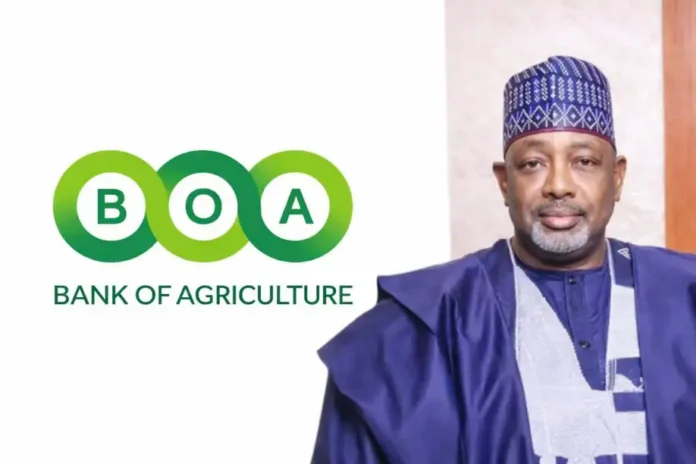
The Federal Government has provided a ₦250 billion loan facility through the Bank of Agriculture (BOA) to help smallholder farmers access affordable credit, while also offering ₦700 billion in insurance coverage to protect nearly 200,000 farmers from risks such as crop losses and climate shocks.
The initiative forms part of the government’s broader efforts to strengthen Nigeria’s agricultural sector, improve farm productivity and protect farmers from the growing risks associated with weather disruptions and market volatility.
Speaking at the 2026 Ministerial Stakeholders Engagement Retreat on Agricultural Transformation in Abuja, the Minister of Agriculture and Food Security, Senator Abubakar Kyari, said the financing and insurance measures are designed to remove key barriers that have historically limited agricultural growth in the country.
According to him, access to finance remains one of the biggest challenges faced by smallholder farmers, many of whom struggle to obtain affordable loans to expand their operations or invest in modern farming technologies.
“The Federal Government has made available a ₦250 billion facility through the Bank of Agriculture to provide farmers with access to credit at single-digit interest rates,” Kyari said.
He explained that the loan facility is intended to help farmers purchase improved inputs such as fertilisers, seeds, agrochemicals and mechanised equipment needed to boost production.
For many small-scale farmers, limited access to credit has long prevented them from adopting modern farming practices or expanding their cultivated land. With the new funding window, the government hopes to improve productivity while encouraging farmers to operate on a more commercial scale.
In addition to the loan facility, the government has also introduced a major insurance intervention aimed at protecting farmers from the financial shocks that often follow crop failures or extreme weather events.
The Nigerian Agricultural Insurance Corporation (NAIC) has provided ₦700 billion in risk coverage for 199,275 farmers across the country.
The insurance scheme is expected to provide compensation to farmers in cases of crop losses caused by floods, droughts, pest infestations or other climate-related disruptions.
Kyari said the insurance coverage is a critical step in building resilience within Nigeria’s agricultural sector, particularly as climate variability continues to threaten farm productivity.
“The ₦700 billion insurance cover provided through NAIC is designed to shield farmers from the devastating impact of climate shocks, crop losses and other disruptions that can wipe out a season’s investment,” he said.
Agriculture remains a major source of livelihood for millions of Nigerians, especially in rural communities where farming activities support both household incomes and local food supply chains.
However, farmers often face significant risks ranging from unpredictable rainfall to pest outbreaks and fluctuating market prices. Without financial protection, many farmers are forced to absorb the full cost of these losses.
Officials say the combination of accessible credit and insurance protection will help farmers operate with greater confidence and stability.
Permanent Secretary in the Ministry of Agriculture and Food Security, Dr Marcus Ogunbiyi, said strengthening financial access for farmers is essential to unlocking the full potential of Nigeria’s agricultural economy.
He noted that improved collaboration between government institutions, financial partners and farmers would be necessary to ensure the success of the programmes.
“The transformation of Nigeria’s agriculture sector requires strong collaboration between government, investors, farmers and development partners,” Ogunbiyi said.
Industry stakeholders at the retreat noted that expanding access to affordable financing and risk protection could encourage more farmers to increase production while also attracting greater investment into the agricultural sector.
They also emphasised that sustained financial support for farmers would play a key role in strengthening Nigeria’s food security and expanding opportunities across agricultural value chains.

