

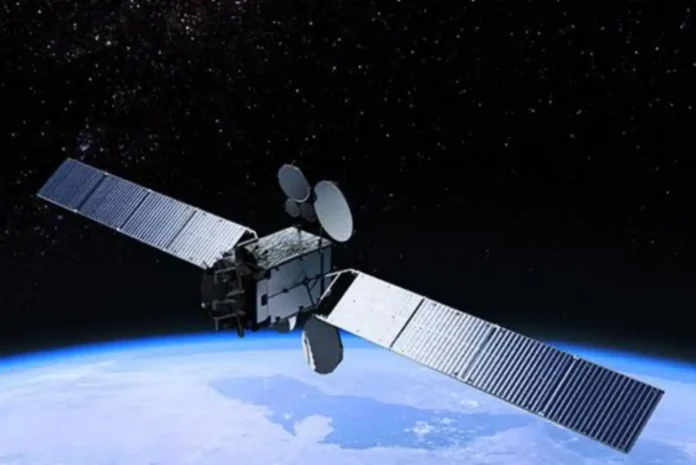
The Federal Government has set 2028 and 2029 as target dates to launch two new communication satellites, NIGCOMSAT-2A and NIGCOMSAT-2B, in a move aimed at strengthening national security, expanding digital connectivity, and improving real-time intelligence capabilities across Nigeria and neighbouring countries.
The plan signals a shift from policy to execution, with authorities confirming that the projects have advanced beyond procurement and are now in the financing and implementation phase. Managing Director of Nigerian Communications Satellite Limited, Mrs Jane Nkechi Egerton-Idehen, disclosed that groundwork has already been completed, including the closure of the tender process.
“For 2A and 2B, we have started the process. We have closed the tender and are now back into the financing and implementation stage. 2A is built to come up in 2028, and 2B for 2029,” she said.
The satellites are being positioned as critical infrastructure for security operations, particularly in the area of intelligence gathering and surveillance. According to Egerton-Idehen, their deployment will enable real-time data collection regardless of location, significantly improving coordination among security agencies.
“When they are up and running, they are expected to provide security within the borders and neighbouring countries. They will support the security agencies because data collection and intelligence in real time is important. Satellites like communication satellites allow that, irrespective of where they are,” she added.
Beyond security, the initiative is also tied to a broader national agenda to deepen digital infrastructure and close connectivity gaps, especially in underserved and remote areas. Minister of Communications and Digital Economy, Bosun Tijani, described the satellite programme as a key component of Nigeria’s long-term digital strategy.
“The President’s approval of NIGCOMSAT-2A and 2B demonstrates a clear commitment to building the future. These satellites will enhance security, connect remote communities, and extend our fibre-optic network into neighbouring countries,” Tijani said.
He noted that while fibre-optic expansion remains ongoing, satellites will play a complementary role by reaching areas where terrestrial infrastructure is limited or non-existent. This dual approach is expected to improve internet access and reduce disparities in connectivity within Nigeria and across the region.
“Some of these neighbouring countries pay up to ten times more for internet capacity than Lagos. Extending our fibre network will not only improve connectivity but also enhance border security and regional collaboration,” he stated.
The government also sees the satellites as enablers of economic growth, with applications spanning agriculture, education, healthcare, and commerce. Satellite-enabled services such as tele-education and telemedicine are expected to benefit rural populations, while businesses will gain improved access to reliable communication networks.
“Satellite technology affects everything, from how a child in a rural community accesses the internet to how farmers make critical decisions and how businesses operate across distance,” Tijani added.
From a defence perspective, the integration of space-based technology is already shaping military operations. The Chief of Army Staff, Olufemi Shaibu, highlighted the increasing importance of satellites in modern warfare and national security.
Represented by Maj Gen Kennedy Osemwegie, he said, “Space technology has become central to Nigeria’s security and development,” noting its role in intelligence gathering, surveillance, communication, and disaster response.
He explained that the Nigerian Army is actively incorporating satellite capabilities into its operations to enhance situational awareness and improve decision-making across various theatres.
The broader ecosystem supporting the satellite programme includes collaboration between government agencies, the military, research institutions, private sector players, and international partners. These partnerships, according to the army leadership, have strengthened Nigeria’s capacity in remote sensing and satellite-based communications.
Despite a reduction in budgetary allocation for the NigComSat-2 Project in the 2026 fiscal year, the initiative remains active. The funding cut, while notable, has not altered the government’s commitment to replacing the ageing NigComSat-1R satellite and expanding national capacity.
The upcoming satellites are expected to support a wide range of services, including broadband connectivity, broadcasting, and secure communications, reinforcing their role as both security assets and drivers of digital and economic development.

