

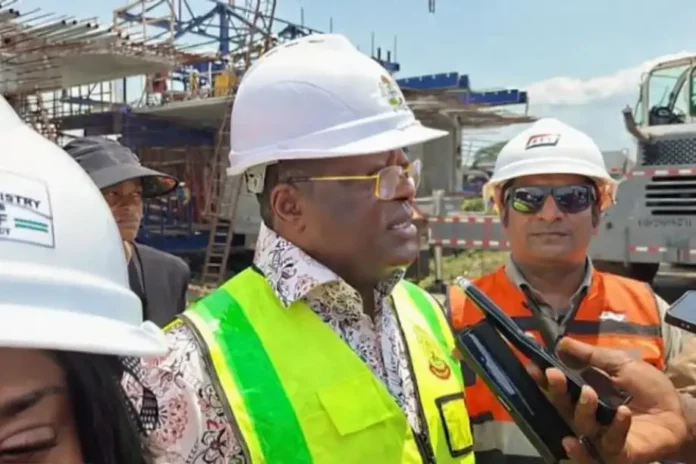
The Federal Government is set to train and mentor young Nigerian engineers by integrating them directly into the Aleto Bridge project in Rivers State, offering hands-on, real-world experience as construction progresses.
The initiative, championed by President Bola Tinubu, is being driven through the Ministry of Works as part of a broader push to strengthen human capital development in Nigeria’s engineering sector. Minister of Works, David Umahi, disclosed this during an inspection of the project, describing it as a deliberate effort to prepare the next generation of technical leaders.
According to Umahi, the Aleto Bridge project is not just a major infrastructure investment but also a live training environment where young engineers can observe and learn from complex construction processes. “We are making efforts on President Tinubu mentorship programme where young engineers will come and study what we’re doing here. They are our future leaders and it is a technical project to behold,” he said.
The programme is expected to expose participants to modern construction methods being deployed on the project, including concrete pavement technology, reinforced structural systems, and solar-powered lighting infrastructure. By working alongside experienced engineers and contractors, the trainees will gain practical insights that go beyond classroom learning.
Umahi emphasised that the scale and technical depth of the Aleto Bridge project make it an ideal platform for mentorship. With the total project cost exceeding ₦230 billion, comprising ₦156 billion for phase one and ₦83 billion for phase two, the government sees it as an opportunity to combine infrastructure delivery with capacity building.
He also highlighted the importance of preserving such investments, warning against practices that could undermine the durability of the roads. “No road project anywhere in the world is designed for static loads, they will destroy the road,” Umahi said, referring to the parking of heavy-duty vehicles like fuel tankers on completed sections.
The Minister further noted that the project’s redesign from asphalt to concrete pavement was directed by the President to ensure long-term durability, adding another layer of learning for the engineers involved in the mentorship programme.
As construction continues, with one carriageway expected before May 25, 2026, and full completion of the first phase projected by August, the integration of young engineers into the process positions the project as both a national infrastructure milestone and a training ground for future industry experts.

