


The Federal Government has expanded its education and skills partnership with the United Kingdom as part of efforts to prepare Nigerians for global employment opportunities through Technical and Vocational Education and Training (TVET), digital skills development, and industry-led apprenticeship programmes.
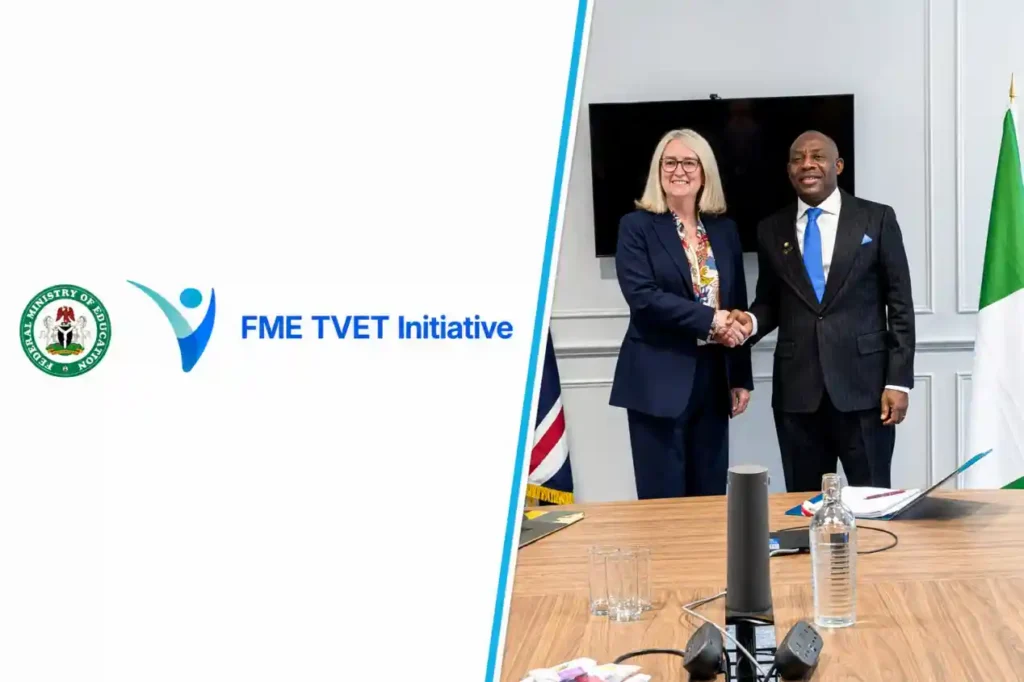
The new collaboration was announced by the Minister of Education, Dr. Tunji Alausa, during a bilateral meeting with the UK Minister of State for Skills, Baroness Smith, at the 2026 Education World Forum in London.
The discussions centred on practical cooperation in TVET reform, workforce readiness, digital learning, and skills development, with both countries targeting sectors expected to shape future employment and economic growth.
According to Alausa, the Tinubu administration is repositioning TVET as a major tool for tackling unemployment, improving industrial productivity, and preparing young Nigerians for emerging global job markets.
“The Federal Ministry of Education is aligning education reforms directly with labour market needs to ensure Nigerian youths are equipped with relevant skills for modern industries,” the minister said.
Under the partnership, Nigeria and the UK will focus on training programmes in clean energy, healthcare, engineering, digital technology, and artificial intelligence (AI). The government described the sectors as critical to Nigeria’s long-term economic transformation agenda.
The agreement also covers structured apprenticeship systems, globally recognised accreditation, quality assurance, and stronger industry participation in technical education.
Alausa said Nigeria is currently implementing a modern skills framework designed to meet current and future workforce demand while improving employability for graduates of technical and vocational institutions.
The partnership will involve collaboration between Federal Technical Colleges, the National Board for Technical Education (NBTE), IQM, and other education and skills agencies in both countries.
In a statement issued by the minister’s Special Adviser on Media and Communications, Ikharo Attah, the Federal Government said the partnership would support joint curriculum development, staff exchange programmes, accreditation alignment, and targeted skills matching initiatives.
The statement added that UK skills institutions are expected to visit Nigeria to co-develop specialised programmes in engineering, healthcare services, clean energy, digital technology, and AI.
Both countries also discussed apprenticeship models aimed at improving the connection between training institutions and industry demand while maintaining programme quality and duration standards.
The engagement further explored ways to improve the public perception and industry recognition of TVET in Nigeria by creating clearer career progression pathways for learners, using ongoing reforms under Skills England as a reference point.
The latest engagement builds on Nigeria’s growing education cooperation with the UK following earlier discussions between the Federal Government and the UK International Education Champion, Sir Steve Smith.
Beyond workforce development, Alausa also used the meeting to seek continued UK support for the Global Partnership for Education (GPE) 2026–2030 Replenishment Campaign. Nigeria is expected to co-host the campaign alongside Italy during the United Nations General Assembly in New York in September 2026.
Responding to the proposal, Baroness Smith commended Nigeria’s ongoing education reforms and expressed support for deeper bilateral cooperation in skills development and technical education.
She also pledged to advocate continued UK backing for the GPE replenishment campaign ahead of the September 2026 meeting.