

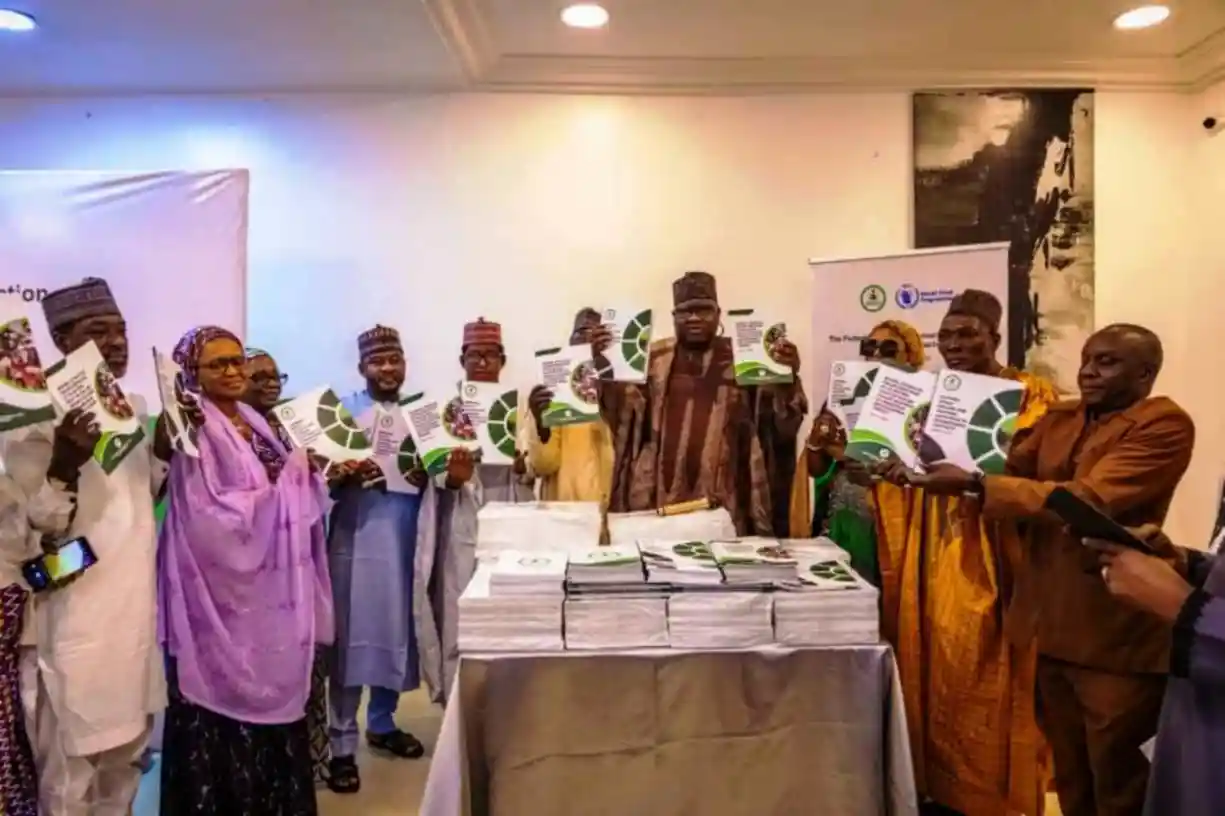
The Federal Ministry of Humanitarian Affairs and Poverty Reduction, in collaboration with the World Food Programme (WFP), has launched the National Policy for Cash and Voucher Assistance in Humanitarian Context and its Implementation Plan 2025–2030.
The official launch took place in Abuja and was led by the Honourable Minister of State for Humanitarian Affairs and Poverty Reduction, Dr. Yusuf Tanko Sununu. Speaking through the Permanent Secretary, Dr. Yakubu Adam Kofarmata, PhD., the Minister described the policy as a major milestone in Nigeria’s humanitarian framework.
Dr. Sununu explained that the policy provides a strategic and operational guide to ensure that cash-based interventions are coherent, accountable, and harmonized across all actors, including government institutions, UN agencies, NGOs, and development partners.
“As we unveil the 2025–2030 policy and its Implementation Plan today, I wish to emphasise that its impact will not only be realized through collective action but by our shared commitment to operationalize and institutionalize it at the sub-national level, where the realities of humanitarian response are most acute,” he said.
The Minister called on all State Governments, Local Government Authorities, and partners across the humanitarian and development sectors to embrace and integrate the new policy into their operational frameworks.
“Let us strengthen coordination, promote accountability, and ensure that the benefits of Cash and Voucher Assistance reach every deserving household across Nigeria,” Dr. Sununu urged.
He expressed gratitude to the World Food Programme for its invaluable contribution, noting that the organization provided the consultant who developed the policy. According to him, WFP’s technical expertise and continuous partnership were instrumental in shaping the national framework.
Dr. Sununu also appreciated the European Civil Protection and Humanitarian Aid Operations (ECHO) for supporting the needs assessment that enriched the content of the policy and its Implementation Plan.
He further commended the Governors of Kano and Edo States for their proactive efforts and sub-national implementation of cash and voucher assistance programmes. He praised the National Humanitarian Coordination Technical Working Group for its commitment throughout the policy formulation, review, and validation stages, which eventually led to the Federal Executive Council’s approval.
Dr. Sununu also acknowledged the contributions of the National Assembly, the Office of the Secretary to the Government of the Federation (OSGF), the Federal Ministry of Justice, donor agencies, and private sector actors for their valuable input in shaping the policy document.
Reaffirming the Ministry’s commitment, the Minister said the Federal Government remains determined to lead and coordinate actions that will ensure the effective rollout and monitoring of the policy across all levels.
Earlier in her remarks, the Director of the Humanitarian Affairs Department, Mrs. Jummai Katagum, highlighted the importance of the policy in improving coordination and accountability within humanitarian interventions.
“In a context where humanitarian needs increase due to recurrent shocks from floods and conflicts to economic vulnerabilities, the Cash and Vouchers Assistance Policy and its Implementation Plan will help to streamline coordination, enhance accountability mechanisms, strengthen data-driven targeting, and ensure that assistance truly reaches those who need it most,” Mrs. Katagum said.
She emphasized that the new policy will provide clarity, reduce bureaucratic barriers, and support national priorities in food security and social inclusion.
The launch event also featured goodwill messages from key partners, including representatives of the Ministers of Agriculture and Food Security, Women Affairs and Social Development, and the Honourable Federal Commissioner for Refugees, Migrants, and Internally Displaced Persons. Other speakers included officials from the National Emergency Management Agency (NEMA), various UN agencies, and the Commissioners of Humanitarian Affairs from Edo and Kano States.
The Deputy Country Director of the World Food Programme, Mr. Edward Thiam, who represented the WFP Country Director, reaffirmed the UN’s commitment to supporting Nigeria’s humanitarian agenda. He described the policy as “a decisive step toward restoring dignity and empowering vulnerable populations.”
The Federal Ministry of Women Affairs also reiterated its ongoing efforts to promote gender equity and women empowerment through financial literacy and digital inclusion initiatives.
In his closing remarks, the Deputy Director of the Humanitarian Affairs Department expressed appreciation to all stakeholders for their contributions to the project. He noted that their support was crucial to achieving the Ministry’s broader goal of poverty reduction and establishing a strong humanitarian policy framework in Nigeria.
The high point of the event was the unveiling of the policy document by the Permanent Secretary, followed by a collective call for continued collaboration among stakeholders to strengthen coordination, promote transparency, and uphold humanitarian principles in all interventions.
Those present at the event included directors from the Ministry, representatives from the UN Office for the Coordination of Humanitarian Affairs (UNOCHA), civil society organizations, the media, and other stakeholders committed to advancing humanitarian and poverty reduction initiatives across Nigeria.

