

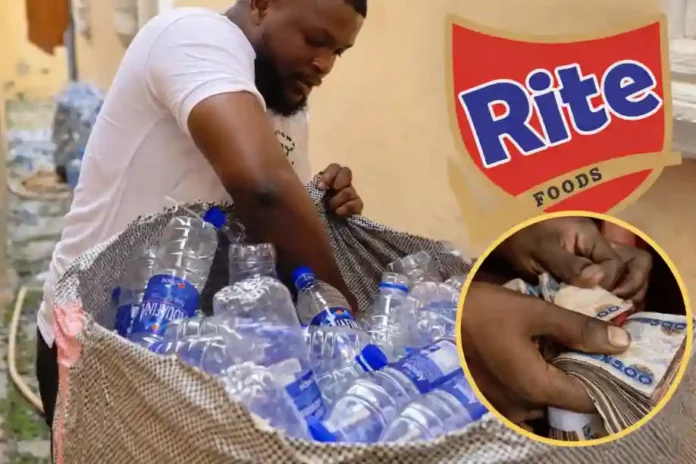
The Waste-Is-Naira (WIN) initiative, launched by Rite Foods Limited in partnership with RecyclePoints, is designed to help Nigerians convert plastic waste into income while supporting environmental sustainability. The programme operates through a structured system that allows individuals, households, and informal waste collectors to participate directly in recycling activities and get paid.
Below is a clear step-by-step guide on how to join and participate effectively.
Step 1: Understand How the Programme Works
Before joining, it is important to understand that the WIN initiative is built on a system of recovering post-consumer packaging waste. This means plastic bottles and beverage cans that would normally be discarded are collected, processed, and reintroduced into the value chain.
The programme is designed around Extended Producer Responsibility (EPR), where the producer takes responsibility for the lifecycle of its packaging materials. However, it also creates room for consumers to actively participate and benefit financially.
Step 2: Register Through the Official System
To participate, individuals are required to register through the programme’s operational platform managed by RecyclePoints or at designated collection hubs.
Registration ensures that every participant is properly captured in the system. This allows all collected materials to be tracked and linked to the individual who supplied them. It also ensures that payments are processed accurately and transparently.
Step 3: Get a Designated WIN Collection Bag
After registration, participants are provided with specially designated “Waste-Is-Naira” bags. These bags are used to encourage proper waste segregation at the source.
Instead of mixing waste, participants are expected to separate plastic bottles and beverage cans from other household waste. This step is critical because it ensures that recyclable materials remain clean and suitable for processing.
Step 4: Begin Collecting Plastic Waste
Participants can start gathering plastic waste from their homes, workplaces, or surrounding communities. The initiative is inclusive, meaning households, waste pickers, and aggregators can all take part.
Collected materials should be placed in the designated WIN bags. The more plastic waste gathered, the higher the potential earnings, as payments are based on the quantity supplied.
Step 5: Deliver Waste to Collection Hubs
Once the bags are filled, participants are required to take them to designated collection hubs established under the programme.
At these centres, the waste is received and processed through a structured system. These hubs serve as the main points where materials enter the recycling value chain.
Step 6: Weighing, Logging and Digital Recording
At the collection hub, all submitted materials go through a verification process. The plastic waste is weighed to determine its value.
After weighing, the details are logged and digitally recorded under the participant’s profile. This digital system ensures traceability, meaning every contribution is properly documented.
It also supports transparency, as participants can trust that their input has been accurately measured and recorded.
Step 7: Receive Payment for Your Waste
Once the waste has been verified and recorded, payments are processed. The system ensures that participants are compensated based on the volume of plastic waste they provide.
Payments are handled in a structured and traceable manner, supporting financial inclusion and reducing the risk of discrepancies.
Step 8: Waste is Recycled and Reintegrated
After collection, the plastic waste is transferred for recycling. The materials are processed and reintegrated into the production cycle, supporting a circular economy.
This step reflects the programme’s broader goal of closing the loop on packaging waste, ensuring that materials are not simply discarded but reused productively.
Step 9: Scale Your Participation
Participants are not limited to small-scale collection. The system allows individuals to increase their involvement by collecting more waste or working within their communities.
Because the programme integrates households, informal waste collectors, and aggregators, it creates opportunities for participants to expand their activities and improve their earnings over time.
What This Means for Participants
The WIN initiative is more than a clean-up effort. It is a structured, incentive-based system that turns waste into economic value. By participating, individuals contribute to environmental protection while accessing a new source of income.
At the same time, the programme supports job creation across the recycling value chain and strengthens community-level engagement in waste management.
By following these steps, anyone within the programme’s coverage area can participate effectively. The process is built to be simple, transparent, and inclusive, ensuring that plastic waste is no longer seen as useless, but as a resource with measurable value.

 programme in Lagos, collect plastic waste, submit at hubs and get paid through a structured system.)