

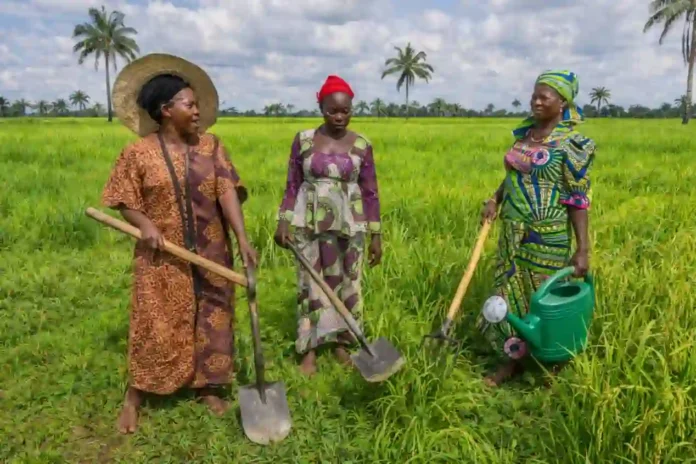
The International Institute of Tropical Agriculture (IITA), in partnership with the Mastercard Foundation, has generated more than 90,000 employment and entrepreneurship opportunities for Nigerian youths, women, and persons with disabilities through the Innovative Youth in Agriculture (I-Youth) project.
The programme, launched in 2020, is designed to equip young people aged 15 to 35 with technical, entrepreneurial, and business skills needed to build agribusinesses or secure dignified employment across the agrifood system. Implementation took place in Kano, Kaduna, Lagos, Jigawa, and Adamawa states, with strong attention given to inclusion and access for underserved groups.
Speaking at the Phase I closeout ceremony, the Director-General of IITA and CGIAR Regional Director for Continental Africa, Dr Simeon Ehui, stressed the value of deliberate investment in young people as a driver of development.
“I-Youth demonstrates what happens when vision, partnership, and opportunity converge. When young people are given skills, mentorship, and access to markets, they do not just seek jobs; they create them,” Ehui said.
He explained that the achievements recorded under the project were made possible through collaboration with the Mastercard Foundation, state governments, private sector partners, training institutions, and community leaders. According to him, the initiative supported the establishment of 36,053 youth-led agribusinesses and contributed to the creation of agribusiness parks, innovation hubs, and cooperative clusters.
Also speaking at the event, the Country Director of the Mastercard Foundation in Nigeria, Ms Rosy Fynn, highlighted the role of I-Youth in advancing the Foundation’s Young Africa Works strategy.
“I-Youth has been a major contributor to our goal of enabling 10 million Nigerians to access dignified and fulfilling work. The numbers reached represent real lives transformed and stronger communities,” Fynn said.
She also commended the Start Them Early Program (STEP), noting that it enabled secondary school students and their families to establish more than 5,900 homegrown agribusiness ventures.
Beneficiaries of the programme also shared their experiences. Olumide Garuba from Lagos State said I-Youth helped him formalise his agribusiness and employ other youths, while Mariam Abass from Kaduna State said the project empowered her to overcome gender barriers and rebuild her poultry business.
Panel discussions at the event focused on inclusive agribusiness development and scaling youth-led enterprises. Speakers stressed the need for better access to finance, stronger market linkages, and sustained post-training support, especially for women and persons with disabilities.
Lessons from I-Youth’s implementation in five Nigerian states are now guiding similar initiatives in Sierra Leone and Liberia, showing influence West Africa.
Read Also: Seplat Achieves First Gas at 300MMscfd ANOH Project

