

 Add us on Google
Jigawa State Governor, Umar Namadi, has announced a strategic partnership with the National Biotechnology Research and Development Agency (NBRDA) to accelerate agricultural progress, strengthen food security, generate employment, and improve living conditions across the state.
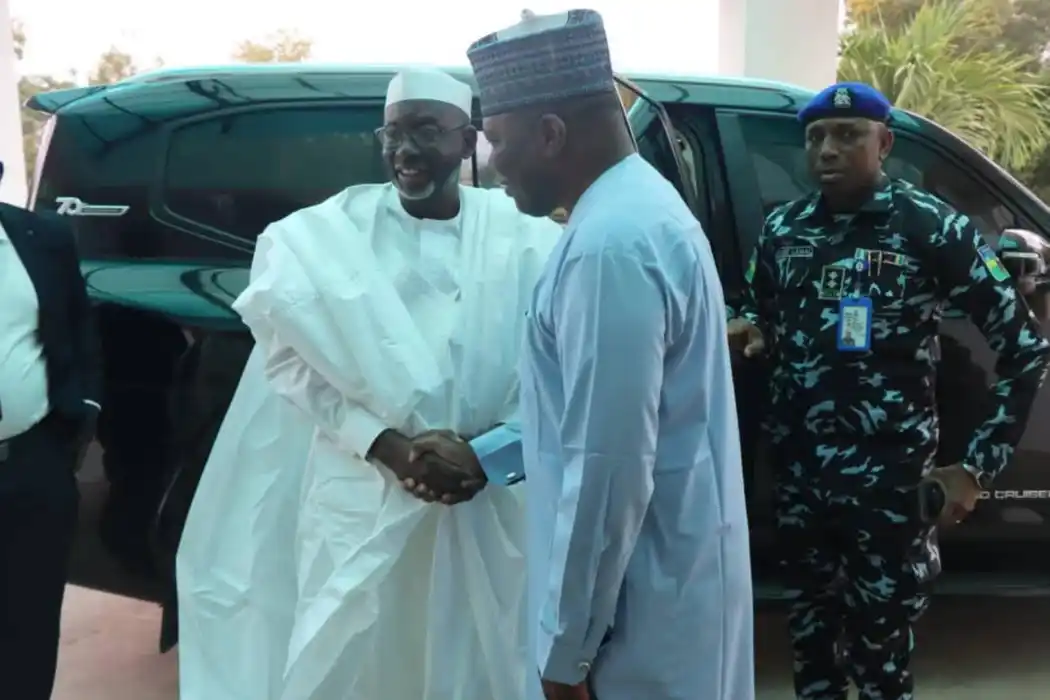
The announcement was made during Governor Namadi’s official visit to NBRDA headquarters in Abuja on Friday. He praised the reappointment of Professor Abdullahi Mustapha as the Director General of the agency, describing the move as “a reaffirmation of President Bola Tinubu’s confidence in the agency’s visionary leadership and its national impact.”
Governor Namadi highlighted the central role of biotechnology in Jigawa State’s development goals. “Our goal is to ensure that farming becomes a sustainable and profitable venture for every farmer in Jigawa.
We are fully committed to working with NBRDA to achieve this vision,” he said. With over 85 percent of Jigawa’s population involved in agriculture, he emphasized the importance of adopting scientific methods to improve productivity and economic resilience.
He cited the Rice Millionaires Project as a successful example of how agriculture can serve as a powerful tool for wealth creation. The initiative, which has empowered more than 1,100 youths across the state’s 11 federal constituencies, focuses on seed production, market access, and agricultural training.
To strengthen national collaboration, Governor Namadi also pledged to include the NBRDA in a future meeting of the Nigeria Governors’ Forum.
He said this would give Professor Mustapha an opportunity to showcase the agency’s biotechnology solutions to other state leaders, encouraging broader adoption of innovation in agriculture and rural development.
Professor Abdullahi Mustapha presented several of the agency’s innovative projects that align with Jigawa’s development plans. The Governor welcomed these proposals, indicating readiness for collaboration.
Health-related biotechnology will also form part of the partnership. Both leaders agreed to focus on diagnostics and disease research, especially targeting kidney-related illnesses. They will also explore clean energy sources, including biogas, to support rural electrification and sustainable fertiliser production.
Further areas of collaboration include the production of improved gum Arabic seeds, fish farming training, hydroponic systems, and high-yield crop techniques.
Farmers and agricultural extension workers in Jigawa are expected to benefit from these programs. In addition, livestock farming will be enhanced through modern genetic techniques and artificial insemination, while clean biogas systems will provide both electricity and organic fertilisers.

