

 Add us on Google
September18, 2025 – Katsina State Enterprise Development Agency (KASEDA) has reported major progress in driving inclusive economic transformation through Micro, Small, and Medium Enterprises between 2023 and 2025. The Director-General of KASEDA, Aisha Aminu Malunfashi, disclosed that 23,912 beneficiaries have directly received support through its programmes, with over 200,000 new jobs projected across the state.
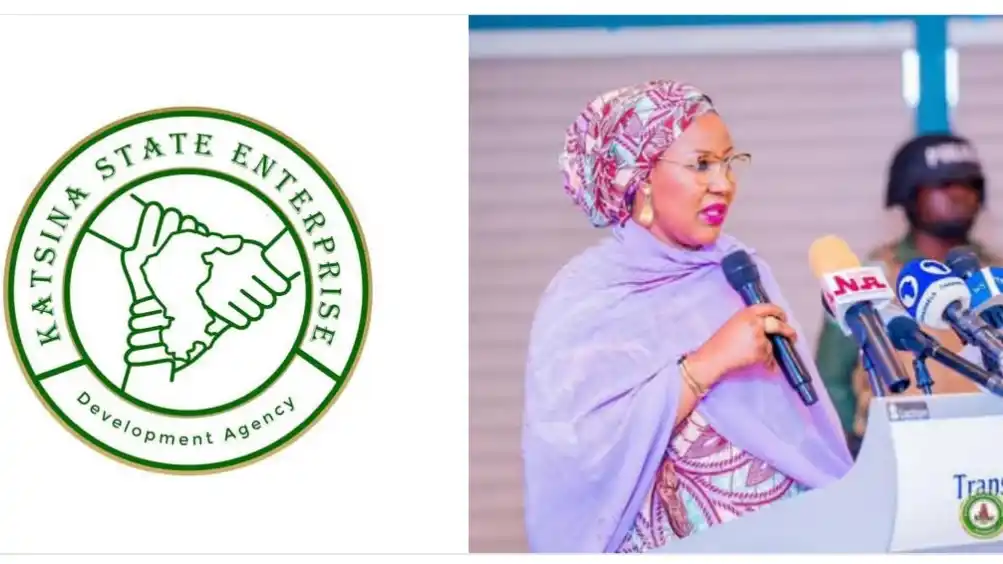
She made this known on September 14, 2025, while presenting a paper titled “Driving Inclusive Economic Transformation through MSMEs” during the high-level consultation on security and governance convened by Governor Dikko Umaru Radda. Malunfashi explained that KASEDA’s interventions have been central to strengthening entrepreneurship, empowering women and youth, and expanding financial inclusion in Katsina State.
According to her, Katsina currently hosts more than 1.7 million MSMEs organized into 823 clusters across agriculture, trade, crafts, services, and the fast-growing digital and creative industries. She said these enterprises provide livelihoods for millions and serve as entry points for women and youth into the economy.
Highlighting the flagship Integrated MSME Development Program, she said it is designed to reach 500,000 enterprises across all 34 LGAs, focusing on women, youth, startups, and entrepreneurs in conflict-affected communities. She noted that the programme prioritizes financial inclusion, digital innovation, agro-processing value chains, and advisory services delivered through the DIKKO Business Development Services Corps.
Malunfashi revealed that KASEDA has facilitated over ₦5 billion in MSME financing, trained thousands of entrepreneurs in business and digital skills, and conducted an MSME census covering 600,000 businesses while mapping 50,000 clusters for investment planning. She emphasized human capital development through entrepreneurship academies such as the Dikko Social Innovation Academy and the KASEDA Digital Academy, which jointly train more than 500 participants annually.
She further stated that the annual Katsina MSME Awards and Fair disbursed ₦10 million in grants to 200 vendors in 2025, creating visibility and opportunities for local entrepreneurs. Reaffirming the agency’s commitment, she listed ongoing initiatives, including a ₦3.4 billion MSME Revolving Fund managed with the Bank of Industry and Sterling Bank, which has supported more than 3,000 entrepreneurs across the 34 LGAs.
Malunfashi also highlighted the ₦542 million UNDP Livelihood Support Programme, which trained 2,000 beneficiaries, provided grants to 1,700 nano and micro businesses, supported 300 SMEs with revolving loans, and gave start-up capital to 1,000 young entrepreneurs. Another key intervention is the Shared Industrial Development Centre, upgraded with SMEDAN at a cost of ₦1 billion. The facility now supports textiles, ICT, packaging, and agribusiness sectors, with about 50 entrepreneurs using it daily.
She recalled that over 10,000 MSMEs benefitted from World Bank KT-CARES grants, with 234 enterprises receiving IT toolkits. In addition, the Mechatronics Apprentices Support Program is training 3,000 youths in automobile technology, offering stipends and starter packs.
Malunfashi stressed that women and youth remain central to KASEDA’s agenda. She pointed to the Katsina Graduate Entrepreneurship Fund, which offers final-year tertiary students seed grants and interest-free loans ranging from ₦200,000 to ₦500,000. Between 1,500 and 2,000 students are expected to benefit each year, enabling them to start businesses after graduation.
She added that the DIRWYFI Initiative targets 8,000 rural women and youth annually with training and resources to help lift families out of poverty. Traditional industries are also being modernized. In Kayauki and Rafin Dadi, kilishi producers are receiving technical support, while hula producers in Daura, Mani, and Mashi LGAs are being assisted to improve standards and income.
The DG explained that Cassava and Gari Processing Centres in Wagini and Batsari are empowering farmers by increasing processing capacity and linking them to agribusiness value chains. She said these centres contribute to job creation and food security. She added that the Food Bank Loan Project is providing thousands of households with regular food loan support, strengthening nutrition, supporting community resilience, and creating opportunities for nano food vendors and small-scale businesses in the food sector.
She disclosed that more than 500 women and youth have participated in Entrepreneur Mindset Reset Workshops on innovation and sustainability. The Graduate Entrepreneurship Fund also continues to support final-year students with take-off capital.
Summarizing KASEDA’s impact between 2023 and 2025, Malunfashi said the agency has directly supported 23,912 beneficiaries through financing, training, digital empowerment, and value chain development programmes. These interventions, she emphasized, are projected to create more than 200,000 jobs and position Katsina as one of Nigeria’s leading hubs for entrepreneurship and inclusive economic growth.
She concluded by stressing that these achievements were made possible under Governor Radda’s vision of a prosperous Katsina powered by entrepreneurship, with strong support from NGOs, cooperatives, private sector actors, donor agencies, and international partners. She assured that KASEDA will continue to deepen MSME growth, ensure women and youth inclusion, and advance this vision across the state.

