

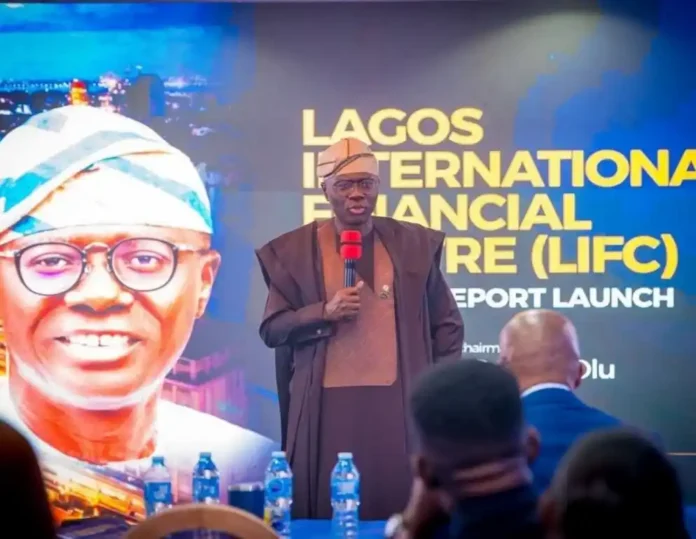
The Governor of Lagos State, Mr. Babajide Sanwo-Olu, has launched the Lagos International Financial Centre (LIFC) Phase 1 Report in conjunction with EnterpriseNGR, outlining the strategy and pathway for implementing initiatives aimed at transforming Nigeria’s economic growth, deepening the financial market, and fostering innovation.
Speaking at the launch held at Lagos House, Marina, Governor Sanwo-Olu, who is the Chairman of the LIFC Council, called on stakeholders across the public and private sectors to support and sustain collaboration to position Lagos as a global financial hub through the Lagos International Financial Centre.
He said the LIFC project, conceived about two years ago, was designed to attract international capital, deepen financial markets, and create sustainable economic opportunities for Nigeria, adding that the initiative was structured to deliver long-term national benefits beyond Lagos State.
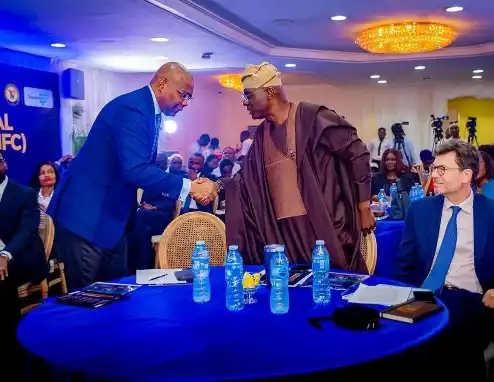
According to the governor, the Lagos International Financial Centre is a project of the Lagos State Government in partnership with EnterpriseNGR and captures a clear strategy and implementation pathway that aligns policy, regulation, and market development to strengthen the country’s financial ecosystem.
Reaffirming his administration’s commitment to the project, Sanwo-Olu described the LIFC as a strategic economic reform aimed at strengthening Nigeria’s global competitiveness and positioning Lagos as a leading international financial hub capable of competing with established centres.
He commended EnterpriseNGR for the initiative and the work done so far, while also appreciating the United Kingdom Government and TheCityUK for providing technical and financial support during the formative phase of the project.
“The foundation we are laying today is for the future of our economy, our children, and generations to come. This is not just about Lagos; it is about building an economic legacy that will transform Nigeria’s financial ecosystem,” the governor said.
He explained that the project was intentionally designed to involve both state and national institutions to ensure continuity and sustainability beyond individual administrations.
“We have designed a model that involves both state and national institutions so that the project becomes institutional rather than personality-driven. It is about building a sustainable structure that will outlive any administration,” he added.
Also speaking at the event, the co-chairman of LIFC, Mr. Aigboje Aig-Imoukhuede, commended the Lagos State Government for fostering strong collaboration with private sector stakeholders to drive financial and economic growth.
He underscored the importance of private sector participation, describing the Lagos International Financial Centre as a collaborative economic ecosystem that depends on strong partnerships between government and business institutions.
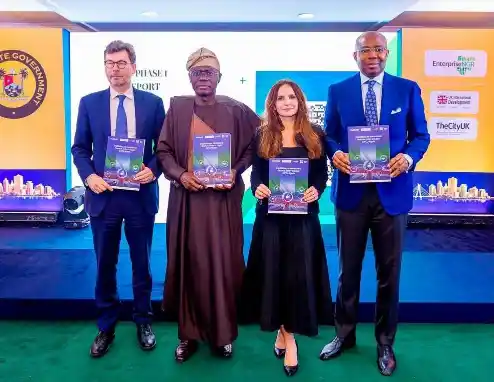
Aig-Imoukhuede described the completion of LIFC Phase 1 as a significant milestone and disclosed that Phase 2 would focus on policy reforms, legislative frameworks, and resource mobilisation to drive full implementation of the project.
“The scale and impact of the Lagos International Financial Centre will go beyond the Nigerian Stock Exchange. It will strengthen capital mobilisation, expand financial institutions, and position Nigeria as a global financial destination,” he said.
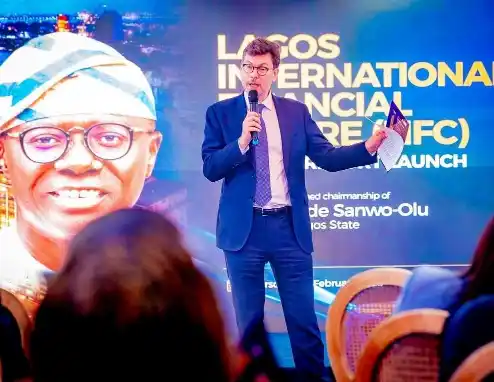
The British Deputy High Commissioner, Jonny Baxter, also applauded the Lagos State Government and EnterpriseNGR for driving the initiative and strengthening collaboration with federal institutions.
He disclosed that the United Kingdom, through TheCityUK, is providing expertise to help identify Lagos’ comparative advantages and the regulatory reforms required to establish a globally competitive international financial centre.
Baxter described the initiative as a major economic milestone capable of unlocking domestic and international capital flows into infrastructure development, job creation, and overall economic growth.
“A well-designed international financial centre can unlock significant domestic and international capital flows. These resources will support infrastructure development, boost productive sectors, and create employment opportunities,” he said.
In his remarks, the Lagos State Commissioner for Finance, Mr. Abayomi Oluyomi, said the journey toward establishing the Lagos International Financial Centre required collaboration among investors and stakeholders to build a competitive platform locally.

