
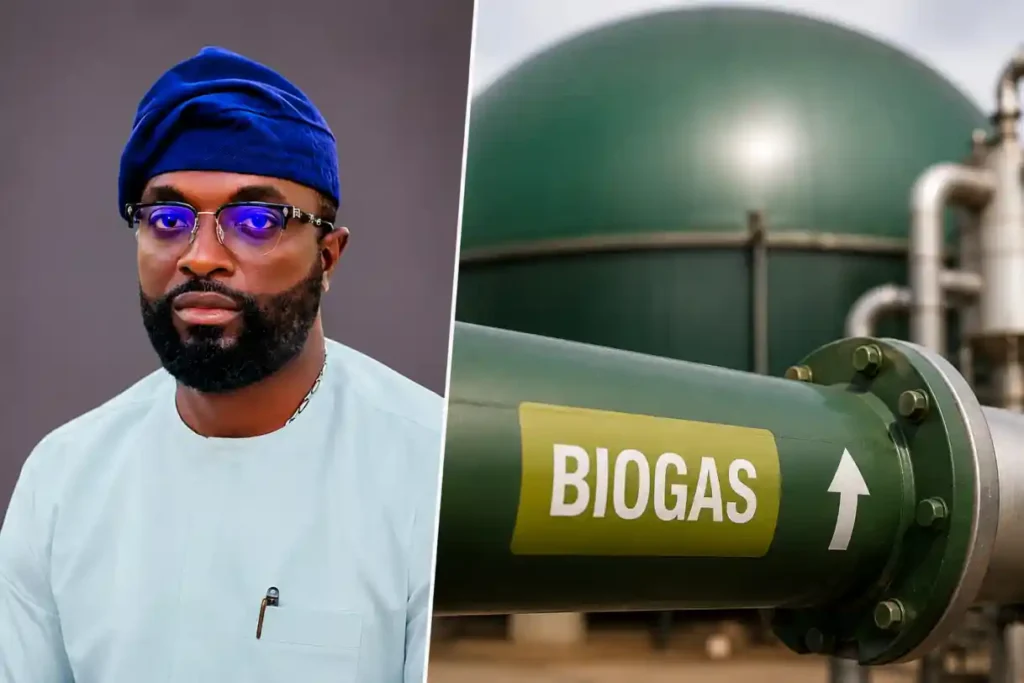


Lagos State Government has moved to commercialise biogas and biomethane production across the state as part of efforts to reduce dependence on imported fuel, improve waste management and expand cleaner energy alternatives for transportation and industrial use.
The state Commissioner for Transportation, Oluwaseun Osiyemi, disclosed this during a ministerial press briefing held in Lagos on Monday, where he confirmed the inauguration of a technical committee set up to drive the initiative.
According to him, the committee consists of representatives from different Ministries, Departments and Agencies to ensure coordinated implementation and accelerate the transition from pilot initiatives to full commercial-scale production.
Osiyemi said feasibility studies carried out by the state showed that biogas and biomethane could become reliable alternatives to diesel, especially with the large volume of organic waste generated daily within Lagos.
“Lagos generates about 13,000 metric tonnes of waste daily, with 45 per cent organic content. This organic waste can be converted into biomethane fuel locally at significantly lower production costs,” he said.
He explained that the newly inaugurated committee would help fast-track investment, policy coordination and infrastructure needed to support commercial production across the state.
The move forms part of Lagos State’s broader clean energy and sustainable transport strategy, which has gained momentum over the last few years as the government pushes to cut emissions and lower transport operating costs.
Osiyemi revealed that the state had already converted 152 First and Last Mile buses from petrol-powered systems to Compressed Natural Gas engines, while gradually replacing diesel-powered transport operations with electricity, biogas and CNG alternatives.
According to him, CNG buses introduced into the transport system since 2022 have transported more than 600,000 passengers across Lagos while reducing fuel operating costs by almost 50 per cent.
He also highlighted progress in electric mobility, noting that two electric buses deployed on Bus Rapid Transit corridors completed a successful 90-day pilot phase.
The buses, he said, moved over 150,000 passengers during the pilot operation and prevented nearly 200,000 kilogrammes of carbon emissions.
Osiyemi further disclosed that the Lagos State Government had introduced 2,000 CNG-powered trucks under Governor Babajide Sanwo-Olu’s haulage reform programme implemented through the transport logistics office in partnership with United Bank for Africa.
“The programme is replacing old, unsafe trucks linked with road accidents across the state. It is also promoting safer and cleaner haulage operations within Lagos,” he said.
The commissioner added that ongoing reforms align with the state government’s THEMES+ agenda, which focuses on eco-friendly transportation, lower emissions, improved traffic management and integrated multimodal transport systems across Lagos.