

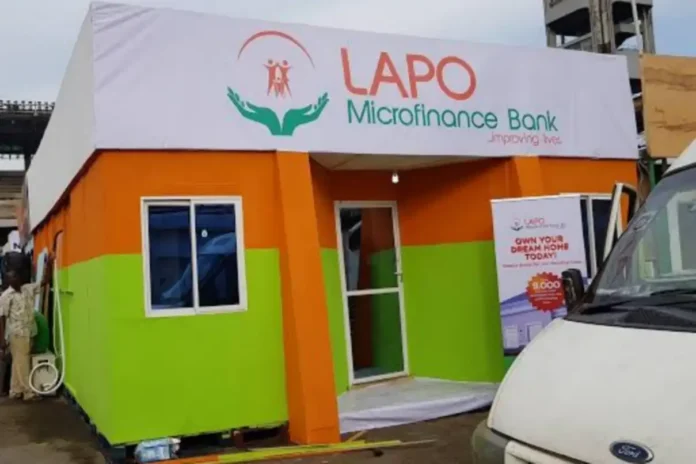
LAPO Microfinance Bank has partnered with the World Savings and Retail Banking Institute (WSBI) to launch a pilot initiative aimed at expanding access to climate-smart financing for women smallholder farmers and women-led businesses in rural Nigeria.
The initiative, supported by grants from the Visa Foundation and the la Caixa Foundation, is designed to promote sustainable agricultural practices, strengthen rural livelihoods and improve resilience to climate risks. It targets 20,000 smallholder farmers, including at least 6,600 women, as well as 5,000 small and medium-sized enterprises, of which 2,200 are women-led.
According to the partners, the pilot focuses on closing financing gaps faced by rural women who are often excluded from formal financial services despite their role in food production. By linking finance with climate adaptation tools, the programme aims to help beneficiaries manage climate shocks.
Under the pilot, beneficiaries will gain access to climate-adaptive financial products, while participating financial institutions will be supported with technical tools to strengthen environmental and social impact. These include the United Nations Environment Programme’s Microfinance for Ecosystem-based Adaptation toolkit and the Food and Agriculture Organization’s Adaptation, Biodiversity and Carbon mapping tool.
The programme will also enhance impact measurement frameworks and position LAPO Microfinance Bank as a national reference institution under the Women Entrepreneurs Finance Code.
The initiative aligns with Nigeria’s climate and financial inclusion policies outlined in the Nationally Determined Contribution 3.0 and the National Financial Inclusion Strategy 3.0. It also fits into LAPO Microfinance Bank’s rural resilience strategy and WSBI’s global work on gender-inclusive finance through the Women Entrepreneurs Finance Code, which is housed by the World Bank and supported by the FAO.
The WSBI Development Finance Unit, established in 2023, will lead the implementation of the pilot.
Chairman of the la Caixa Foundation, Isidro Fainé, said the partnership reflected the growing role of savings and retail banking in addressing social and environmental challenges. “We are delighted to see the social involvement of savings and retail banking grow worldwide, especially through projects that contribute to poverty reduction, youth empowerment, female entrepreneurship and environmental sustainability,” he said.
WSBI’s Chief Executive Officer, Peter Simon, said the initiative underscored the link between inclusive finance and climate resilience. “By empowering women farmers and entrepreneurs with the tools and financing they need, we are building stronger rural economies and more sustainable communities,” he said.
President of the Visa Foundation, Najada Kumbuli, said financial inclusion remained critical to ensuring broad participation in the digital economy.
Managing Director and Chief Executive Officer of LAPO Microfinance Bank, Cynthia Ikponmwosa, said the pilot marked the bank’s first foray into providing climate-smart financial solutions targeted at women farmers and entrepreneurs. She said the partnership would help deepen LAPO’s impact in rural communities.
LAPO Microfinance Bank said the initiative builds on its 30-year mandate of promoting social and economic empowerment nationwide.
Read also: KSM VGC Launches Digital Skills Programme for Youth Empowerment

