

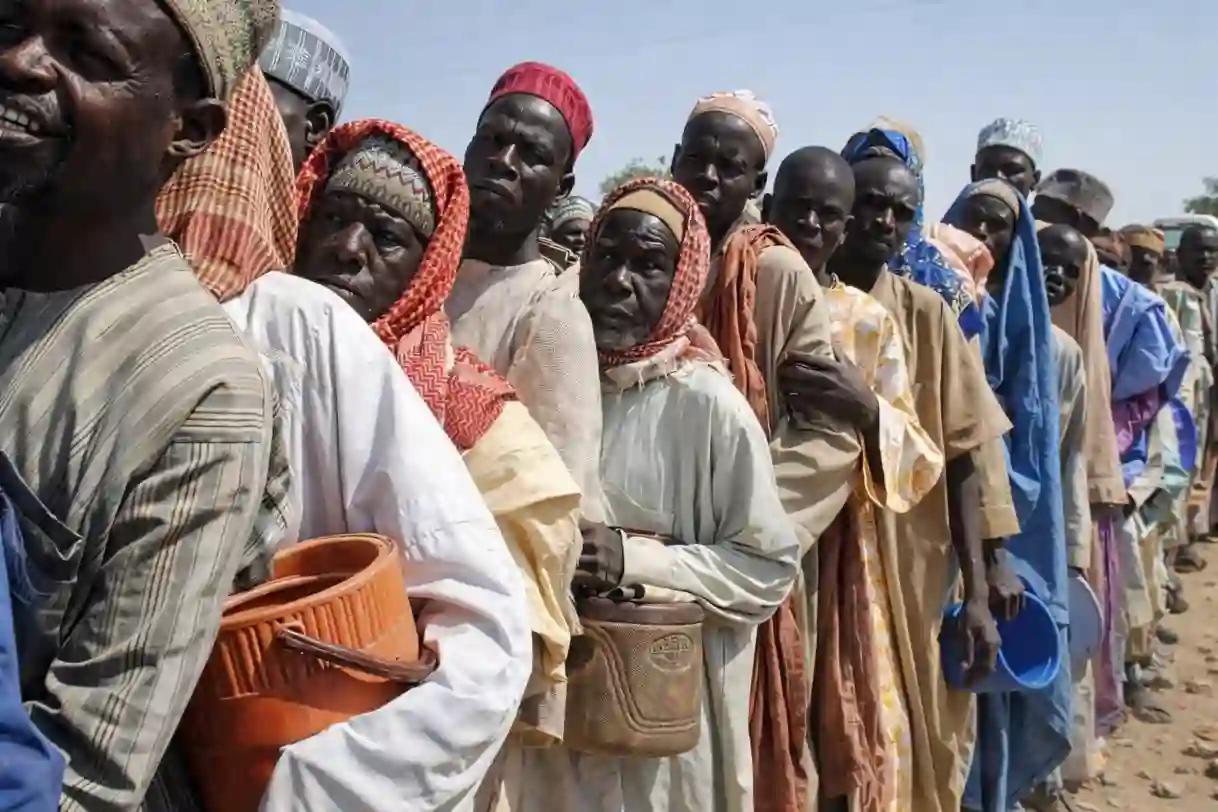
Nigeria’s poverty eradication efforts heading into 2026 are anchored on a set of Federal Government programmes that directly target poor, vulnerable, and rural populations. Rather than introducing new schemes, the government has expanded and restructured existing interventions to provide cash support, food security, livelihood opportunities, and community-level economic resilience. Below is a factual listing of the key poverty eradication programmes in Nigeria for 2026, based on verified information.
1. Conditional Cash Transfer Programme (CCT)
The Conditional Cash Transfer Programme is a direct income-support initiative of the Federal Government implemented under the Household Uplifting Programme. It is designed to support poor and vulnerable households by providing cash payments to help meet basic needs and reduce extreme poverty.
Continuing into 2026, beneficiaries receive ₦25,000 per payment cycle, paid three times. This brings the total cash benefit per household to ₦75,000. Federal disclosures in 2025 confirmed that more than ₦54 billion was approved for disbursement to over two million households in one phase, showing that the programme remains funded and active.
The objective of the programme is to cushion vulnerable households against economic shocks, stabilise consumption, and improve welfare outcomes. Eligibility is limited to households identified as poor or vulnerable in the National Social Register through community-based data validation.
There is no public application portal. Beneficiaries are selected automatically through government social protection databases coordinated by the National Cash Transfer Office and relevant federal agencies.
2. Home-Grown School Feeding Programme (HGSF / NHGSFP)
The Home-Grown School Feeding Programme is a poverty eradication and social investment initiative that provides daily meals to pupils in public primary schools while supporting local food producers and household incomes.
Beyond feeding pupils, the programme is undergoing restructuring to deepen its poverty-reduction impact. Reports referenced during this research, including Nigeria Startup News-linked coverage, indicate that under the revised structure, participating mothers or caregivers involved in food preparation may receive ₦15,000 per month. This payment is for service delivery and is tied to school attendance and feeding activities.
The programme’s objectives include improving child nutrition, increasing school enrolment and attendance, reducing dropout rates, supporting smallholder farmers, and creating income opportunities for women.
Eligibility for pupils is based on enrolment in public primary schools in participating states. Mothers and food vendors are selected through state and local government coordination. There is no national application portal, as implementation is decentralised through education authorities.
3. NG-CARES
(Nigeria Community Action for Resilience and Economic Stimulus) NG-CARES is a large-scale Federal Government programme aimed at supporting livelihoods, food security, and economic recovery for poor and vulnerable households and firms. While it originated during the COVID-19 period, its scope has expanded beyond pandemic response.
The current Programme Development Objective is to expand access to livelihood support and food security services, and grants for poor and vulnerable households and firms.
NG-CARES is backed by substantial international financing, including an initial World Bank facility of about US$750 million and additional financing of roughly US$500 million approved to extend implementation into 2026. There is no fixed nationwide payment per beneficiary. Support varies by state and activity and may include livelihood grants, agricultural input support, food security assistance, public works wages, or community-level projects.
Eligibility includes poor households, farmers, micro and small enterprises, and vulnerable groups identified at state and community level. There is no central public application portal, as implementation is handled by state governments under federal guidelines.
4. Skills to Wealth Programme (S2W)
The Skills to Wealth Programme is a Federal Government vocational empowerment initiative under the Renewed Hope Agenda. It addresses poverty by equipping beneficiaries with practical, income-generating skills rather than direct cash transfers.
The programme focuses on hands-on training in areas such as agriculture, renewable energy, automobile repair, and other technical trades. Reports confirmed during this research show that successful participants may access low-interest credit facilities ranging from ₦300,000 to ₦400,000 after completing training to start or expand businesses.
The objective of S2W is to promote self-reliance by linking skills acquisition directly to income opportunities. Eligibility generally targets youths and vulnerable adults willing to complete the full training cycle.
There is no permanent national application portal. Registration and participation are announced through programme rollouts, training centres, and state-level coordination.
5. FG-IFAD LIFE Programme (LIFE-ND component)
The FG-IFAD LIFE Programme is a rural poverty eradication framework implemented through the LIFE-ND project in the Niger Delta. It focuses on improving incomes, food security, and employment for rural youth and women through agribusiness incubation and enterprise development.
The programme is jointly implemented by the Federal Government and the International Fund for Agricultural Development, with support from the Niger Delta Development Commission. Total project financing exceeds US$130 million, covering training, incubation facilities, and enterprise support rather than direct cash payments.
The objective is to create sustainable livelihoods by integrating beneficiaries into agricultural value chains. Eligibility is limited to rural youth and women in participating Niger Delta states. Beneficiaries are engaged through community structures and incubators, not online portals.
6. Renewed Hope Ward Development Programme
The Renewed Hope Ward Development Programme is a Federal Government initiative approved to deliver poverty eradication interventions at ward level across Nigeria’s 8,809 wards. It is designed to decentralise economic support and reach communities directly.
Funding is drawn from federal budget allocations running into hundreds of billions of naira. The programme does not specify a uniform cash amount per beneficiary, as support is activity-based and locally determined.
Eligibility is community-wide, with beneficiaries identified by ward and local authorities. There is no national application portal.
7. Rural Access and Agricultural Marketing Project (RAAMP)
RAAMP is a Federal Government programme that addresses poverty through rural infrastructure development. It focuses on improving rural access roads and agricultural market connectivity to reduce transport costs and increase rural incomes.
The programme is financed by the Federal Government with support from development partners such as the World Bank and the French Development Agency. Benefits are indirect, as funding is channelled into infrastructure rather than individual payments.
Eligibility covers rural communities, farmers, traders, and transporters in participating states. There is no beneficiary application process, as implementation is handled through federal and state project units.

