

 Add us on Google
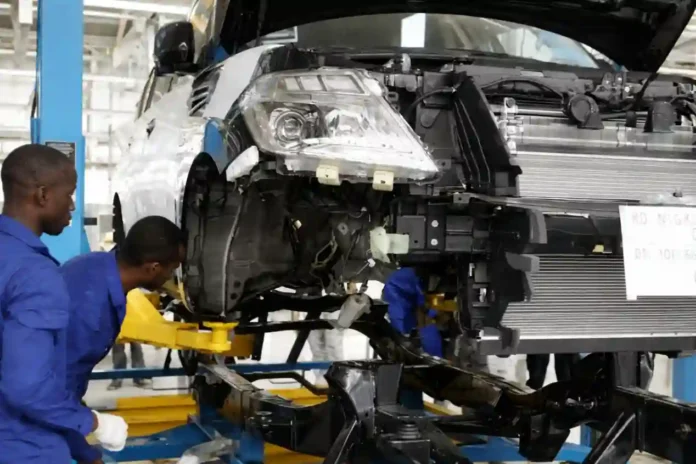
The National Automotive Design and Development Council (NADDC) has trained more than 15,000 technicians across Nigeria to strengthen technical capacity, improve after-sales services and promote long-term sustainability in the country’s automotive industry.
Director-General of the Council, Joseph Osanipin, disclosed this in Abuja during a capacity-building programme for members of the House of Representatives Press Corps. The programme was organised in collaboration with the House Committee on Media and Public Affairs.
Osanipin said the large-scale training initiative forms a central part of Nigeria’s automotive development strategy. According to him, the focus is on building the skilled workforce required to support local vehicle assembly, component production and maintenance services nationwide.
He explained that while policy frameworks such as the Nigeria Automotive Industry Development Plan provide strategic direction, industrial sustainability depends largely on human capital development.
“The sustainability of any automotive ecosystem depends not only on assembly plants but also on the availability of skilled technicians who can maintain and service vehicles efficiently,” he said.
Osanipin noted that strengthening local technical expertise would reduce reliance on foreign support services, boost consumer confidence and improve the competitiveness of locally assembled vehicles.
He added that the Council’s broader localisation programme is designed to reduce Nigeria’s dependence on imported vehicles and spare parts by encouraging domestic production of selected components.
Chairman of the House Committee on Media and Public Affairs, Akintunde Rotimi, said the automotive training engagement reflects the House of Representatives’ wider reform agenda to promote professionalism within its parliamentary media ecosystem.
Rotimi conveyed the goodwill of the Speaker of the House of Representatives, Tajudeen Abbas, and members of the 10th Assembly. He stated that effective legislative work must be supported by informed public communication.
“Our legislative responsibility does not end with lawmaking. It is completed when citizens understand the purpose, impact and long-term benefits of policy decisions,” he said.
He stressed that industrial policies, including those guiding the automotive sector, require clear interpretation and contextual reporting to ensure public understanding and support.
Rotimi described the automotive sector as sitting at the intersection of industrialisation, job creation, local content development, technology transfer and economic diversification. He said these priorities align closely with the House’s broader economic growth agenda.
Similarly, Chairman of the Nigeria Union of Journalists (NUJ), FCT Council, Grace Ike, described the engagement as a strategic step toward strengthening policy-focused journalism.
“Informed journalism is vital to accountability, investment attraction and national development,” she said.
Ike urged legislative reporters to translate complex automotive policies into accessible stories that can shape public discourse and attract investment. She also encouraged participants to deepen investigative reporting and scrutinise sectoral policy frameworks more rigorously.
Chairman of the House of Representatives Press Corps, Gboyega Onadiran, described local automotive production as an economic necessity rather than a policy aspiration.
He warned that continued reliance on imported vehicles exerts pressure on foreign exchange reserves and weakens domestic value chains.
According to him, strengthening local assembly and component manufacturing would help conserve foreign exchange, create technical and engineering jobs, and stimulate growth in supporting industries such as steel, rubber, plastics and glass production.
Onadiran urged Nigerians to consciously patronise locally assembled vehicles, noting that consumer choices directly affect industrial growth and economic stability.
Osanipin reaffirmed that sustained investment in skills development, including the training of over 15,000 technicians, would position Nigeria as a competitive automotive hub in Africa, especially under continental trade frameworks that reward strong local content.
The event highlighted a shared view among regulators, lawmakers and media stakeholders that technical capacity development, informed legislative reporting and consistent policy implementation remain essential to expanding Nigeria’s automotive footprint and achieving long-term industrial resilience.

