

 Add us on Google
The National Agency for Science and Engineering Infrastructure (NASENI) and the Bureau of Public Procurement (BPP) have taken a major step towards boosting local content and industrial development in Nigeria.
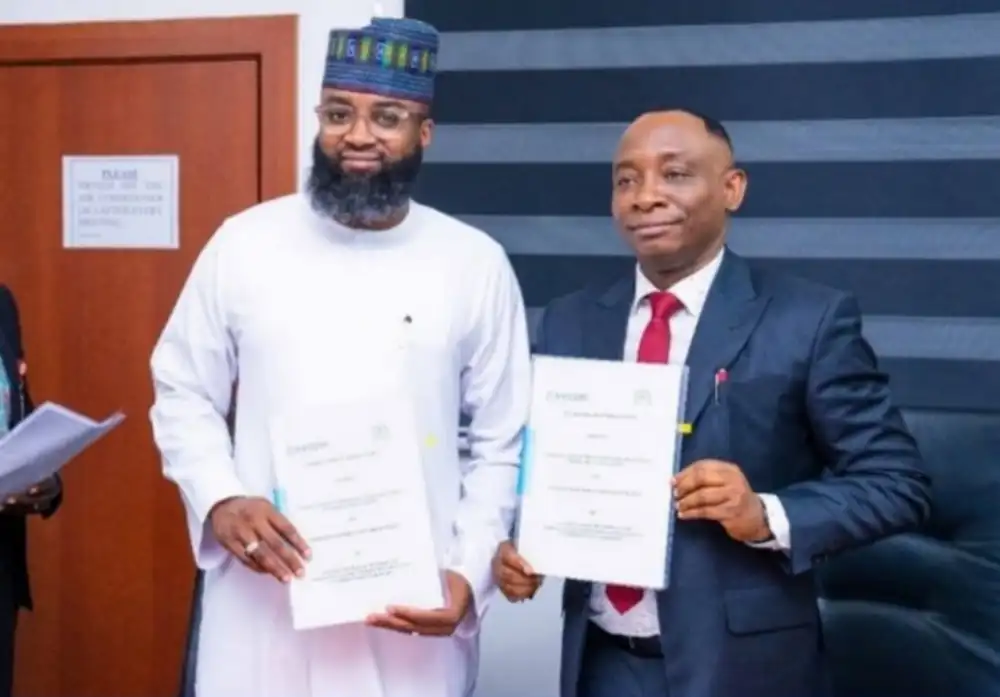
On Monday, July 28, 2025, both agencies signed a Memorandum of Understanding (MoU) focused on the full implementation of the “Nigeria First Policy on Procurement, Projects, and Other Related Matters.”
This policy is a key part of the Federal Government’s Renewed Hope Agenda and aims to promote the use of Nigerian-made goods and services. It also targets the growth of local businesses, economic diversification, reduction of dependence on imported items, and the strengthening of Nigerian identity through consumption of locally made products.
Speaking during the MoU signing ceremony held at the Bureau of Public Procurement headquarters in Abuja, the Executive Vice Chairman and Chief Executive of NASENI, Mr. Khalil Suleiman Halilu, said the move is a breakthrough for local innovation and entrepreneurship.
“With the signing of this MoU and implementation of the Nigeria First Policy, 80 percent of the challenges faced in convincing investors and foreign partners will be resolved. Nigeria will no longer serve as a dumping ground for foreign goods. We are now focusing on the promotion of Nigerian products, goods, and services,” Halilu said.
He further noted that NASENI is currently offering over 50 market-ready Nigerian-branded products and highlighted that the agency has helped the country attract more than 2 billion dollars from recent partnership activities with China.
“One thing that was clear when I took over leadership of NASENI was the need to move from producing just prototypes to commercializing our technologies and products. We complemented this vision with a complete turnaround in rebranding the agency,” he explained.
According to Halilu, NASENI is building the largest renewable energy park in Nasarawa and is also working closely with the Abuja Technology Village. The goal is to strengthen technology transfer, boost local manufacturing capacity, shift the agency’s research facilities into full-scale production, and promote Nigerian-made brands.
He added that the collaboration with BPP is expected to significantly improve Nigeria’s economy by encouraging job creation and enhancing human capital. “This also shows that our efforts are not in vain,” Halilu said.
The Director-General of the Bureau of Public Procurement, Dr. Adebowale Adedokun, also shared his thoughts during the signing ceremony. He stated that the MoU offers a new pathway to connect production with procurement in Nigeria’s public sector.
“The agreement between BPP and NASENI is a structured bridge that connects production and procurement. It provides a way to take locally made solutions off the shelves and place them at the heart of public service delivery,” Adedokun said.
He emphasized that the Nigeria First Policy aligns government action with national priorities and is designed to give meaningful support to Nigerian businesses.
According to him, “NASENI’s innovations, from tractors to tablets, from surveillance drones to solar backup systems, will now be actively prioritized in the procurement plans by Ministries, Departments, and Agencies. We are institutionalizing a framework that makes local options not just preferable, but the default option before all others.”
Dr. Adedokun announced that NASENI’s product catalogue will be fully integrated into the Nigeria Open Contracting Portal (NOCOPO), which will serve as a central hub for showcasing these Nigerian-made solutions. He called on other MDAs to follow this example in supporting homegrown technologies and innovations.
He noted, “The Nigeria First Policy is not an act of protectionism, but an act of patriotism grounded in performance. It is aimed at fast-tracking Nigeria’s industrial revolution.”
He also confirmed that NASENI has already secured product certifications from national regulatory agencies such as the Standards Organisation of Nigeria (SON) and the National Agency for Food and Drug Administration and Control (NAFDAC).
These approvals, he said, would ensure that NASENI’s offerings are verifiable and measurable, which is key to increasing visibility across government procurement systems.
Adedokun revealed that NOCOPO has already helped Nigeria make major savings. “Between January and June this year alone, NOCOPO’s enhanced price intelligence helped Nigeria save over 173 billion naira, 155 million dollars, and 1.7 million euros,” he said.
He also highlighted the new procurement thresholds approved by the BPP, which allow MDAs to act faster on high-value projects. “The revised threshold is now five billion naira for goods and ten billion naira for works. This allows for quicker execution of projects while post-review and audit mechanisms are being strengthened,” he stated.
Dr. Adedokun made it clear that BPP will support NASENI’s efforts with strong reforms and will ensure that made-in-Nigeria products are given priority across public procurement processes.
“For the avoidance of doubt, let me say it here that we will be backing this commitment with reform actions,” he assured.
The signing of this MoU marks a significant moment in Nigeria’s push to improve its economic resilience and industrial capabilities.
With strong support from the BPP, NASENI’s efforts to drive innovation, create jobs, and grow the economy through locally made products are expected to make a lasting impact on Nigeria’s development.

