

Nigeria’s non-oil sector now accounts for about 96 percent of the country’s Gross Domestic Product (GDP) and nearly 75 percent of total government revenue, with economic growth projected at 4.68 percent in 2026. This formed the central focus of deliberations at the 156th meeting of the National Economic Council (NEC), which resolved to deepen engagement with stakeholders to further boost non-oil revenues in line with the economic blueprint of the administration of President Bola Ahmed Tinubu.
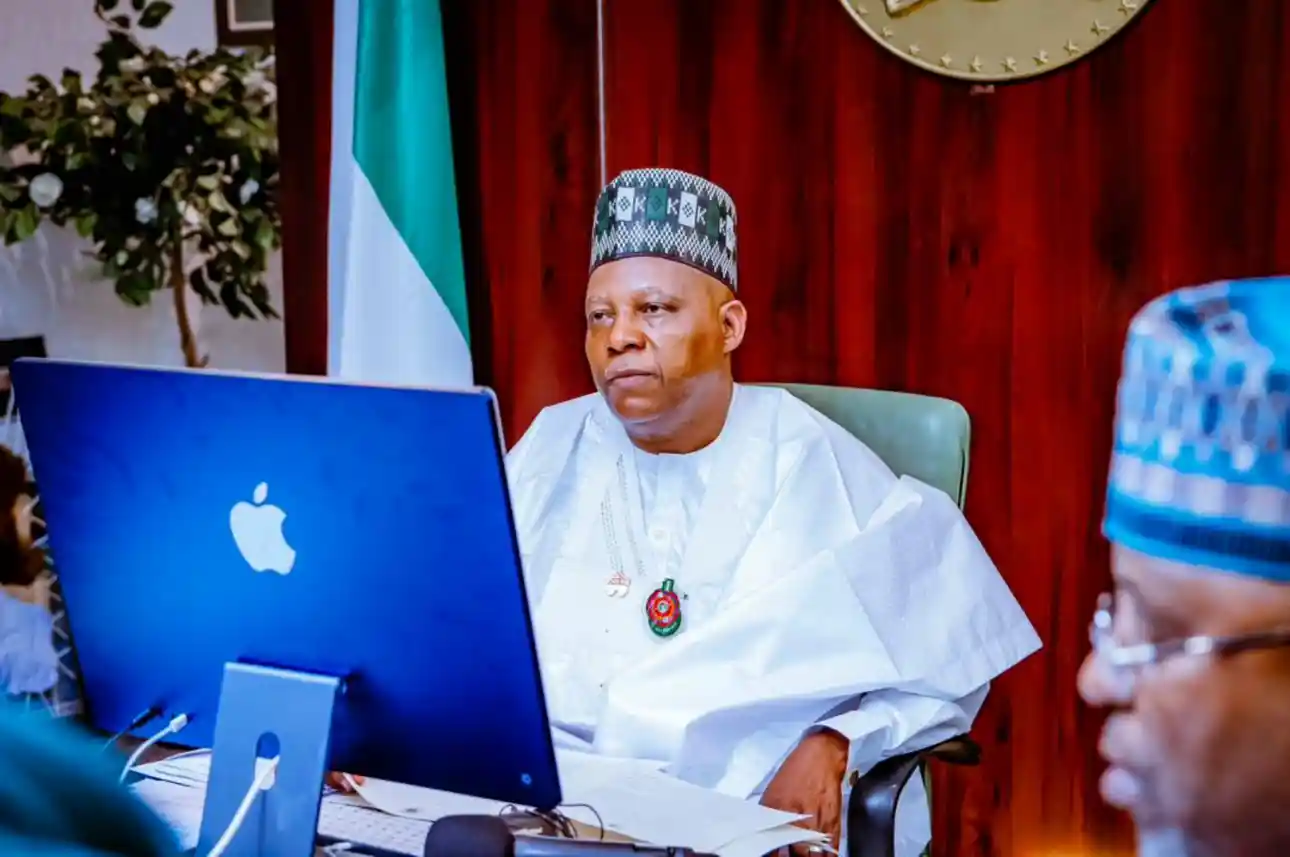
The meeting, which was the first NEC session of the year and held virtually, brought together state governors and key federal officials to review Nigeria’s economic outlook, reform progress, and policy priorities for 2026. Discussions were largely shaped by the need to reduce the nation’s long-standing dependence on crude oil revenues and strengthen a more diversified, resilient, and inclusive economy.
Call for Accelerated Transition from Oil
Chairman of the Council and Vice President, Kashim Shettima, used the meeting to underscore the urgency of Nigeria’s transition from an oil-dependent economy to a non-oil-driven growth model. He observed that global economic conditions remain uncertain, with oil prices, exchange rates, and capital flows becoming increasingly volatile and disruptive to domestic economic planning.
According to him, this reality has reinforced the need for stronger fiscal risk management and deliberate efforts to reduce Nigeria’s economic and revenue exposure to oil. He noted that non-oil sectors have emerged as the backbone of Nigeria’s growth story, expanding steadily and providing a buffer against external shocks.
Shettima explained that services, agriculture, manufacturing, and other non-oil activities are increasingly carrying the weight of the economy. More importantly, he said non-oil revenues now contribute nearly three-quarters of total government collections, reflecting a gradual but meaningful shift away from historic reliance on oil receipts.
He stressed that the task before policymakers is to deepen this transition through:
- Competitive manufacturing that can create jobs and add value locally
- Export diversification to earn stable foreign exchange
- Increased private sector investment across key value chains
Economic Priorities for 2026
NEC’s resolutions followed a presentation on the economic priorities for 2026 by the Minister of Finance and Coordinating Minister of the Economy, Wale Edun. The presentation highlighted key reforms already implemented by the Tinubu administration, noting that targeted programmes have helped remove long-standing distortions in the system, stabilise the economy, and place Nigeria on a path of sustained recovery.
The minister said Nigeria’s improving macroeconomic outlook and reform momentum have enhanced the country’s global standing, reinforcing investor confidence. This, he explained, underpins the projection that the economy will grow by 4.68 percent in 2026.
Key priorities outlined in the presentation include:
- Maintaining Nigeria’s economic competitiveness through sound governance
- Improving the availability and affordability of food to ease pressure on households
- Strengthening human capital development through education and healthcare
- Enhancing social protection frameworks to support vulnerable groups
- Ensuring timely payment of debt service obligations, salaries, and pensions
In its resolution, NEC noted and commended the Federal Government’s plans to unlock rapid and sustained job-rich growth, with emphasis on high-quality jobs and entrepreneurship opportunities that can absorb Nigeria’s expanding labour force.
Food Security and Agricultural Productivity
Food security featured prominently in the council’s deliberations, with members agreeing that rising food prices and low agricultural productivity remain major threats to economic stability and household welfare. NEC resolved to dedicate a special session to address salient issues affecting food security, particularly those related to agricultural productivity and supply constraints.
Council members noted that improving agricultural outcomes will require coordinated interventions across production, processing, storage, transportation, and market access, especially as agriculture remains a key pillar of the non-oil economy.
Economic Performance Review for 2025
In his opening remarks, Vice President Shettima reflected on Nigeria’s economic journey over the past year, noting that while global powers continue to assert their interests and commodity markets remain volatile, Nigeria has made measurable progress despite difficult conditions.
He observed that the nation’s economy recorded significant growth in 2025, expanding by 3.9 percent, the fastest rate in over a decade. According to him, growth momentum strengthened quarter by quarter:
- 3.13 percent in the first quarter
- 4.23 percent in the second quarter
- 3.98 percent in the third quarter
Shettima attributed this performance to difficult but necessary policy decisions taken by the administration, describing the outcome as evidence of disciplined economic management. However, he cautioned that acceleration of growth should not be confused with adequacy.
He explained that while 3.9 percent growth is encouraging, it is not sufficient to decisively reduce poverty, generate jobs at the scale required, or significantly lift per capita incomes. With population growth estimated at about 2.6 percent annually, he said the current pace of expansion leaves limited room to absorb inflationary pressures or external shocks.
Approval of Committee on Legacy Projects
One of the major outcomes of the meeting was the approval of a committee to oversee the implementation of President Tinubu’s directives on the actualisation of key legacy infrastructure projects. These include the Lagos–Calabar Coastal Highway and the Sokoto–Badagry Super Highway, which are expected to stimulate investment, open up economic corridors, and support long-term growth.
The committee is chaired by the Governor of Cross River State, with one governor representing each geopolitical zone:
- North West: Sokoto State
- North East: Gombe State
- North Central: Niger State
- South East: Abia State
- South West: Lagos State
The Permanent Secretary of the Ministry of Budget and Economic Planning, Deborah Odoh, will serve as Secretary, while the Ministers of Works and Transportation will also serve as members.
Council was briefed that implementation is being coordinated by the Office of the Secretary to the Government of the Federation, and that the Office of the Surveyor-General of the Federation has been moved to the Presidency in compliance with the President’s directive.
Update on Federal Account Balances
The Accountant-General of the Federation presented updates on key federal accounts as at January 14, 2026. The balances disclosed to council were:
- Excess Crude Account: $535,823.39
- Stabilization Account: ₦64,652,693,552.36
- Natural Resources Account: ₦97,369,382,081.96
NEC took note of the figures within the broader context of fiscal reforms and the need for prudent financial management amid limited resources.
World Bank–Nigeria Country Partnership Framework
Council also received a briefing on the proposed World Bank–Nigeria Country Partnership Framework. The presentation outlined how development support will increasingly focus on fewer but larger national programmes implemented at the state level, with an emphasis on results-based financing.
Key elements of the framework include:
- National programmes executed at the state level, accounting for about two-thirds of the active portfolio
- Greater use of result-based financing, covering about half of the portfolio
- Strong focus on early childhood development, particularly the first 2,000 days of life
- Alignment with Nigeria’s long-term human capital development goals
The framework also set out a 2026 agenda, including:
- Agreement on a national, state-driven Early Years programme under the HCD 2.0 strategy
- Nomination of state focal persons and senior budget officials as Early Years leads
- Support for diagnostic and multisector dialogue to develop state-level investment plans
- Alignment of budgets and medium-term strategies with Early Years priorities
Council noted that investing in human capital is critical if Nigeria is to transition into a group of wealthier and more productive nations.
Nigeria’s Sustainable Agricultural Value-Chains for Growth (AGROW)
NEC was further briefed on the AGROW initiative, a $500 million results-based programme designed to strengthen agricultural value chains nationwide. The initiative aims to ensure accountability and performance-driven implementation while promoting collaboration among stakeholders.
Key features of AGROW include:
- A unified national platform linked to measurable outcomes
- Performance-based funding to ensure accountability
- Co-creation with state governments, private sector players, and development partners
- Emphasis on long-term sustainability and local ownership
Council welcomed the initiative as a critical tool for boosting agricultural productivity, supporting rural livelihoods, and improving food security.
Update on Nigeria’s Tax Reform Laws
An update was also presented on Nigeria’s ongoing tax reform process. The Presidential Fiscal Policy and Tax Reforms Committee described the existing tax system as fragmented, complex, and inequitable, noting that reforms are aimed at promoting shared prosperity and reducing the burden on Nigerians and businesses.
The committee outlined priorities, targets, challenges, and opportunities associated with the new tax framework. Council directed the committee to prepare a more comprehensive brief for presentation at NEC’s forthcoming conference in February to prepare states for effective implementation.
Areas where state support is required include:
- Political leadership to drive tax reform
- Enactment of tax harmonisation laws
- Adoption of a presumptive tax regime for the informal sector
- Strengthening state internal revenue services
- Approval and alignment with the National Fiscal Policy
Council Resolution on Tax Reform Engagement
NEC resolved to intensify engagement on the new tax regime at its forthcoming conference in February, stressing the importance of cooperation between the federal and state governments to ensure successful implementation across the country.
Overall, the meeting underscored a defining moment in Nigeria’s economic transition, with strong emphasis on non-oil growth, infrastructure delivery, human capital investment, and fiscal reform as pillars of sustainable development in 2026 and beyond.
Read Also: FG Begins Enrolment of RHWDP Beneficiaries in All Wards

