

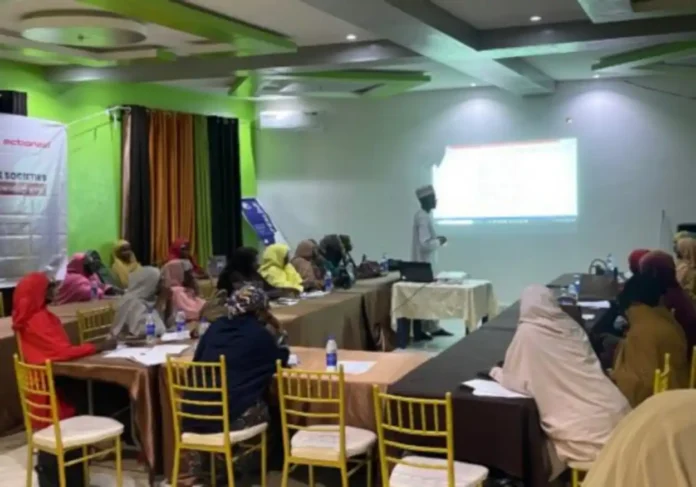
Global Peace Development, an NGO, has trained women leaders on cooperative formation and management in Soba Local Government Area (LGA) of Kaduna State as part of efforts to promote peacebuilding and economic inclusion.
The training, which was held in the area, brought together about 55 participants drawn from the 11 wards of Soba LGA, with each ward represented by selected executives of the proposed cooperative society.
Speaking at the event, the Kaduna State Project Officer of the organisation, Safiya Umar, said the initiative was designed to address some of the underlying causes of farmer-herder conflicts in the area, particularly poverty and youth restlessness.
She explained that the idea of forming the cooperative emerged during a town hall meeting earlier organised by the NGO with farmers, herders and their families.
“During our engagement with the communities, we realised that poverty and lack of economic opportunities were major drivers of the conflicts. That informed our decision to support the women to form a cooperative society,” she said.
According to her, women were deliberately targeted because of their role in peacebuilding and household economic stability.
Umar added that the cooperative would be registered immediately, noting that collection of identification documents from participants had already commenced to facilitate the process.
“We are training the executives first so that they can in turn train other members. Registration will be done immediately, subject to the Christmas break,” she added.
She also addressed concerns about the possible impact of the new tax regime on cooperative societies, saying information available to the organisation indicated that registered cooperatives were exempt from taxation.
Also speaking, Ali Abbas, a facilitator at the training, said cooperative education required patience and continuous supervision, especially for rural women with limited exposure to formal financial systems.
“When a cooperative is properly registered, it becomes legally recognised. The certificate can be used to access loans, grants and other financial support, and it also gives government confidence to engage with the group,” he said.
Abbas noted that registered cooperative societies were generally exempt from taxes and stood better chances of benefiting from government and donor-funded programmes.
He added that follow-up supervision and record inspection would be put in place to ensure that lessons from the training were applied effectively.
The organisers said the programme was linked to broader goals of gender equality, reduction of gender-based violence, and poverty alleviation, stressing that empowering women economically would have positive effects on families, communities, and the state at large.

