

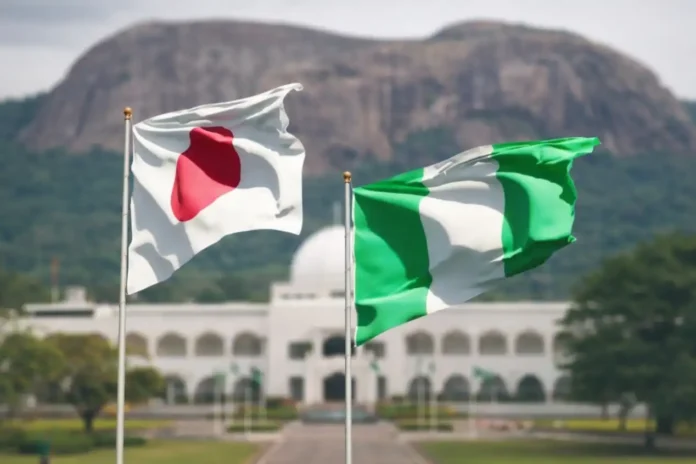
Nigeria and Japan are working to unlock new trade and investment flows under the African Continental Free Trade Area (AfCFTA) following a two-day capacity building and investment dialogue organised by the United Nations Development Programme (UNDP) under the Japan Business Support (JBS) Programme.
The forum, titled “Unlocking Trade and Investment Opportunities in the Context of AfCFTA,” was held in Lagos on January 28 and 29. It brought together government officials, regulators, financiers, Japanese firms and Nigerian businesses to address policy alignment, market readiness, financing gaps and regulatory bottlenecks limiting cross-border trade between both countries.
Speaking at the event, Folashade Ambrose-Medebem, Lagos State commissioner for Commerce, Cooperatives, Trade and Investment, described the engagement as “timely, strategic and critical to Nigeria’s trade and investment ambitions,” especially in deepening economic relations with Japan.
She said Lagos remains Nigeria’s commercial hub and highlighted state-backed export readiness initiatives designed to prepare local businesses for international markets. According to her, “for the first time, 253 businesses were trained and equipped to meet export requirements” through a structured export readiness programme supported by the state government.
Speaking with BusinessDay at the event, Zahrah Mustapha Audu, director-general of the Presidential Enabling Business Environment Council (PEBEC), clarified that her office does not interpret AfCFTA rules for exporters. Instead, she said PEBEC focuses on ensuring that regulators deliver services efficiently and transparently.
Audu urged businesses to fully understand regulatory requirements and to rely on official escalation channels when discrepancies arise. “If the information published on regulators’ websites differs from what is being demanded of you, you can escalate to PEBEC,” she said, adding that the council also conducts quarterly “mystery shopping” exercises to independently test compliance by agencies.
She said Nigeria is well positioned to receive Japanese investment, pointing to policy consistency, fiscal reforms and ongoing regulatory streamlining. “Absolutely, Nigeria is ready for Japanese businesses,” Audu said. “This is a great time to come into Nigeria. We’re streamlining reforms, reducing regulations and holding ourselves accountable as a government.”
Providing a macroeconomic and investment outlook, Babatunde David, consulting lead at Seven Star Consultants Ltd, said recent reforms have improved Nigeria’s attractiveness as an AfCFTA gateway economy. He cited the unification of the foreign exchange market, improved transparency and external reserves at an eight-year high.
David added that Nigeria’s population of nearly 250 million people gives investors access to a large domestic market alongside AfCFTA’s $3.4 trillion continental market, making the country a strategic entry point for businesses seeking scale across Africa.
On AfCFTA implementation, Benedict Obhiosa, executive secretary of the Manufacturers Association of Nigeria (MAN) Export Group, said the agreement offers expanded market access for manufacturers but warned that weak implementation and non-tariff barriers could limit its impact.
“The best thing that has happened to Africa in terms of trade is bringing African countries into one trade room to pursue borderless trade,” he said, while stressing that “non-tariff barriers are worse than tariffs” and remain a major challenge for exporters.
A panel discussion on MSME financing highlighted structural constraints preventing Nigerian firms from scaling across borders. Foluke Alakija, managing director of Mayden Microfinance Bank, said many MSMEs remain unbankable due to weak documentation and poor compliance structures.
“Before you can get financing, it has to be presentable. The business itself has to be bankable,” she said, noting that lenders often struggle to assess risk when records and governance are weak.
From an investor perspective, Adesuwa Okunbo-Rhodes, founder of Aruwa Capital, warned businesses against taking foreign currency debt. “Every five years in Nigeria there is a currency devaluation of some sort,” she said. “If you’re taking debt, please take local currency debt. Foreign currency debt has killed a lot of businesses.”
Day two of the forum focused on sector-led deal-making and direct regulatory engagement. Clare Henshaw, UNDP head of inclusive growth, said many Nigerian exporters fail to convert international exposure into actual transactions due to poor preparation and weak follow-through.
“It’s not a case of Nigerians not having the right products,” she said. “But what happens when you come back, coordination, certification and follow-through.” Henshaw urged entrepreneurs to remain engaged despite operating in difficult conditions, describing Nigerian business owners as “heroes.”
Sector roundtables in agribusiness, cosmetics, fashion and manufacturing featured Nigerian firms seeking Japanese partnerships in machinery, automation, technology transfer and market access. Japanese participants highlighted rising demand for organic, health-focused and value-added products while stressing the importance of quality assurance and compliance.
Business-to-government clinics involving Customs, NAFDAC and logistics regulators raised long-standing concerns around samples, testing, airport access and charges. Customs officials reiterated that trade-related complaints submitted through official channels must be resolved within 72 hours, while NAFDAC officials defended local testing and labelling requirements as consumer protection measures aligned with global trade rules.
Organisers said the dialogue is part of a $1 million Japan Supplementary Budget project implemented by UNDP across Nigeria, Ghana, Kenya and Tanzania, aimed at linking African enterprises with Japanese partners and translating AfCFTA commitments into concrete trade and investment outcomes.

