

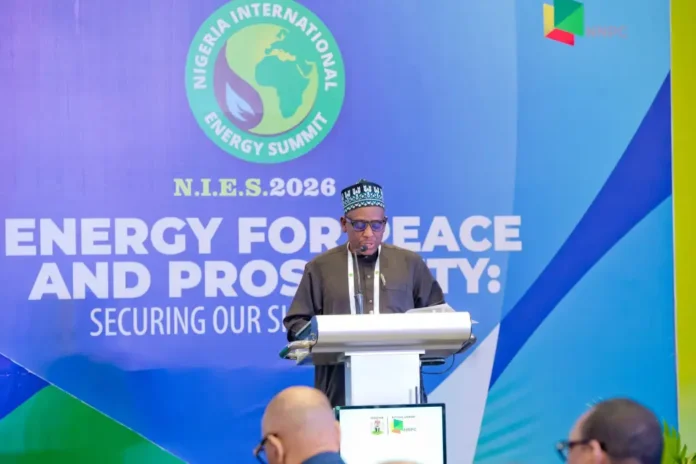
At the 2026 Nigeria International Energy Summit, the Executive Secretary of NCDMB, Engr. Felix Omatsola Ogbe, represented by Abdulmalik Halilu, delivered a keynote titled “Local Content Beyond Compliance: Building African Industrial Powerhouses” under the summit theme “Energy for Peace and Prosperity: Securing Our Shared Future.”
The address challenged Africa to move from consuming innovation to creating innovation, framing “beyond compliance” around three pillars: competence, capacity utilisation, and collaboration. According to the keynote, competence means building an indigenous supply chain that delivers service excellence without compromising standards. Capacity utilisation focuses on maximising domestic assets, from fabrication yards to marine fleets, so local content becomes local mastery and value retention. Collaboration…
NCDMB highlighted progress achieved through regulations, systems, and processes that have strengthened indigenous technology, local manufacturing, research and innovation, and a more resilient supply chain. Examples cited included Nigerian cable manufacturers supporting major projects like NLNG Train 7 and positioning to serve wider African markets. Fabrication and assembly yards such as Aveon Offshore, Beamco Nigeria Limited, and Tranos were referenced for building capability across key components. The …
The keynote further stated that Nigerian service companies are expanding operations into other African markets, while the training pipeline continues to grow. More than 10,000 youths are being skilled through field readiness programmes in high-demand areas such as subsea, QA/QC, marine operations, automation and controls, underwater welding, digitalisation and drilling.
In line with Bola Ahmed Tinubu’s reforms, Executive Orders and the “Nigeria First” policy, the focus is to boost local capacity, reduce contracting costs, and remove intermediaries that add cost without value. NCDMB announced policy revisions around the NCEC to prevent transfers to intermediaries and to prioritise competent contractors, including within the $1,000,000 threshold referenced in Section 17(1) of the NOGICD Act 2010.
On regional cooperation, Nigeria reaffirmed support for the Brazzaville Accord as a pathway toward a unified industrial engine for Africa’s 1.4 billion-person market and stronger cross-border partnerships. Access to competitive financing was also highlighted, with stakeholders informed that the African Energy Bank is now a reality and its office will be handed over to APPO.
The closing message stressed that “local content beyond compliance is not just an energy agenda, but a development and sovereignty agenda for African prosperity,” adding that with competence, capacity utilisation and collaboration, Africa can move from local participation to local mastery, for Africa.

