

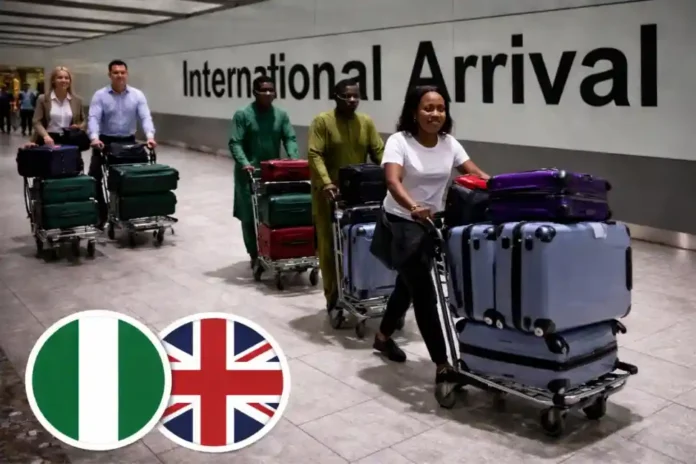
The migration partnership between Nigeria and the United Kingdom has recently come under intense public scrutiny, driven largely by widespread misinformation and misinterpretation of its provisions. At the centre of this debate is the Memorandum of Understanding (MoU) on immigration cooperation signed during President Bola Ahmed Tinubu’s state visit to the UK. While public reactions have ranged from concern to outright scepticism, a closer reading of the agreement reveals a more structured and rights-based framework than many assume.
This article examines what the MoU actually says, what it does not say, and what it means for ordinary citizens of both countries.
Understanding the Purpose of the MoU
At its core, the Nigeria–UK Migration MoU is designed to strengthen bilateral cooperation on migration management. It aims to promote safe, orderly, and regular migration while addressing the challenges posed by irregular migration.
The agreement was signed by Nigeria’s Minister of Interior and the UK’s Secretary of State for the Home Department. It establishes a formal structure through which both countries can collaborate on migration-related matters, in line with their domestic laws and international obligations.
Contrary to popular claims, the MoU does not introduce any radical or unprecedented migration policy. Rather, it builds on earlier agreements signed in 2012, 2017, and 2022, maintaining continuity in how both countries engage on migration issues.
No Obligation to Accept Foreign Nationals
One of the most persistent misconceptions is that Nigeria has agreed to accept non-Nigerian deportees from the UK. This claim is not supported by the text of the MoU.
Nowhere in the 12-page document is Nigeria required to receive foreign nationals who are not its citizens. The agreement strictly applies to the return of bona fide nationals of each country. In other words, Nigeria will only accept individuals who have been verified as Nigerian citizens.
The verification process itself is rigorous. It involves multiple layers of identification, including biometric checks and documentary evidence. Where there is any doubt about a person’s nationality, the return process is halted until clarity is achieved.
Importantly, if an individual is mistakenly returned and later found not to be a Nigerian national, the UK is obligated to take that person back at its own cost.
Conditions for Return and Repatriation
The MoU outlines detailed procedures governing how returns are to be conducted. These provisions are intended to ensure transparency, coordination, and respect for due process.
Before any return takes place, identification checks are carried out by Nigerian officials in the UK. Upon arrival in Nigeria, further verification is conducted by local authorities. The UK must also provide advance notice, including flight details and personal information of returnees, at least five working days before departure.
Returns may be conducted using scheduled commercial flights or specially chartered aircraft. However, the process is tightly regulated, and Nigerian authorities retain full control over documentation.
A key point here is that the Nigeria Immigration Service remains solely responsible for issuing any Nigerian travel documents. Even in cases where the UK uses its own documentation system, known as the UK Letter (UKL), Nigeria must still validate and process the individual’s entry under its own legal framework.
Safeguards for Human Rights and Appeals
Another critical aspect of the MoU is its emphasis on human rights and legal protections. The agreement explicitly states that all returnees must be treated with dignity and respect, with full regard for their fundamental rights.
Individuals facing return are not without recourse. If a person has an ongoing claim under domestic or international human rights law, that claim must be properly considered before any decision is made.
Grounds for appeal may include long-term lawful residence in the UK, strong social and cultural ties, or significant barriers to reintegration in Nigeria. These provisions are particularly relevant for individuals who have spent most of their lives in the UK and may face hardship if returned.
This framework reflects an attempt to balance immigration enforcement with humanitarian considerations.
Personal Belongings and Property Rights
One notable improvement in the current MoU is the recognition of returnees’ rights to their personal belongings and property.
Unlike in the past, where deportees often returned with little or nothing, the new agreement ensures that individuals can take their legally acquired possessions with them. They are also given adequate time to arrange the transfer or disposal of property before departure.
This provision, reinforced under Article 12, represents a significant shift towards more humane treatment of migrants undergoing repatriation.
Reintegration Support for Returnees
The MoU goes beyond the return process to address what happens after individuals arrive in their home country. Article 11 outlines a comprehensive reintegration support system aimed at helping returnees rebuild their lives.
Short-term assistance may include airport reception, temporary accommodation, transportation, and basic care packages. In some cases, small cash support may also be provided.
Medium-term support focuses on helping returnees reconnect with their families, obtain necessary documentation, and access local services. Mental health support and counselling may also be available where needed.
In the longer term, returnees may benefit from initiatives such as the Returnee Education and Entrepreneurship Fund. This programme is designed to promote sustainable reintegration by supporting access to employment, vocational training, and business opportunities.
These measures indicate a recognition that successful reintegration is essential to preventing repeat migration and ensuring social stability.
Law Enforcement and Bilateral Cooperation
The MoU also strengthens cooperation between law enforcement agencies in both countries. Authorities are expected to work together to protect the interests and well-being of their citizens, particularly in situations that may give rise to conflict or exploitation.
This includes efforts to combat irregular migration networks and related criminal activities. By enhancing information sharing and operational coordination, both countries aim to address the root causes of unsafe migration.
Duration and Continuity of the Agreement
Like previous agreements, the current MoU is valid for an initial period of five years. It may be renewed for an additional five-year term, subject to mutual agreement.
This time-bound structure allows both parties to review the effectiveness of the partnership and make adjustments where necessary.
Why the Misinformation Matters
The controversy surrounding the MoU highlights a broader issue: the role of misinformation in shaping public perception. Inaccurate claims can create unnecessary fear and undermine trust in legitimate policy frameworks.
For citizens, understanding the actual content of the agreement is crucial. The MoU does not strip Nigeria of its sovereignty, nor does it impose unfair obligations. Instead, it establishes a cooperative system that seeks to manage migration in a lawful, structured, and humane manner.
The Nigeria–UK Migration MoU is not without its complexities, but it is far from the alarming narrative that has circulated in some quarters. It is a continuation of existing cooperation, refined with clearer safeguards and stronger emphasis on human dignity.
For Nigerian citizens, the key takeaway is that the agreement protects national interests while also providing support mechanisms for those who may be returned. For policymakers and media organisations, the responsibility lies in ensuring that public communication is accurate, balanced, and grounded in the actual text of the agreement.
In a climate where migration remains a sensitive and often politicised issue, clarity is not just helpful—it is essential.

