

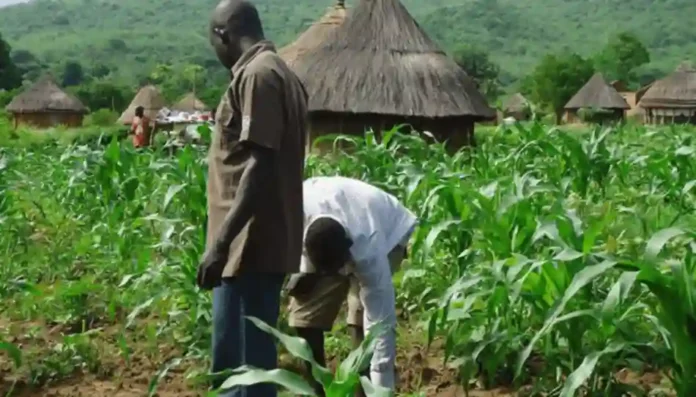
Nigeria has about 35% of its jobs in primary agriculture and 33% in off-farm agri-food activities, according to recent analysis of Africa’s agri-food systems. This split shows that Nigeria’s food economy now stretches well beyond farming into processing, transport, storage, marketing, retail, and food services, making the sector a major source of employment and income.
Across the continent, Africa’s agri-food system already provides about two-thirds of all jobs. Half of Africa’s population depends on primary agriculture for their livelihood, and when food marketing, transport, processing, and retail services are included, the agri-food system accounts for roughly two-thirds of total employment. The assessment was shared in a blog marking 15 years of the Africa Development Forum (ADF) book series co-published by the World Bank and the Agence Francaise de Developpement.
The blog notes that Africa has strong agricultural potential, with regions that combine suitable water, soil, and land resources that could support highly productive food systems if backed by the right policies and investments. However, agricultural development since the ADF Series launched in 2009 has delivered mixed results. Between 2010 and 2023, agricultural gross output grew by 3.1% annually, but about three-quarters of that growth came from land expansion rather than productivity gains, a path described as unsustainable and environmentally costly.
Performance has varied widely across countries. Senegal recorded agricultural growth of 7.7% per year over 2010–2023, while most countries grew at under 2% annually. This contrasts with other developing regions where productivity growth is the main driver of agricultural expansion.
Demand-side changes are also reshaping the sector. Rising incomes and rapid urbanisation are increasing demand for diverse foods and food services. Employment in midstream and downstream agri-food activities grew by 4.1% per year between 2001 and 2022, faster than overall employment growth of 2.6% per year, and by 2022 these activities accounted for 19% of all jobs in Africa.
Labour patterns have shifted over time. In 2000, about 60% of Africa’s workforce was engaged in primary agriculture and 13% in mid and downstream agri-food activities. By 2022, primary agriculture’s share had fallen to 49%, while off-farm agri-food employment had risen to 19%. At country level, the size of the off-farm agri-food sector is linked to how commercialised agriculture and agricultural trade are.
Nigeria is cited as an example of this transition, with nearly as many jobs off the farm as on it. In contrast, the Democratic Republic of Congo has only 5% of jobs in off-farm agri-food activities, while 56% of employment remains in primary agriculture.
The blog warns that weak productivity growth could widen Africa’s food import bill. Africa is already a major net food importer, with 75% of Sub-Saharan Africa’s wheat and 50% of domestic rice supply imported in 2022. Closing productivity gaps is underway in countries such as Ethiopia, Rwanda, Ghana, and Senegal, supported by public investments and policy reforms.
Evidence from the 2017 ADF book Agriculture Public Spending in Sub Saharan Africa shows that better-quality public spending can deliver large gains. Investments in rural public goods, water access, markets, and improved technologies can be significant, alongside trade and regulatory reforms that attract private investment.
Examples of successful value chains include Côte d’Ivoire’s cashew industry, Kenya’s cut flower exports, and Nigeria’s aquaculture sector, where farmed fish harvests grew more than tenfold between 2002 and 2014, underscoring agriculture’s role in jobs and growth. The blog adds that agribusinesses can work with farmers to finance upgrades, improve practices, and guarantee markets, helping turn agriculture into a stronger engine for inclusive, poverty-reducing growth as fiscal resources across African countries become increasingly constrained. These steps are presented as timely policy priorities.

