

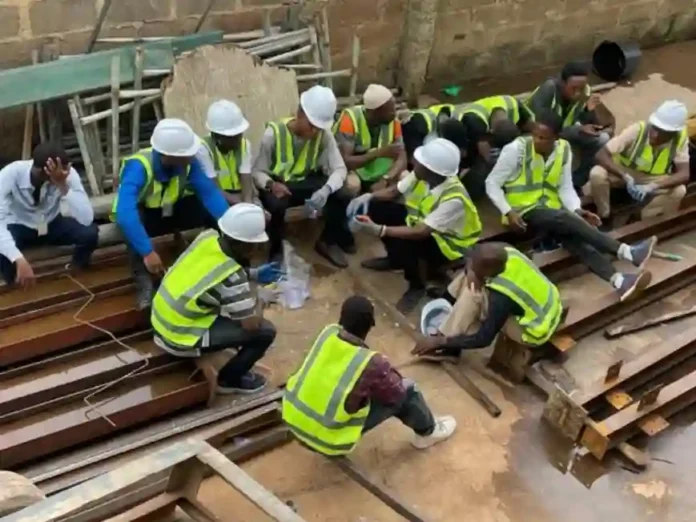
The Nigerian Institute of Building (NIOB) has partnered with West African Ceramics Limited (WACL) to train about 1,000 inmates and artisans in technical construction skills as part of efforts to address the shortage of skilled workers in the building industry.
The collaboration was announced by the President of NIOB, Daniel Kolade, during a news conference held in Abuja to commemorate the 2026 Builders’ Day celebration.
Kolade explained that the partnership, formalised through the signing of a Memorandum of Understanding (MoU), is aimed at strengthening the technical capacity of workers across the construction value chain.
According to him, the construction industry continues to face a significant shortage of adequately trained artisans, a situation that often affects the quality and durability of building projects.
He noted that the new initiative would introduce structured training programmes designed to equip participants with practical construction skills, improve their technical knowledge and enhance overall workmanship within the sector.
“Unfortunately, the industry has continued to face shortage of adequately trained artisans, which often affects the quality of construction work,” Kolade said.
“Through this collaboration, structured training programmes will be implemented to equip artisans with practical skills, enhance their technical knowledge and improve overall workmanship in the construction industry.”
Kolade said the partnership also seeks to promote the use of modern building materials and encourage adherence to best construction practices across project sites.
He explained that although building materials and construction technologies have advanced significantly over the years, the success of any building project still depends largely on the competence and professionalism of the artisans responsible for executing the work on site.
The NIOB president further noted that the initiative would support broader national goals aimed at promoting vocational training, improving employability and creating sustainable livelihoods for young Nigerians.
“The initiative is also expected to support national efforts aimed at promoting vocational training, improving employability and empowering artisans with sustainable livelihood,” he said.
“We believe partnerships such as this will contribute meaningfully to addressing the skill gap within the industry while promoting professionalism and quality assurance in construction delivery.”
Kolade disclosed that the first phase of the programme will begin before the end of March with the selection of 30 inmates for a three-month training programme under the National Skills Qualification Framework (NSQF).
He explained that the trainees would undergo different levels of certification programmes facilitated by West African Ceramics, while the Nigerian Institute of Building would serve as the awarding body responsible for certification.
According to him, the training initiative is expected to run for five years, with about 300 participants trained annually.
He added that the programme would initially commence in Abuja but would later be expanded to correctional facilities across the country.
By the end of the five-year programme, Kolade said no fewer than 1,000 young Nigerians are expected to benefit from the training and certification process.
He also revealed that participants would receive starter packs and training kits upon completion of the programme to enable them begin practicing their newly acquired skills immediately.
The Managing Director of West African Ceramics Limited, Franklin Jose, described the collaboration as an important milestone in the company’s long-standing commitment to supporting the Nigerian construction industry.
Jose emphasised that artisans play a crucial role in the successful application of building materials, noting that the quality of construction work ultimately depends on the skill of those handling the materials.
“Even if a product is of the best quality in the factory, if the craftsmanship is not right, it will neither look beautiful nor be durable,” he said.
He also pointed out that the construction industry is evolving rapidly, with new technologies and materials being introduced regularly, making continuous training essential for artisans who want to remain relevant and improve their earning potential.
Representative of the Federal Capital Territory Command of the Nigerian Correctional Service, Osaji Emmanuel, commended the partnership and described it as a strong example of how public and private institutions can collaborate to support rehabilitation programmes.
Emmanuel, who serves as the FCT Command Works Officer, said skill acquisition initiatives are critical to the reformation and reintegration of inmates into society.
“We have a large number of people in correctional centres, and this collaboration will go a long way in equipping them with skills that can help them earn a living when they leave custody,” he said.
He added that correctional authorities would carefully select inmates for the programme based on their records and suitability for the training.

