

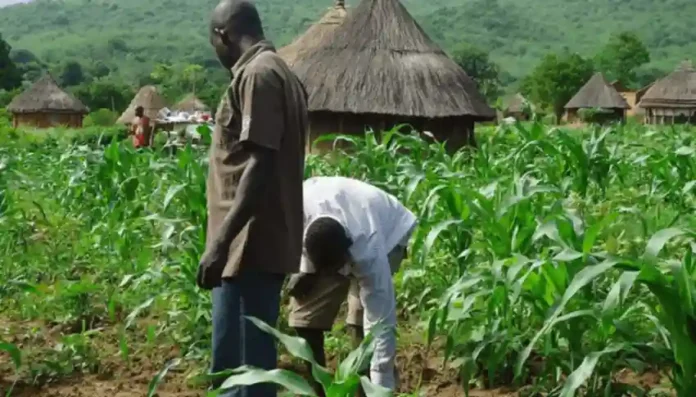
The Oyo State Government has officially launched the 2026 farming season, urging farmers across the state to rely on weather forecasts from the Nigerian Meteorological Agency (NiMet) to guide their planting decisions.
The state also introduced a 50 percent tractorisation subsidy programme designed to support mechanised farming and improve agricultural productivity.
The Commissioner for Agriculture and Rural Development, Olasunkanmi Olaleye, announced the initiative while flagging off the farming season at the Local Government Training Hall, State Secretariat, Agodi, in Ibadan.
According to Olaleye, the combination of reliable weather information and improved access to farm equipment will help farmers increase production while reducing risks linked to changing climate conditions.
“Access to accurate weather forecasts is critical to modern farming. When farmers align their planting and other agricultural activities with reliable climate information, they are better positioned to achieve higher productivity and avoid avoidable losses,” Olaleye said.
He explained that the government introduced the 50 percent tractor subsidy to make mechanised farming more accessible to farmers across the state, especially smallholder farmers who struggle with the high cost of equipment.
The commissioner said the programme forms part of broader efforts by the state government to strengthen agriculture and ensure stable food production.
“The government of Oyo State remains committed to strengthening the agricultural sector through practical interventions that will enhance productivity, improve farmers’ livelihoods and ensure food security for our people,” he added.
Olaleye also noted that the state had continued to record progress in agriculture through targeted programmes aimed at increasing output and encouraging the adoption of modern farming methods.
As part of activities marking the launch of the 2026 farming season, experts from the Nigerian Meteorological Agency presented rainfall predictions to help farmers plan their agricultural activities properly.
Muhideen Alim, who represented the Oyo State contact person of NiMet, Emmanuel Udoh, advised farmers to pay close attention to rainfall forecasts and adopt climate-smart farming practices.
“Farmers should prioritise drought-resistant seed varieties and strictly follow the rainfall predictions for the year in order to minimise the risk of crop failure,” Alim said.
He also warned farmers not to rush into planting because of the recent rainfall currently being experienced in some areas of the state.
“Farmers should not be misled by the early rains currently being experienced. Planting should ideally commence towards the end of April when the rainfall is expected to stabilise,” he advised.
Earlier in her welcome address, the Permanent Secretary in the Ministry of Agriculture and Rural Development, Abosede Owoeye, said the sensitisation programme was organised to help farmers understand how to use seasonal climate predictions in their farming activities.
“This initiative is aimed at ensuring that farmers and other stakeholders understand how to interpret seasonal climate predictions and integrate them effectively into their agricultural planning and operations,” she said.
She added that the programme would also help extension officers, agribusiness operators, financial institutions and policymakers make better decisions that align with seasonal climate realities.

