

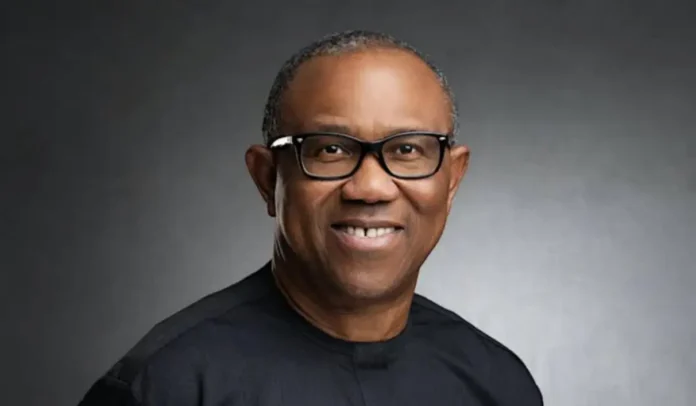
Peter Obi has criticised the Federal Government over the reported write-off of about ₦8 trillion in debts owed by the Nigerian National Petroleum Company Limited (NNPC), describing the move as financially reckless and harmful to the country’s already strained public finances.
In a statement issued on Wednesday, Peter Obi expressed concern over what he described as a growing culture of fiscal indiscipline, especially at a time when many Nigerians are struggling with rising living costs and economic uncertainty.
“Financial recklessness is increasingly becoming normalized in our country. Just last week, it was alarmingly reported that the President approved the write-off of ₦5.57 trillion and $1.42 billion—approximately ₦8 trillion—in debts owed by NNPC, a company that recently announced profits and claimed it had turned a new leaf,” Obi said.
He noted that the same agency is currently facing serious audit inquiries over its failure to account for ₦210 trillion, an amount he said far exceeds the combined Federal budgets of Nigeria from 2023 to 2026. According to him, the Federal Government’s budgets stood at about ₦21.83 trillion in 2023, ₦43.56 trillion in 2024, ₦54.99 trillion in 2025, and an estimated ₦58.18 trillion for 2026, bringing the total for the four years to roughly ₦178.56 trillion.
“Nigerians are still waiting for the outcome of the National Assembly investigation into the missing trillions. This company is also under scrutiny for trillions spent on non-functional refineries. Yet, the President, who also serves as the Minister in charge, has approved the write-off of about ₦8 trillion in NNPC debts,” he stated.
Obi further linked the decision to the economic pressure faced by citizens following subsidy removals. “Nigerians, already enduring severe hardships due to the removal of petroleum and electricity subsidies—with no tangible improvements in their lives—are now confronted with this unexplained debt forgiveness. The nearly ₦8 trillion write-off will effectively replace revenue that the government is currently seeking through unfair taxation,” he said.
He stressed the need for transparency, saying the government must clearly explain the rationale behind the decision due to its potential impact on national development. “This almost ₦8 trillion write-off could have generated the revenue the government now seeks through these unfair taxes. The amount exceeds the 2025 combined Federal budget allocations for education, health, and agriculture, which total ₦7.1 trillion,” Obi said.
He added that the sum is nearly twice the 2025 Federal security budget of ₦4.9 trillion, even as insecurity persists nationwide. According to him, such resources could empower about eight million youths, create jobs across Nigeria’s 8,809 wards, and significantly reduce the number of people living in poverty.
“The President, who is also the Minister, owes the Nigerian people clear answers. The citizens deserve honesty, fiscal discipline, and governance that protects their interests—not the interests of mismanaged corporations or political elites,” Obi said, adding that the situation represents a betrayal that must be stopped.

