

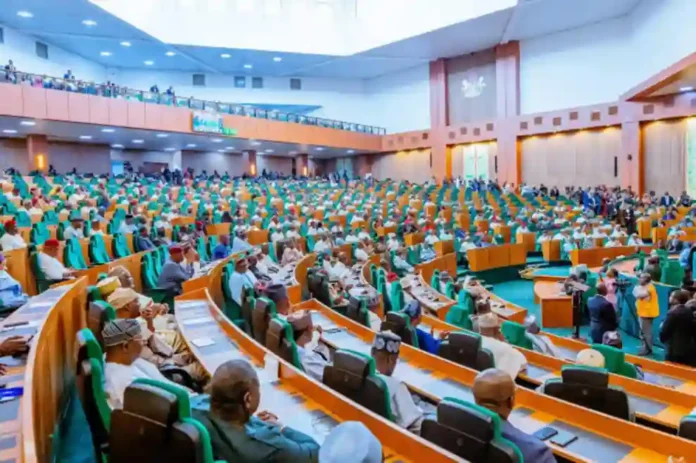
The House of Representatives on Thursday urged the Federal Government to address the growing scourge of hunger across the country through better coordination and harmonisation of the various poverty reduction schemes currently being implemented.
The call followed the consideration and adoption of a motion of urgent public importance moved by a lawmaker from Yobe State, Mrs Khadija Ibrahim, during a plenary session.
In her presentation, Ibrahim cited recent estimates showing that about 139 million Nigerians, representing 61 per cent of the population, are currently living below the national poverty line. She added that projections indicate the figure could rise to about 141 million by 2026 due to persistent economic pressures, including inflation and weak economic growth.
The House was also informed that Nigeria is facing a severe food security challenge, with the United Nations World Food Programme projecting that about 35 million Nigerians will experience severe food insecurity in 2026, the highest figure on the African continent.
Khadija said, “Millions of Nigerians are unable to afford basic food items and essential services, thereby aggravating food insecurity and malnutrition, especially among women, children, the elderly, and internally displaced persons.”
She further noted that the North East region, which is largely agrarian, has been the worst affected by the crisis. According to her, “For several years farming activities were severely hindered due to insurgency, displacement of rural populations, destruction of farmlands, and loss of productive assets.”
The lawmaker acknowledged that security conditions in the zone have improved but stressed that many farmers are still unable to return to full agricultural activities due to limited access to inputs, financing, extension services, irrigation, storage, and rural infrastructure.
She warned that failure to reintegrate displaced farmers into existing agricultural recovery and food security programmes would continue to deepen poverty, hunger, and dependency in the region, “with negative implications for national food sufficiency, economic stability, and peace-building efforts.”
Following the adoption of the motion, the House urged the President Bola Tinubu-led government “To strengthen and harmonise ongoing national poverty reduction, food security, and post-conflict agricultural recovery initiatives, with deliberate focus on agrarian communities affected by insecurity.”
It also mandated the Federal Ministry of Agriculture and Food Security, working with Ministries, Departments and Agencies, to mainstream farmers in the North East into existing agricultural recovery programmes by providing access to farm inputs, credit support, extension services, mechanisation, irrigation, storage facilities, and value-chain development.
The Committees of the House were directed to intensify oversight on agricultural recovery, poverty alleviation, and food security interventions and report back to the House for legislative action further.

