

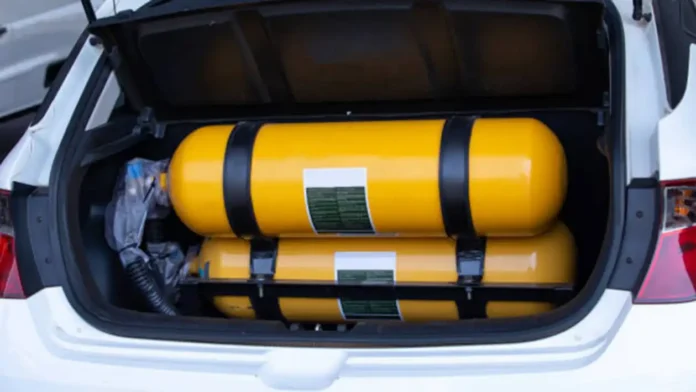
President Bola Ahmed Tinubu has ordered the immediate nationwide rollout of vehicle conversion kits to enable cars, buses and other transport systems run on compressed natural gas, in a move aimed at cutting fuel costs and easing pressure on Nigerians.
The directive, announced in a statement by Presidential Spokesperson Mr Bayo Onanuga, places strong emphasis on affordability, with the President mandating that the transition must not become a financial burden on citizens. He instructed the leadership of the Presidential Initiative on Compressed Natural Gas and Electric Vehicles to “immediately establish a coordinated process for the rapid deployment of vehicle conversion kits nationwide”.
According to the statement, the rollout will be supported by structured financing arrangements involving CreditCorp Nigeria and other financial institutions, ensuring that vehicle owners can access the conversion kits at manageable costs. The President stressed that the kits must be made available “at a cost that is not burdensome”, signalling a deliberate effort to make the policy inclusive for transport operators, small businesses and private car owners.
The push for compressed natural gas adoption is being positioned as a direct response to rising fuel expenses, with the government seeking to provide a cheaper and cleaner alternative to petrol and diesel. By converting vehicles to run on CNG, authorities believe Nigerians can significantly reduce daily transportation costs while also benefiting from a more stable and locally available energy source.
To support the transition, President Tinubu also directed the accelerated deployment of Mobile Refuelling Units to ensure immediate access to CNG across different parts of the country, even as permanent infrastructure continues to expand. The move is expected to address one of the major barriers to adoption—limited refuelling points—by bringing supply closer to users in the short term.
Officials say the broader reform goes beyond cost savings, with the initiative designed to strengthen energy security and reduce reliance on imported fuel. Nigeria’s abundant gas reserves are being leveraged as a strategic advantage, allowing the country to shift towards a more sustainable and economically efficient transport system.
The expansion of the programme to include electric vehicles further reflects the administration’s wider clean mobility agenda, but the immediate focus remains on scaling CNG adoption quickly through accessible conversion options and financing support.

