

The Tony Elumelu Foundation (TEF) has unveiled 3,200 young African entrepreneurs selected for its 2026 Entrepreneurship Programme, marking another major push to drive job creation and reduce poverty across the continent.
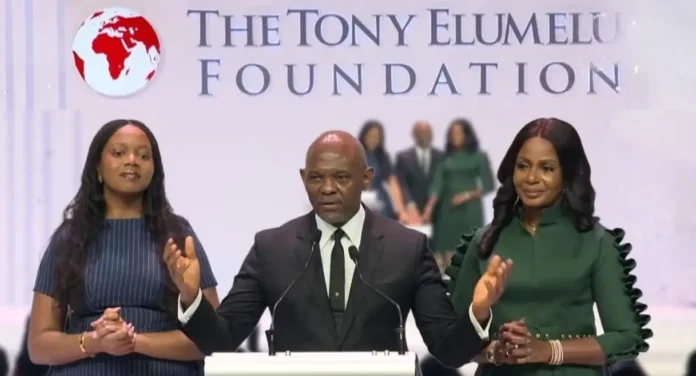
The announcement was made on Sunday in Abuja during the Foundation’s annual selection event, which coincided with the birthday of its founder, Tony Elumelu. The scale of this year’s selection underscores the growing urgency to support Africa’s young population with opportunities that translate into sustainable livelihoods and economic growth.
According to the Foundation, the 3,200 beneficiaries emerged from a highly competitive pool of 265,529 applicants across Africa. From this number, 112,202 were shortlisted before the final selection, highlighting both the demand for entrepreneurial support and the programme’s rigorous screening process.
To back this cohort, TEF has committed a total of $16 million in start-up capital, reinforcing its long-standing model of funding, training, mentorship, and business support. The funding distribution reflects a mix of private sector backing and global partnerships. Of the selected entrepreneurs, 1,751 were supported through Heirs Holdings Group companies, including Heirs Energies, Transcorp Power, Transcorp Hotels, and United Capital.
Another 1,049 entrepreneurs were selected through collaborations with international partners such as the European Commission, OACPS, BMZ, and GIZ. In addition, 100 entrepreneurs each were supported through partnerships with organisations including the Seme City Development Agency, DEG, the IKEA Foundation in collaboration with UNICEF’s Generation Unlimited and the Dutch Government, as well as the United Nations Development Programme (UNDP) and the Rwandan Ministry of Youth and Arts.
Speaking at the event, Tony Elumelu emphasised that the programme is rooted in a broader vision of economic transformation driven by Africans themselves. He described the initiative as part of the Foundation’s mission of “democratising prosperity” across the continent.
He reiterated the central role of entrepreneurship in tackling unemployment, stating, “The future of Africa lies in the hands of young entrepreneurs. The greatest betrayal of our youth is failing to create jobs, and what creates jobs are small businesses.”
Elumelu also pointed to the importance of policy and governance in sustaining entrepreneurial growth. He commended President Bola Tinubu for fostering what he described as an enabling environment for enterprise development, stressing that government support remains critical to long-term success.
Addressing the beneficiaries directly, he urged them to make full use of the opportunity, noting that responsibility comes with access. “To whom much is given, much is expected,” he said, encouraging them to build businesses that not only succeed commercially but also create impact within their communities.
He further warned about the broader implications of inequality, stating that “poverty anywhere is a threat to all,” framing entrepreneurship not just as an economic tool but as a stabilising force for the continent.
Also speaking, TEF Chief Executive Officer, Somachi Chris-Asoluka, highlighted the scale of interest the programme continues to attract, describing the applications as “260,000 visions for a better future.” Her remarks reflected the depth of ambition among young Africans seeking opportunities to transform their ideas into viable enterprises.
She noted that since the launch of the programme in 2015, the Foundation has disbursed over $100 million to 24,000 entrepreneurs across all 54 African countries. These interventions have delivered measurable impact, with supported businesses collectively creating 1.5 million jobs and generating $4.2 billion in revenue.
According to her, the ripple effects extend beyond individual businesses. More than 3.1 million Africans have been lifted out of poverty, while 4.1 million households have been positively impacted. “At TEF, we have seen ideas become enterprises and entrepreneurs become employers. We are building a new generation of African business leaders driving innovation and prosperity,” she said.
Chris-Asoluka explained that the unveiling of the 2026 cohort would be done in phases, beginning with 1,951 entrepreneurs, with additional names to be announced later through various global partnerships. She also stressed that the selection process is independently verified and conducted in multiple stages to ensure transparency and merit.
Data from the Foundation shows that agriculture and agribusiness continue to dominate, accounting for 30.7 per cent of selected businesses. This is followed by fashion at 8.8 per cent and food and beverage processing at 8.66 per cent, reflecting both market demand and the diversity of entrepreneurial ventures across the continent.
The gender distribution reveals a near balance, with women making up 51 per cent of beneficiaries and men accounting for 49 per cent. The Foundation also highlighted its inclusion efforts, noting that 23 per cent of beneficiaries are persons living with disabilities.
Beyond inclusion, performance metrics indicate strong business growth among beneficiaries. About 80 per cent of TEF-supported businesses are currently generating revenue, a significant increase from 40 per cent at the point of application.
The broader social impact remains substantial. Beneficiaries have contributed to lifting over 2.1 million people above the poverty line, while more than four million households have been positively affected. Women-led enterprises alone have created approximately 500,000 jobs and generated around $320 million in revenue.
Additionally, 65 per cent of beneficiaries are from fragile states, while 83 per cent are contributing to efforts aimed at reducing carbon footprints, aligning entrepreneurship with sustainability goals.
The event also featured testimonials from alumni and mentors, demonstrating how access to funding, training, and mentorship has transformed small ideas into scalable businesses across different sectors and countries.
Through its continued expansion and strategic partnerships, the TEF Entrepreneurship Programme remains one of the continent’s most significant private-sector-led efforts to empower young entrepreneurs and drive inclusive economic growth.

