

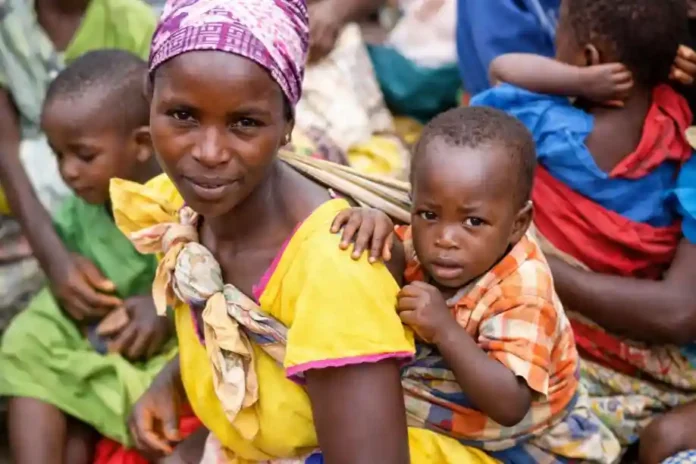
The United Nations Children’s Fund (UNICEF) has warned that about 35 million Nigerians could face hunger in 2026, with nearly 3 million children at risk of severe acute malnutrition, largely due to worsening insecurity that continues to prevent farmers from accessing their farmlands.
The warning highlights the deepening food crisis in Africa’s most populous country, where persistent violence, banditry, kidnappings and insurgency have forced thousands of farmers to abandon their agricultural activities, reducing food production and worsening food shortages.
With Nigeria’s population estimated at around 237 million people, the projection means roughly one in every six Nigerians could be at risk of hunger if urgent interventions are not implemented.
The grim outlook was presented in Abuja during a high-level bilateral meeting between the Federal Government of Nigeria and the Kingdom of Spain, where government officials, development partners and regional stakeholders gathered to discuss ways to strengthen food security, nutrition and sustainable livestock development.
During the meeting, UNICEF’s representative in Nigeria, Wafaa Saeed Abdellatef, described malnutrition as one of the most serious threats facing children in the country.
“Malnutrition remains one of the leading underlying causes of child mortality in Nigeria, with devastating long-term consequences on cognitive development, productivity and national growth,” Abdellatef said.
According to UNICEF, the projected figures underscore the urgent need for coordinated interventions to prevent a worsening humanitarian crisis, especially among vulnerable households and children.
The agency stressed that insecurity in farming communities remains one of the biggest drivers of Nigeria’s food crisis, as farmers are increasingly unable to cultivate their land due to constant threats from armed groups.
Across many northern and central states, including key agricultural zones, farmers have either reduced their farming activities or completely abandoned their fields due to fears of attacks.
The impact of this disruption is already being felt through rising food prices, reduced harvests and worsening nutrition indicators across several regions of the country.
UNICEF warned that if the trend continues, millions of children could face severe malnutrition, which can lead to long-term developmental challenges.
The agency noted that acute malnutrition not only affects physical growth but can also cause lasting damage to brain development, education outcomes and economic productivity later in life.
The Abuja meeting that highlighted these concerns was convened by Antón Leis García, director of the Spanish Agency for International Development Cooperation (SAIDC), who emphasized the importance of stronger international cooperation to tackle food insecurity.
García said climate change, economic pressures and conflict are creating a dangerous combination that threatens food systems across West Africa.
He stressed that stronger collaboration between countries, development agencies and regional institutions would be necessary to protect vulnerable populations.
“Knowledge sharing and regionally driven solutions are essential to address the growing threats posed by climate change, market disruptions and food insecurity,” García said.
He reaffirmed Spain’s commitment to working with Nigeria and the Economic Community of West African States (ECOWAS) to strengthen food systems and support sustainable agricultural development across the region.
Officials of the Nigerian government who attended the meeting also acknowledged the challenges affecting food production in the country.
Permanent Secretary at the Federal Ministry of Livestock Development, Dr. Chinyere Ijeoma Akujobi, who represented the Minister of Livestock Development, Alhaji Idi Mukhtar Maiha, said the government was working to transform the livestock sector into a more resilient and market-oriented system capable of supporting national nutrition goals.
Akujobi explained that improving the livestock sector could play a critical role in strengthening food security, particularly by increasing access to protein and improving the livelihoods of rural communities.
She identified several priorities within the government’s food security strategy, including addressing feed and fodder shortages, rehabilitating grazing reserves, strengthening animal health surveillance systems and promoting greater gender inclusion in livestock value chains.
“We are committed to building a livestock ecosystem that directly improves nutrition outcomes and strengthens resilience among farmers, pastoralists, women and vulnerable populations,” she said.
Despite Nigeria’s vast agricultural potential, insecurity has continued to undermine the country’s ability to achieve food sufficiency.
Nigeria is widely regarded as having abundant arable land, favourable climatic conditions and a large population of farmers capable of producing enough food for domestic consumption and export.
However, years of conflict and criminal activities across several regions have disrupted agricultural activities and forced farming communities into displacement.
In many rural areas, farmers now face the constant threat of attacks by bandits, kidnappers and insurgents who often target farms and rural settlements.
The violence has not only led to loss of lives but has also destroyed farms, livestock and agricultural investments.
As a result, many farmers now consider it too dangerous to cultivate their land, especially in remote areas far from security presence.
This situation has significantly reduced food production in several states that traditionally supply major food crops to other parts of the country.
The disruption of farming activities has also affected supply chains, contributing to food shortages and price inflation in markets across Nigeria.
Experts warn that unless insecurity is addressed, efforts to improve food production may continue to face serious setbacks.
The federal government had previously attempted to tackle the security challenges affecting farmers through the Agro Ranger Scheme, a special initiative designed to protect farming communities.
The programme, developed under the administration of former President Muhammadu Buhari, involved the deployment of specially trained personnel from the Nigeria Security and Civil Defence Corps (NSCDC) to guard farms and agricultural areas.
About 3,000 personnel were initially designated for the programme, with training provided by the Nigerian Army in weapon handling and farm security operations.
The aim was to restore confidence among farmers and encourage them to return to their farmlands without fear of attacks.
However, the initiative faced significant challenges, including the limited number of personnel available to cover the country’s vast agricultural areas.
Many analysts argued that the number of security operatives assigned to the programme was too small compared to the scale of Nigeria’s farming landscape.
Others also pointed to inconsistent implementation and insufficient funding as major obstacles to the programme’s effectiveness.
As insecurity continued to spread in rural areas, farmers remained reluctant to resume full agricultural activities.
In recent discussions on security reform, policymakers have suggested new approaches, including the potential deployment of retired military and police personnel to help secure rural areas and ungoverned spaces often used as hideouts by criminal groups.
Security experts believe such measures could help restore safety in farming communities and allow agricultural activities to resume more fully.
For millions of Nigerian farmers and households already struggling with rising food prices and economic hardship, improved security could be a decisive factor in preventing the food crisis projected by UNICEF.
Without stronger protection for farmers and sustained investment in food systems, the warning that 35 million Nigerians could face hunger in 2026 may become a reality.

