

The World Food Programme says it needs US$116 million up to May 2026 to reach 900,000 people with life-saving food and nutrition assistance in northern Nigeria, where hunger levels are rising at an alarming rate. Recent projections show that 6 million people in the region are expected to experience acute or worse food insecurity in 2026. WFP warns that despite the worsening situation, it can currently support only 900,000 people in northeastern Nigeria, and that number may drop to half by the end of December if new funding does not arrive.
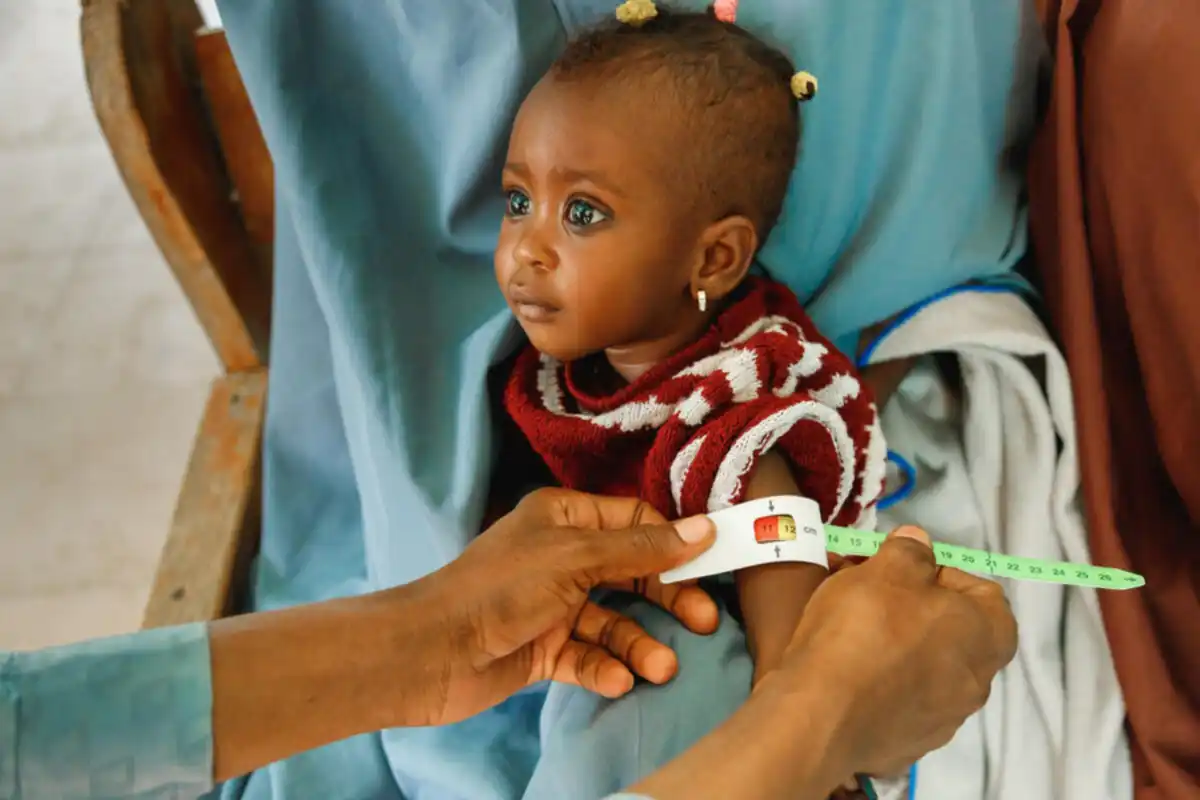
In the northeastern town of Dikwa, the reality of this crisis is visible outside a health centre where women and children sit on wooden benches, waiting for treatment. A health worker wraps a MUAC nutrition band around the arm of one-year-old Zara, and the indicator moves straight into the red zone. The little girl is severely malnourished. Her mother, Maryam, 20, explains the struggle her family faces each day. “Even when we get food, it is always the same thing,” she says, describing their diet of maize and sorghum. “That is why there is no improvement to her health.”
Zara receives a nutrient-rich food supplement at the WFP-supported clinic, designed to give her the vitamins and energy she needs to survive. But this support could soon end, even as hunger continues to escalate. According to the latest Cadre Harmonise assessment, nearly 35 million people across Nigeria may face severe food insecurity during next year’s June to August lean season. This is the highest figure ever recorded for Nigeria and the highest in Africa.
A rise in violence, especially in north-central parts of the country, is a major driver of this surge. But reduced funding also means humanitarian organisations may not be able to provide the essential aid people depend on. In Borno State alone, where conflict and kidnappings remain widespread, 15,000 people could face catastrophic food insecurity next year, representing the most severe level on the global food insecurity scale.
“Communities are under severe pressure from repeated attacks and economic stress,” says David Stevenson, WFP Country Director in Nigeria. He warns that if support declines, the consequences could spread beyond hunger. “If we can’t keep families fed and food insecurity at bay, growing desperation could fuel increased instability with insurgent groups exploiting hunger to expand their influence.”
Families already feel that desperation. Maryam, her husband and their two children live in a displacement camp, sharing a small shelter made of straw, sticks and tarp. She sews clothes to help feed her family, and they try to farm on borrowed land. But it is dangerous. If insurgents attack, they lose everything. “We live in fear,” she says.
In July, WFP was forced to scale down nutrition support due to limited funding, shutting down dozens of clinics in the northeast and putting the health of 300,000 children like Zara at risk. “Hunger is now reaching levels we have not seen in years,” says Emmanuel Bigenimana, WFP area office head. He describes a dangerous cycle where rising hunger increases vulnerability, and armed groups exploit that vulnerability. “Armed groups can use that desperation to tighten their grip, putting the wider region at even greater risk.”
In another clinic near Maiduguri, WFP support is helping two-year-old Modu Modu recover from malnutrition. His mother, Bintu, says they were displaced after bandits attacked their village of Isanari. “I was very scared that my child might die, but now I am relieved he is getting care,” she says. She remembers when her family used to grow corn, sorghum and millet before violence forced them to flee. “We had nothing. We had to start all over again,” she says. With limited means, “we just eat small amounts.”
Others share similar stories of trauma. In Dikwa, 30-year-old Hadiza recalls being kidnapped and held in a forest camp for eight years before she was freed. Now living in a displacement camp with her family, she survives by selling fried yams, potatoes and soybean cakes, along with the food assistance she receives from WFP. “Honestly, we would like to see peace to return to our lives, with everyone returning to their farms,” she says. “Just like before.”
Fatima, 20, shares a similar hope. Her family once farmed enough food to avoid hunger, but they were also uprooted by unrest and now live in the Dikwa camp. They rely entirely on WFP electronic cash transfers, worth about US$31 per person each month. She uses the money to buy maize, rice, vegetable oil and spaghetti. At the start of each month, her family eats three times a day, but by the end, meals become fewer as supplies run out. “We’re living on food assistance alone,” Fatima says. “It is everything to us.”
WFP says its life-saving activities in Nigeria rely on support from several partners, including the African Development Bank Group, Canada, the European Commission, France, Germany, private donors, the Republic of Korea, Saudi Arabia, Sweden, UNCERF, the United Kingdom and the United States. But with hunger rising and needs expanding faster than resources, the agency says it urgently requires US$116 million to continue reaching vulnerable people up to May 2026.

