
Agriculture across Africa is entering a new phase driven by technology, efficiency, and sustainability. As population growth increases food demand and climate pressures continue to affect crop yields, innovation is becoming central to how farms operate, produce, and survive.
 Follow us on Google News
From drone-assisted crop monitoring to renewable-powered irrigation systems, emerging agricultural technologies are redefining traditional farming models. These innovations are not only improving productivity but are also helping farmers reduce waste, cut operating costs, and adapt to climate-related risks.
For Nigeria and other African countries where agriculture remains a major contributor to employment and GDP, these developments could determine the future competitiveness of the sector.
Agricultural drones improving precision farming
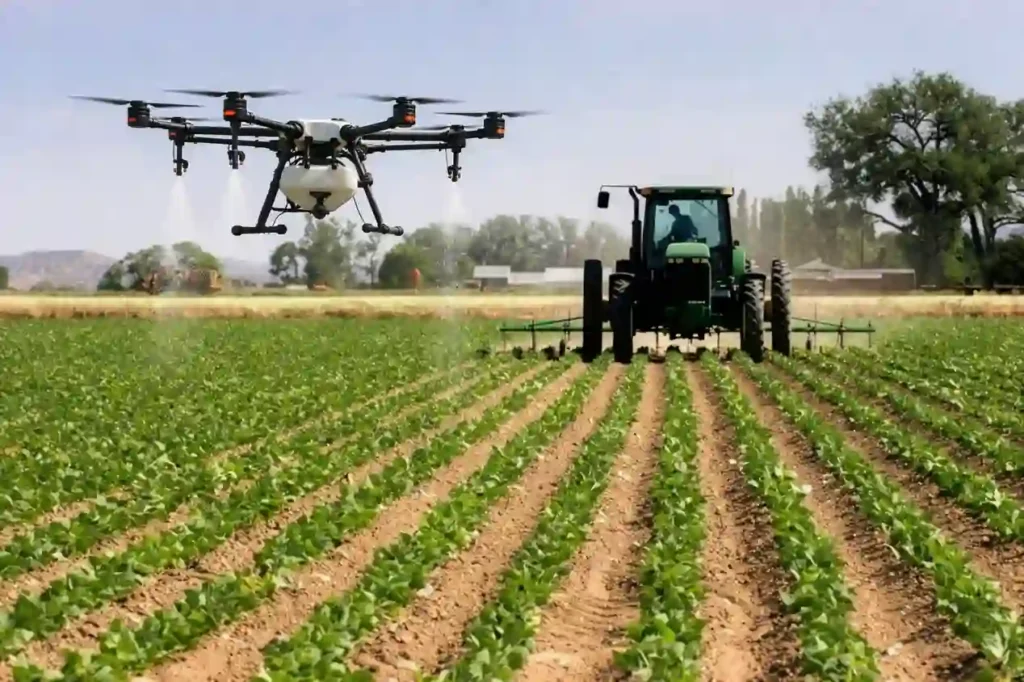
One of the most visible changes in modern farming is the growing use of agricultural drones.
These unmanned aerial systems are now being deployed to monitor crop health, spray fertilisers and pesticides, map farmland, and collect real-time field data. Unlike manual inspection methods, drones can scan large hectares of land within minutes, helping farmers identify disease outbreaks, pest infestations, or irrigation gaps early.
This technology reduces labour intensity and limits chemical waste, since applications can be targeted only where needed. For commercial-scale farms in Nigeria, drone adoption is becoming increasingly relevant as producers seek ways to improve yields while lowering operational costs.
In regions where labour shortages affect planting and harvesting cycles, drones also offer a faster and more accurate alternative.
Renewable energy integration reducing farming costs
Energy remains one of the biggest expenses in agricultural production, especially in irrigation, cold storage, and machinery operations.
Renewable energy systems—particularly solar-powered irrigation pumps and solar-driven farm equipment—are helping farmers reduce dependence on diesel and unstable grid electricity. These systems are becoming more practical in rural African communities where electricity access remains limited.
Solar-powered irrigation allows year-round farming, especially in dry seasons, enabling multiple planting cycles and improved food supply consistency. For smallholder farmers, this can significantly reduce fuel expenses while lowering carbon emissions.
As energy costs continue to rise, renewable integration is likely to become a standard feature in future farm infrastructure.
Climate-smart agriculture technology tackling weather risks
Climate change has made farming increasingly unpredictable. Floods, droughts, irregular rainfall, and heat stress are affecting planting schedules and harvest volumes across Africa.
Climate-smart agriculture technologies are designed to help farmers respond to these risks. These include smart sensors, weather-linked forecasting tools, automated irrigation controls, and disease detection systems that alert farmers before crop damage escalates.
With these tools, farmers can make faster and more informed decisions on watering, fertiliser timing, and harvest planning. In Nigeria, where climate variability has disrupted food production in several states, early-warning systems could become critical in reducing annual crop losses.
This approach combines data and automation to make farms more resilient under changing environmental conditions.
Vertical and hydroponic farming expanding production possibilities
Land scarcity and urban expansion are pushing agriculture beyond traditional open-field systems.
Vertical farming and hydroponics are emerging as alternatives that allow crops to grow indoors or in stacked layers without soil. These systems use nutrient-rich water solutions and controlled environments to maximise output in smaller spaces.
For urban centres where farmland is shrinking, hydroponic farming offers an efficient way to produce vegetables closer to consumers. It also reduces water use significantly compared to conventional farming and enables year-round production regardless of weather conditions.
Though still developing in many African markets, this innovation has strong long-term potential, particularly for cities facing rising food demand and limited arable land.
Why these innovations matter for Nigeria’s agricultural future
Nigeria’s agricultural sector faces a dual challenge: feeding a growing population while increasing productivity under tighter environmental and economic constraints.
The adoption of these four innovations—drones, renewable energy systems, climate-smart tools, and hydroponic farming—offers a pathway to more efficient, profitable, and sustainable agriculture.
However, wider adoption will depend on financing access, infrastructure support, training, and policy incentives that make these technologies affordable to both commercial farmers and smallholders.
As agricultural transformation accelerates globally, countries that invest early in smart farming systems are likely to gain stronger food security and export competitiveness in the years ahead.
Read also: LSETF Broiler Project Loan Programme for Farmers: Apply for Up to N5 Million Support