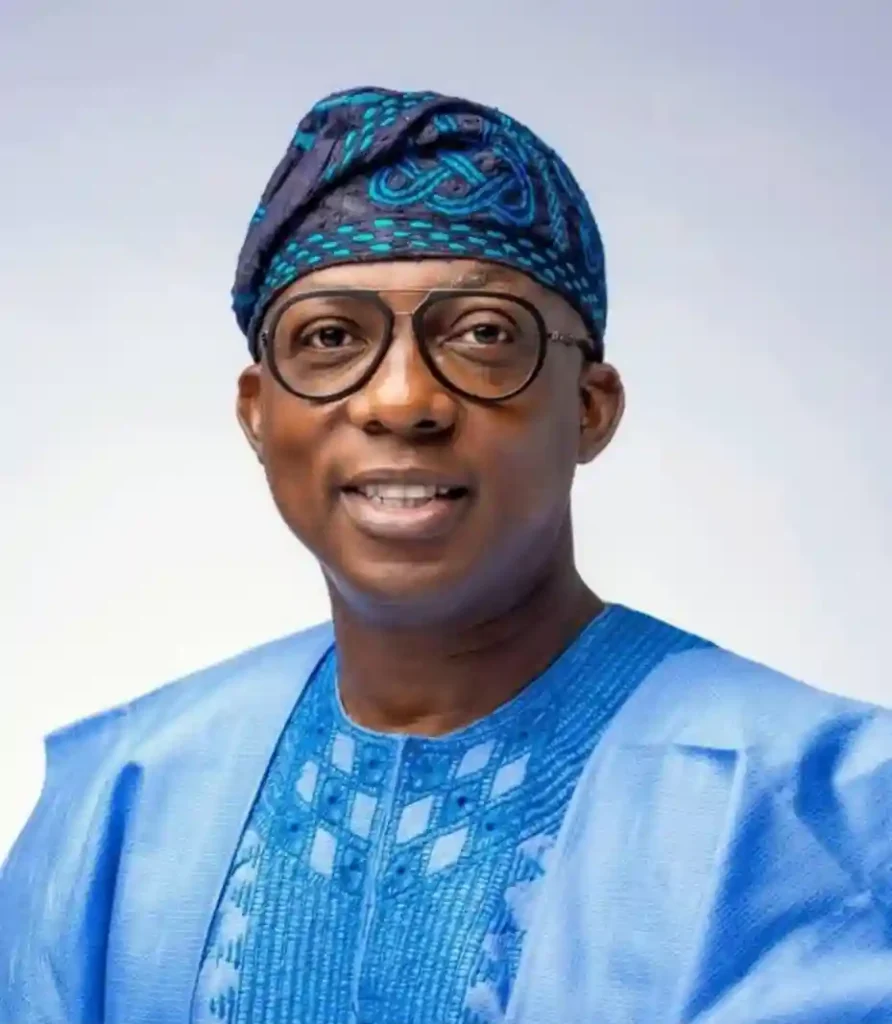
The Lagos State Government has restated its commitment to building a sustainable megacity through proper waste management as part of efforts to shape the future of the state. The Commissioner for the Environment and Water Resources, Mr. Tokunbo Wahab, made this known on Thursday while speaking during an X Space programme, explaining that refuse management has become a global conversation and Lagos State is determined to lead by example.
 Follow us on Google News
Wahab recalled that about two decades ago, the state government introduced a Public Private Partnership model to improve waste disposal across the 377 wards in the state. Under the structure, the Lagos State Waste Management Authority (LAWMA) was made the regulatory body overseeing the Private Sector Participation (PSP) operators responsible for waste collection and management. He noted that Lagos has experienced massive population growth since then, giving it the status of a megacity.
According to him, the state currently generates between 13,000 and 14,000 tons of waste daily, operating what he described as a linear waste management system, which means “pick and dump.” He added that the present administration is changing this system by encouraging residents to see waste as a source of income. “We want people to understand that they can exchange cash for their waste. Waste can be converted to energy, and by doing this, the state is moving toward a more sustainable, environmentally friendly waste management system,” Wahab said.
He pointed out that while the transition process is ongoing, PSP operators still face challenges. “Some of the challenges are not just economic but global, as many operators are struggling to meet their obligations in ensuring proper waste disposal across the state,” he said. Wahab also expressed concern about some residents who refuse to pay for waste disposal services and instead dispose of refuse indiscriminately. “We have residents who want to free-ride the system. They do not patronise PSP operators but dump their waste anywhere,” he said.
To address these issues, Wahab said the state government had held several meetings with the 57 newly elected local government chairmen to strengthen collaboration on environmental sustainability at the grassroots level. He said, “Some of the chairmen are already hitting the ground running since their swearing-in. The goal is to ensure a cleaner and healthier Lagos.”
He disclosed that the government had deployed 100 trucks to support areas where PSP operators face difficulties and would also attach one Environmental Health Officer to each PSP waste manager to improve monitoring and accountability. Wahab added that a major breakthrough had been achieved through a concession agreement with Zoom Lion, a company that will convert 4,000 tons of daily waste into useful products. “Zoom Lion will convert 55 per cent of the waste to compost fertiliser and recyclables, leaving less than five per cent to end up in landfills,” he said.
He further stated that the state government had also signed new partnerships with international companies to boost waste-to-energy projects. “We have an agreement with Harvest Waste, a Dutch company, for waste conversion to energy, and another with Closing the Loop, also from the Netherlands, for electronic waste management,” Wahab said.
He mentioned that companies like LAFARGE are already going green by using some of the state’s waste to power their factories. According to him, these initiatives will significantly reduce the quantity of waste that ends up in landfills across the state. Wahab revealed that the government plans to decommission two major landfills—Olososun in Ikeja and Soluos 3 in Igando—within the next 18 months, adding that two new sites would be opened in Ikorodu and Epe.
He also noted that Lagos, being a coastal state, faces natural challenges such as flash floods. “Flash floods cannot be completely avoided because Lagos is surrounded by 187 kilometres of the Atlantic Ocean to the south, rivers, creeks, and lagoons in between. Nature will always be nature,” Wahab explained.
Speaking on climate change, he said it remains a major issue the government continues to tackle. “Climate change is something we must keep mitigating. Everyone should support the government and avoid activities that worsen the situation,” he said. He pointed out that years ago, some areas never experienced flooding because the natural flow of water was intact. However, illegal sand mining disrupted the balance. “Sand miners started excavating sand without considering its environmental impact,” Wahab said.
He assured that the state would continue investing in resilient infrastructure to address flooding. “We are committed to providing durable drainage systems, roads, and security infrastructure that can withstand environmental challenges,” he said.
Wahab stressed that continuous improvement remains the government’s focus. “The biggest struggle in life is room for improvement. We will keep training and retraining our enforcement team to follow global best practices,” he said.
The commissioner also reiterated that street trading remains banned in Lagos. He urged traders to comply with the law by operating only in designated markets. “Traders should stop hawking on roads, road medians, setbacks, and open spaces. We have provided markets where they can sell legally,” he said.
He emphasised the importance of strict enforcement to maintain order in the state. “To fix a state like Lagos, you’ve got to be firm and very decisive. I must let you know that enforcement, amongst other things, needs to be carried out always to save this place for our future generation,” Wahab stated.