
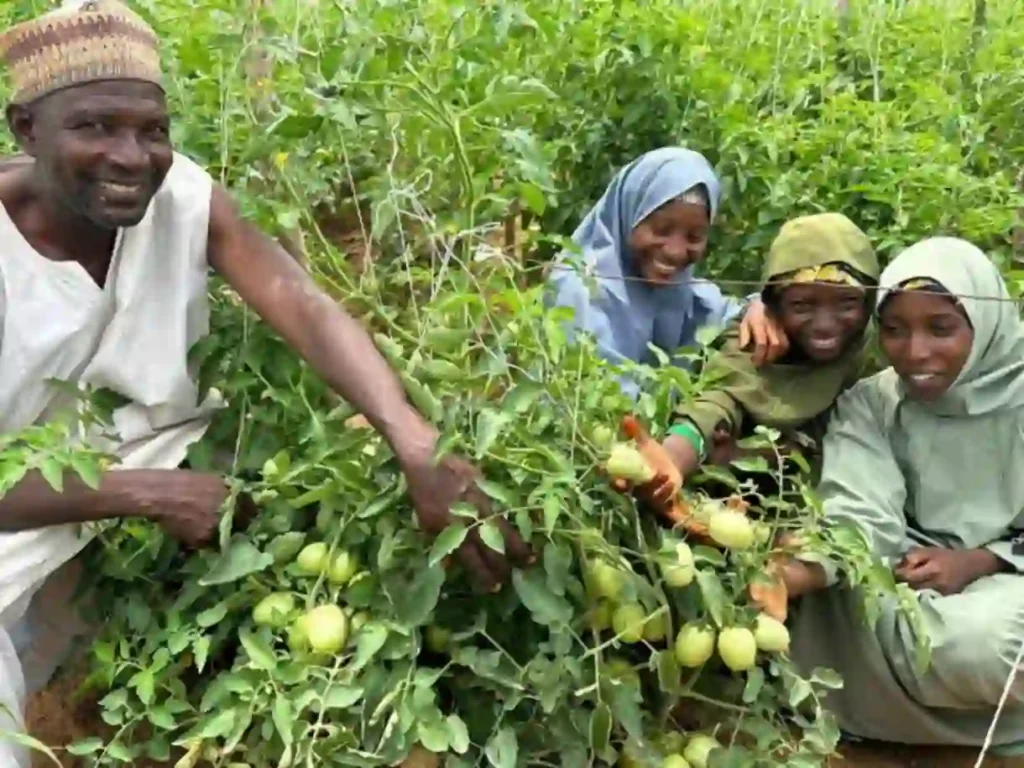
Federal Government, through the Kano State Special Agro-Processing Zone Programme in partnership with IFAD, has supported 9,870 rice farmers in Kano with climate-resilient inputs and modern production technologies. This was contained in a statement issued by the SAPZ Knowledge Management and Communication Officer, Rabi Mustapha. The State Project Coordinator, Mr Aminu Iliyasu, announced the development during the Farmers Field Day at Chiromawa Garin Babba Cluster in Garun Malam Local Government Area.
 Follow us on Google News
He said the activity was organised to expose farmers to science-based, practical solutions that can improve yields, enhance food security, and boost rural livelihoods. Iliyasu described the field day as a celebration of knowledge, innovation and the resilience of smallholder farmers. He explained that the SAPZ initiative in Kano was designed to expand access to improved technologies, strengthen extension services, reduce post-harvest losses, and create market opportunities for rural farmers.
“These innovations are not theoretical. They are practical solutions that farmers can adopt immediately to raise productivity and increase income,” he said, while appreciating the support of local authorities. Mustapha said the inputs distributed to 9,870 farmers included FARO 44 improved seeds, Urea and NPK fertilisers, and insecticides. The distribution targeted beneficiaries in Garun Malam, Gezawa, Bichi and Bagwai LGAs for the 2025 wet season.
She added that experts trained farmers on soil selection, seed dressing, nursery establishment, land preparation, and timely transplanting at proper spacing. “They also covered fertiliser management, weed control, Integrated Pest Management and water regulation to boost rice yields. The training emphasised harvesting at optimal maturity, drying paddy to safe moisture levels, and fumigation using phostoxin to prevent storage losses,” she stated.
A beneficiary, Salamatu Ali, said the intervention had better positioned Kano farmers to boost yields, withstand climate pressures and increase household incomes. Another farmer, Huwaila Ibrahim, said the programme had transformed her approach to rice production. “Before, we planted without checking whether the land was suitable. Now, we first assess the soil to ensure it matches the seed variety. This season, we cultivated FARO 44,” she said. Ibrahim added that her output increased from 20 to 25 bags per acre to about 40 bags after adopting the improved technologies.