
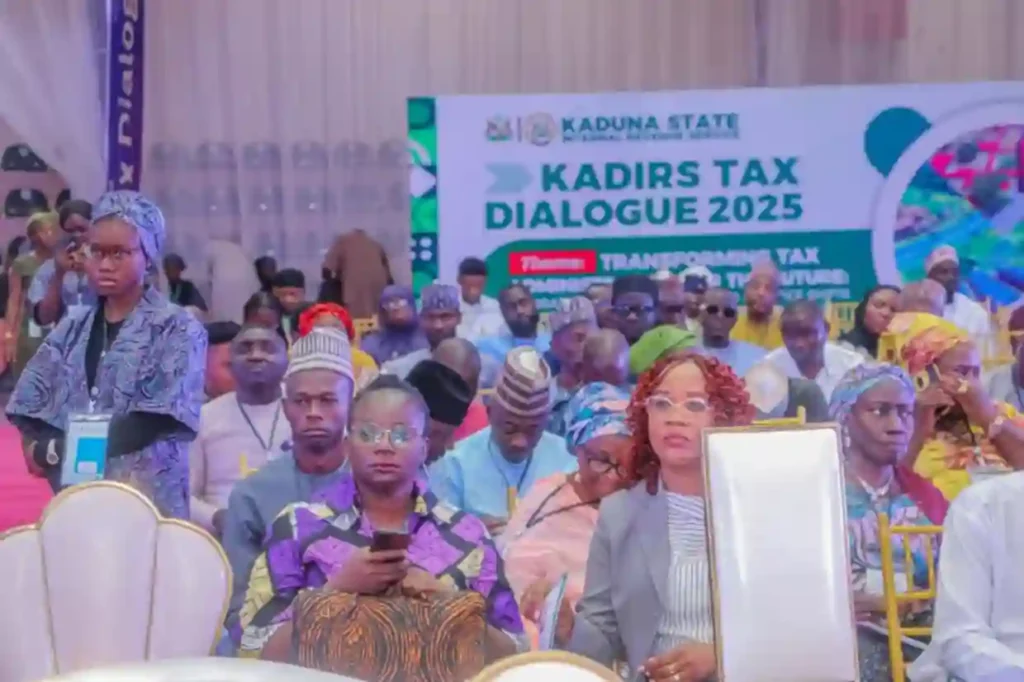
The Kaduna State Internal Revenue Service has announced that the state is projecting an Internally Generated Revenue of about ₦85 billion by the end of 2025 as the government intensifies efforts to build a fair, transparent, and technology-driven tax administration system. The Executive Chairman of KADIRS, Mr. Jerry Adams, disclosed this during his address at the 2025 KADIRS Tax Dialogue held on Monday in Kaduna. The event was themed “Transforming Tax Administration for the Future: Navigating the Procedural and Practice Shift Signaled by the Nigerian Tax Reform Act and Enhancing Compliance Into 2026 and Beyond.”
 Follow us on Google News
Adams said the dialogue was aimed at deepening stakeholders’ understanding of the procedural changes introduced by the Nigerian Tax Reform Act 2025 and identifying strategies for effective state-level implementation. He explained that KADIRS had continued improving revenue performance, moving from ₦58 billion before 2023 to ₦62 billion in 2023 and ₦71 billion in 2024. According to him, the state is trending around ₦85 billion, driven by an average monthly collection of ₦7 billion, reflecting steady growth influenced by reforms, improved efficiency, and strengthened collaboration with Ministries, Departments, and Agencies.
The KADIRS boss attributed the gains to the commitment of Governor Uba Sani to infrastructure development, security, and inclusive governance, saying these efforts have boosted public confidence and encouraged voluntary compliance. He noted that the Governor’s support enabled manpower expansion, better staff welfare, and innovations such as the PAYKADUNA portal, which he said has strengthened transparency and efficiency in tax administration.
Adams further revealed that the state government has approved the establishment of a committee to review and update the Kaduna State Tax Codification and Consolidation Law to align fully with the National Tax Act before January 2026.
He said insights from the dialogue, especially on legal implications, corporate communication, and planning, would guide the amendment process and improve revenue mobilisation. He commended the support of Kaduna State MDAs, technical partners like Primeguage Solutions, and national bodies such as the Joint Tax Board. Adams encouraged participants to engage openly, question assumptions, and offer practical contributions to shape the state’s evolving tax system.
Representing Governor Uba Sani, Deputy Governor Dr. Hadiza Balarabe said building a resilient revenue system requires collective responsibility and continuous collaboration. She observed that global economic shifts are reshaping tax systems to reflect digital activity, informal sector growth, and changing labour patterns, while Nigeria’s reforms align with Kaduna’s goal of simplifying processes, reducing duplication, and placing data at the centre of decision-making.
Governor Sani stressed that taxation must not punish poverty but should draw from genuine income to ensure fairness while generating revenue to support schools, healthcare, rural roads, water systems, and security infrastructure. He added that trust is central to compliance, noting that tax administration must treat citizens with respect and provide clarity rather than intimidation. The Governor reaffirmed his commitment to strengthening inter-agency collaboration, building staff capacity, and prioritizing taxpayer engagement.
He urged business leaders, financial experts, civil society, and community leaders to contribute constructively, saying the strength of the state’s tax system depends on shared conviction and fairness. Also speaking, Muhammad Dattijo, Deputy Governor of the Economic Policy Directorate at the Central Bank of Nigeria, described the Nigerian Tax Reform Act as a major step toward fiscal governance and economic resilience. He said the reforms would boost non-oil revenue, expand the formal economy, and reduce reliance on deficit financing.
Dattijo called on states to leverage technology and data-driven platforms for efficiency and transparency in revenue collection, noting that collaboration with the private sector and financial institutions would support sustainable compliance and growth. In his keynote presentation, Mr. Taiwo Oyedele, Chairman of the Presidential Committee on Fiscal Policy and Tax Reforms, stated that the reforms aim to build a fair and growth-driven tax system. He said the committee is simplifying laws, harmonizing revenue collection, and eliminating multiple taxation.
Oyedele explained that increased transparency, technology-based administration, and wider tax education would improve voluntary compliance and strengthen government revenue. Lead presenter Dr. Bagudo Mustapha warned that Nigeria’s growing reliance on borrowing is harmful and urged stricter revenue administration. He called for modern data systems and stronger collaboration across government to ensure that tax policies promote fairness and investment.
The Nigerian Tax Ombudsman, represented by Alhaji Usman Ndayako, urged taxpayers to use the Ombudsman’s Office for fair resolution of issues. Speaking virtually, the Executive Secretary of the Joint Tax Board, Mr. Olusegun Adesokan, praised Kaduna’s proactive engagement ahead of the 2026 reforms, saying such efforts strengthen understanding and compliance.