Nigeria is taking major steps to unlock more than $70 billion in economic value from its livestock sector, following fresh government commitments and stronger collaboration with development partners. The Federal Government said it is adopting new financing models designed to boost investment, raise productivity, and strengthen the sector against economic, climate, and operational pressures.
 Follow us on Google News
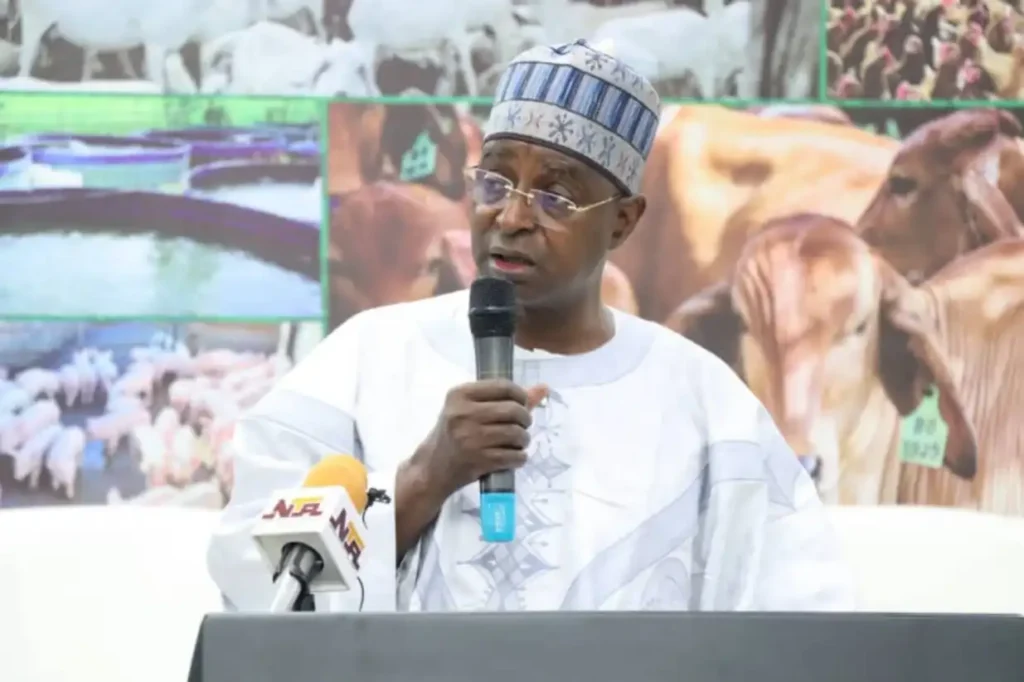
Minister of Livestock Development, Alhaji Idi Muktar Maiha, explained this during an engagement with private sector players on investment opportunities in Climate-Resilient Livestock Systems. He described the meeting as timely and strategic, adding that its outcomes would help shape and advance the future of the livestock sector.
Dr. Tunde Amole, Country Director of the International Livestock Research Institute Nigeria, also spoke at the forum. He said the livestock sector has the potential to transform the economy if it receives the right level of financing and management. He noted that years of underinvestment have led to economic losses and contributed to security challenges. According to him, the government’s National Livestock Growth Strategy and a 15-year investment master plan now offer a clear pathway for sustainable progress.
“Our goal is to develop the livestock sector in a climate-smart and sustainable way,” Dr. Amole said. “We aim to expand production, improve productivity, and attract investments from donors, private companies, and technology partners, while safeguarding the environment.”
The Managing Director of the Bank of Agriculture, Ayo Sotinrin, said the bank is increasing its commitment to livestock financing. He explained that livestock currently accounts for about 30 percent of its loan portfolio, mostly supporting poultry and cattle fattening. “Local dairy cows produce just 1–2 litres of milk per day, while comparable breeds in Southern Africa yield 16–40 litres,” he said. “With proper investment in high-performing African breeds and improved management, Nigeria can achieve similar productivity levels.”
Mr. Sotinrin added that BOA is scaling financing through partnerships with Christian Aid and the Mastercard Foundation, supporting poultry production for around 500,000 farmers. He said the bank plans further investments in ranching, feedlots, and other value chain areas, with 30 percent of its recapitalization funds set aside for livestock development in partnership with the Ministry of Livestock and organizations such as PropCom+, FCDO, GIZ, and the World Bank.
Private sector interest is also increasing. Frederick Benefenpong, CEO of Farming in Africa, said his Ghanaian company is preparing to expand into Nigeria after introducing improved goat, sheep, and cattle genetics in Ghana. He commended the focus on innovation and climate resilience, noting that environmental sustainability is essential for long-term profitability.
Experts believe that strong public-private partnerships, targeted financing, and climate-smart approaches could reduce Nigeria’s heavy reliance on meat imports, especially from South Africa, while building a competitive and productive livestock economy capable of generating large revenue and new jobs.