
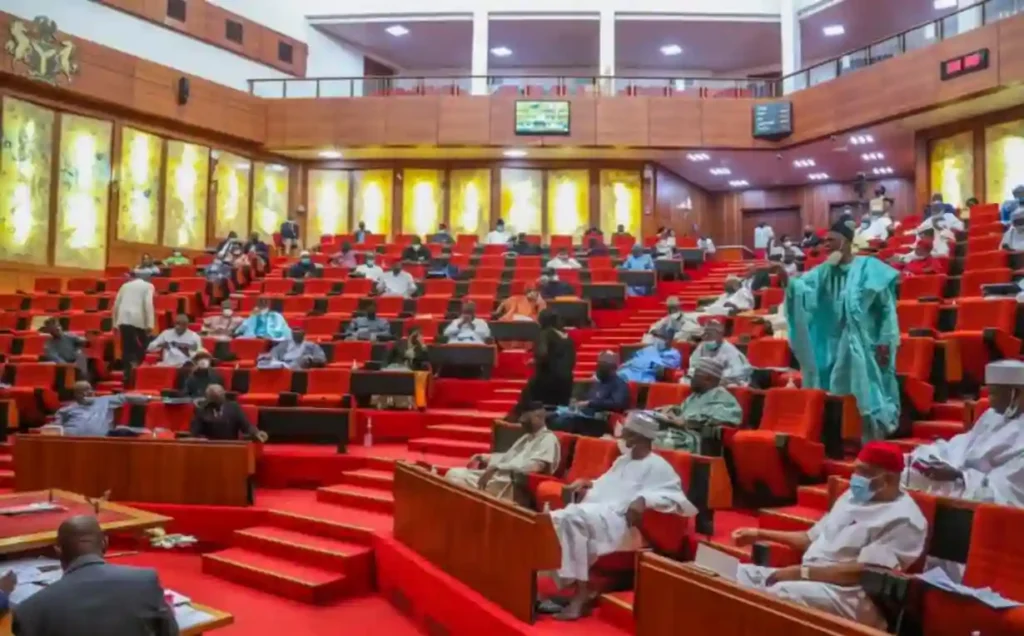
The Senate has called on the Federal Government to introduce broad-based agricultural input subsidies, particularly for fertilisers and other farm inputs, as part of urgent steps to protect Nigerian farmers from the sharp drop in prices of agricultural produce. Lawmakers warned that the situation, if not addressed, could threaten millions of livelihoods and worsen the country’s fragile food security.
 Follow us on Google News
The resolution followed the adoption of a motion sponsored by Senator Mohammed Danjuma Goje representing Gombe Central, which drew attention to the growing imbalance between falling farm-gate prices and the persistently high cost of agricultural inputs.
In its resolutions, the Senate commended the Federal Government for the recent reduction in food prices across the country through the granting of waivers and special permissions for large-scale importation of food products. Lawmakers noted that this policy had provided relief to Nigerians facing a cost-of-living crisis.
However, the Senate expressed concern that the same measure had created unintended consequences for local farmers. “The lowering of the cost of food products has brought succour to Nigerians but has at the same time created special problems for the Nigerian farmers,” the resolution stated.
Senator Goje explained that while the prices of farm produce had been declining, the cost of essential inputs such as fertilisers, pesticides, and insecticides had remained extremely high. “This situation places enormous pressure on farmers’ earnings and sustainability,” he said. He added that the trend “gravely threatens the livelihood of millions of smallholder farmers who constitute the backbone of Nigeria’s food production system and depend almost entirely on farming as their primary and sole source of income.”
Seconding the motion, Senator Aliyu Wamakko representing Sokoto North stressed the need for government policies that ensure balance between food affordability for consumers and sustainable income for farmers. He emphasised that addressing high input costs was essential to boost production and ensure food security.
Senator Dandutse Mohammed from Katsina South described the motion as timely, pointing out that more than 60 per cent of Nigerians rely on agriculture for their livelihoods. He lamented that fertiliser prices had risen to over ₦60,000 per bag while produce prices continued to fall, warning that unchecked food importation and lack of subsidies were damaging the agricultural sector and contributing to insecurity.
Senator Steve Karimi representing Kogi West raised concerns over insecurity in farming communities, noting that it remained a major threat to food production and farmer safety. Senator Idiat Adebule of Lagos West questioned the role of state governments in supporting federal agricultural initiatives, calling for stronger collaboration between different levels of government.
Also contributing, Senator Victor Umeh representing Anambra Central said that while temporary border relaxation during periods of scarcity might be necessary, farmers must receive adequate support in the form of affordable inputs and stable commodity prices. He warned that Nigeria’s increasing dependence on imported food commodities would “weaken national food sovereignty, undermine domestic value chains, distort local markets and discourage the growth of agro-processing industries.”
The Senate further noted that such dependence could expose the national economy to global price volatility and foreign exchange pressures. Lawmakers stressed the need for effective coordination among Ministries, Departments, and Agencies (MDAs), state governments, commodity boards, agricultural cooperatives, and other stakeholders to achieve fair pricing, improve storage, enhance transportation, and strengthen market linkages.
As part of its resolutions, the Senate urged the Federal Government to design and implement a Special Emergency Intervention Package to support farmers affected by the collapse in agricultural produce prices. The aim, lawmakers said, is to cushion their losses and protect household stability.
The Senate also recommended the establishment of a Benchmark Minimum Price Framework for major agricultural commodities, alongside a Guaranteed Off-take Programme that would allow government to purchase produce directly from farmers at benchmark prices to stabilise the market.
In addition, the lawmakers called on the Federal Government to introduce broad-based subsidies for fertilisers and other farm inputs, and to prioritise investment in strategic agricultural infrastructure such as storage facilities, rural roads, processing centres, and irrigation systems to reduce post-harvest losses and enhance profitability for farmers.