
The Federal Government is actively inviting both local and foreign investors to partner with Nigeria in transforming its agricultural sector, placing strong emphasis on climate-smart farming as a pathway to sustainable growth and food security.
 Follow us on Google News
This call was made by the Minister of Agriculture and Food Security, Abubakar Kyari, who stressed that collaboration with private investors, financial institutions, and development partners is critical to unlocking the full potential of Nigeria’s agriculture. According to him, the government is positioning the sector as a viable and profitable investment destination capable of delivering long-term value.
“The Federal Government has called on investors, financial institutions, and development partners to collaborate with Nigeria in its vision of building a resilient food system, promoting climate-smart farming, expanding sustainable agricultural production, and unlocking the enormous potential of Africa’s largest agricultural market,” the statement read.
Nigeria’s agricultural sector remains one of the largest in Africa, employing nearly 70 per cent of the country’s labour force and contributing over 24 per cent to its Gross Domestic Product. With vast arable land and diverse agro-ecological zones, the country is capable of producing a wide range of commodities such as rice, maize, cassava, cocoa, sesame, sorghum, and horticultural crops for both domestic consumption and export markets.
Despite this strong foundation, the government acknowledged that the sector is still underfunded and requires significant private capital to scale operations, improve productivity, and modernise value chains. Kyari pointed out that access to finance remains a major barrier for farmers and agribusinesses across the country.
“While public financing remains essential, unlocking the scale of investment required will depend on stronger participation from private capital and development finance partners. Access to finance is a major constraint for farmers across Nigeria, significantly limiting productivity,” he said.
He further revealed that although credit schemes exist, the total financing available to the agricultural sector is still far below what is required. “Despite the prevalence of credit schemes, total credit accessible by farmers remains limited, reaching ₦3.4 trillion as of April 2025. While this value may seem significant, it represents less than 4 per cent of agriculture’s contribution to the country’s GDP,” Kyari added.
The government’s renewed push for investment is also driven by the urgent need to address the growing impact of climate change on food production. Rising cases of drought, erratic rainfall, flooding, and desertification continue to threaten agricultural productivity, making climate-smart farming practices a priority.
To create an enabling environment for investors, the Federal Government has rolled out several initiatives aimed at reducing risks and improving returns within the sector. These include the declaration of a national state of emergency on food security by President Bola Ahmed Tinubu in July 2023 and the establishment of the Presidential Food Systems Coordinating Unit to ensure policy alignment and effective implementation.
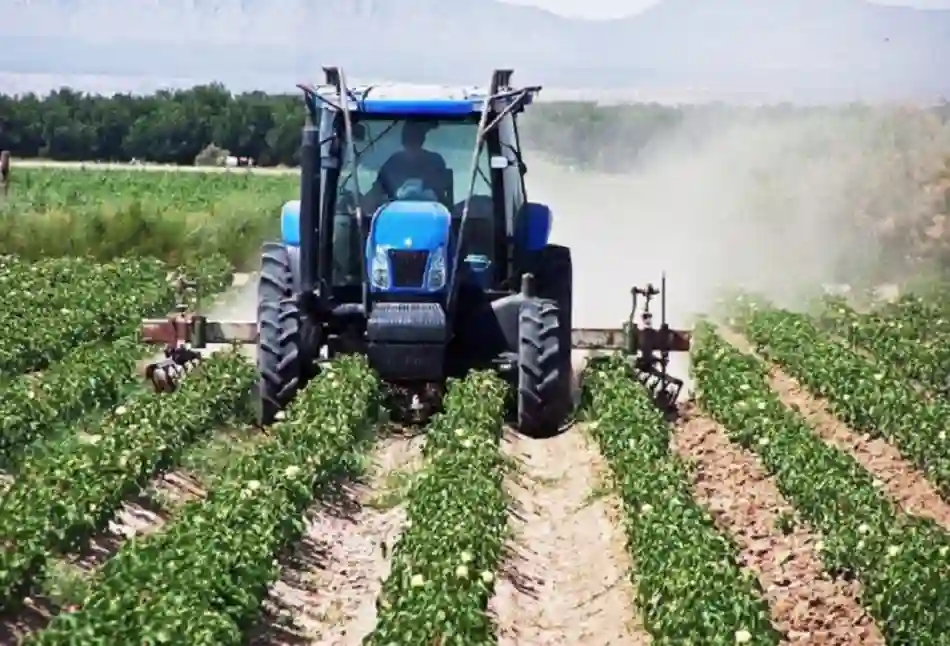
In addition, targeted programmes such as the distribution of solar-powered irrigation pumps, the development of climate-resilient seed systems, and the National Agricultural Mechanization Programme have been introduced to support farmers and boost productivity. The mechanisation programme alone has facilitated the procurement of 2,000 tractors and over 9,000 farm implements.
Other strategic interventions include the Nigeria Postharvest Systems Transformation Programme, which focuses on reducing losses and improving storage, as well as the Special Agro-Industrial Processing Zones initiative designed to enhance value addition and market access.
Kyari also highlighted ongoing reforms in key agricultural institutions to attract more private investment. Agencies such as the Bank of Agriculture, the Nigeria Agricultural Development Fund, and the National Agricultural Insurance Corporation are being strengthened to provide better financial support and reduce investment risks.
The minister identified several high-impact areas where investors can tap into opportunities, including irrigation technologies, mechanisation, seed development, cold storage, agro-processing, and agricultural logistics. These segments are seen as critical to building a more efficient and resilient agricultural value chain.
He reassured investors of the government’s commitment to maintaining favourable policies that support long-term growth. “Let me reaffirm the Nigerian government’s commitment to providing an enabling policy environment. We have prioritised climate action within our Nationally Determined Contributions and embedded climate resilience into the Agricultural Transformation Agenda,” Kyari said.
He added that through policies such as the National Agricultural Technology and Innovation Policy, the government is encouraging private sector participation, supporting climate-smart agribusinesses, and improving land tenure systems.
Kyari further extended the invitation to international partners, particularly investors from the United Kingdom, urging them to explore joint investment platforms and innovative financing models that align with global sustainability standards.