
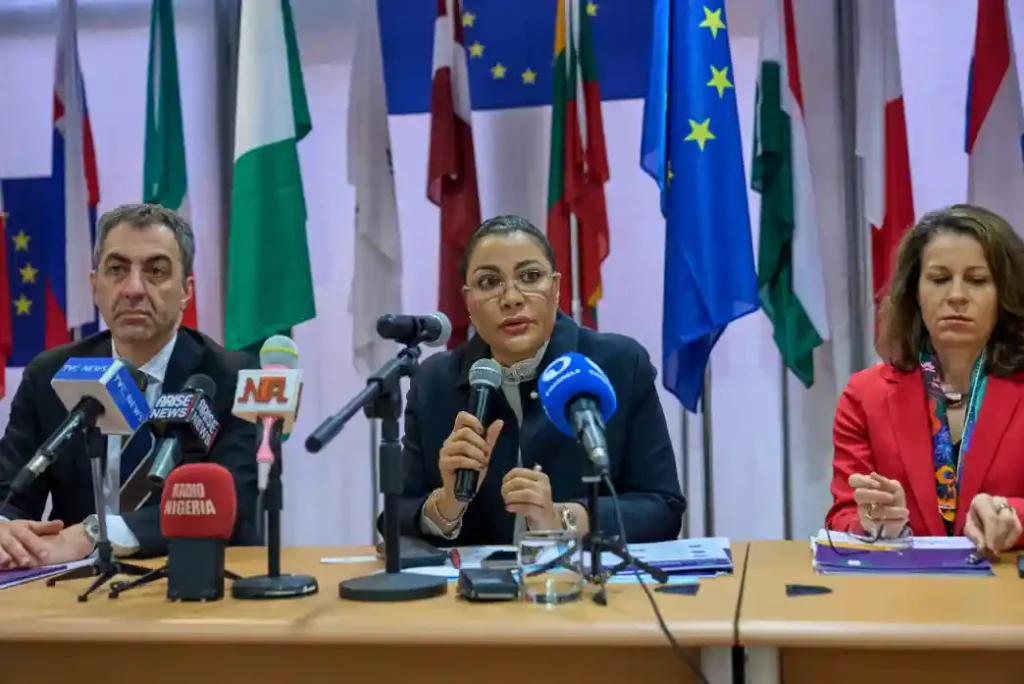
The European Union has announced a €131 million investment targeted at strengthening Nigeria’s digital sector, as part of a broader €290 million package unveiled during the Eighth EU–Nigeria Ministerial Dialogue held in Abuja.
 Follow us on Google News
The digital component of the investment is aimed at expanding internet access, improving digital services, and equipping Nigerians with relevant technology skills needed for a modern economy.
A major highlight of the initiative is the planned rollout of about 90,000 kilometres of fibre optic cable across the country. This is expected to significantly improve broadband penetration, particularly in underserved and rural communities where access to reliable internet has remained limited.
Officials said the project would help deliver faster, more secure, and affordable internet services to millions of Nigerians, thereby enhancing communication, business operations, and access to online services.
Beyond connectivity, the EU investment will also support the development of secure and interoperable digital public infrastructure. This includes systems that enable seamless data exchange and improved access to government services for citizens.
The initiative is expected to strengthen Nigeria’s digital ecosystem by making public services more efficient, transparent, and accessible through technology-driven platforms.
In addition, the programme will support large-scale training and employment initiatives under Nigeria’s ongoing technical talent development efforts. This is aimed at preparing young Nigerians with in-demand digital skills and creating job opportunities within the technology sector.
Stakeholders believe that the focus on skills development will not only address unemployment but also position Nigeria as a competitive player in the global digital economy.
The investment aligns with the Federal Government’s push to accelerate digital transformation and expand the country’s digital economy. It is also expected to attract further private sector participation by improving infrastructure and creating an enabling environment for innovation.
Analysts note that improved digital connectivity could have a multiplier effect across various sectors, including education, healthcare, financial services, and commerce, where digital tools are increasingly becoming essential.
The EU said the initiative reflects its commitment to deepening its partnership with Nigeria by supporting projects that promote inclusive growth and long-term economic development.
With the planned upgrades in connectivity, infrastructure, and skills, the digital investment is expected to play a critical role in bridging Nigeria’s digital divide and unlocking new economic opportunities for millions of citizens.