

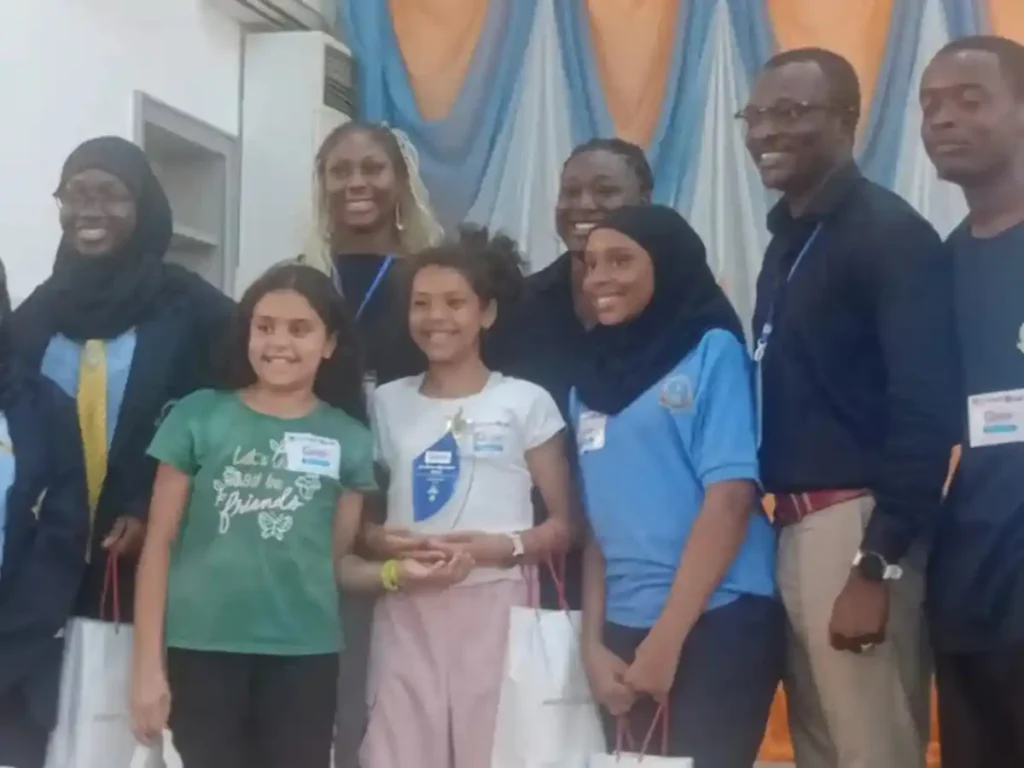


Abuja Hackathon 2026 has placed the spotlight on a new generation of Nigerian innovators building practical technology solutions around robotics, drones and artificial intelligence to address some of the country’s pressing challenges.
The competition, which brought together young innovators from different teams and categories, featured drone demonstrations, robotics challenges and coding-based solutions aimed at solving real-life problems in areas such as security, emergency response and rescue operations.
Participants who spoke with journalists after the event in Abuja said the projects showcased during the competition proved that Nigerian youths have the creativity and technical ability to develop solutions that can compete globally while also addressing local problems.
One of the standout teams at the event was Team Alpha Flyers, which impressed judges with a drone project designed to demonstrate how drone technology can move beyond entertainment and become useful in solving societal issues.
Fatima Kalembe, a member of the team, said the project reflected the power of collaboration among young Nigerians and the growing interest in home-grown innovation.
According to her, the drone challenge was not just about completing tasks during the competition but about showing what Nigerian youths could achieve when given the right environment and support.
“It’s not just us pushing balls, going through gates, but it’s all showing how far Nigerian minds can go and how much we can achieve if we just come together,” she said.
“We have problems in the society and hopefully in the future with our youths, our great minds and our innovative and creative selves, we can find a way to solve them.”
Another member of Team Alpha Flyers, Karma Mohammed, said the team had only two weeks to prepare for the competition but still managed to deliver a strong performance.
Mohammed described the recognition as encouraging and said the team hoped to improve on its innovation in future competitions.
The robotics category also produced several notable projects focused on emergency response and rescue operations.
One of the winning projects came from the Everest team in the Robotic Senior Category Challenge. Team member Emmanuel Offornagoro explained that the robot developed by the group was designed to simulate rescue operations during emergencies.
According to him, the robot could move objects representing people from unsafe locations to safer areas through remote control operations.
“This is a robot controlled by our drivers here to move objects into their specific places. These objects are just imagined as people,” he said.
“We could build a robot that saves citizens when it’s needed and then move where it needs to be controlled. That’s just what the robot was meant to do.”
Another major winner at the competition was Team Spark, which also emerged among the top teams in the Robotic Senior Category Challenge.
The team developed a project known as Rescue Naija, a rescue-focused robotic prototype designed to support emergency and security operations.
Speaking on behalf of the team, Mary-Claret Onyenwe said the robot had been programmed to carry out rescue operations and could eventually be adapted for real-world use across both rural and urban communities.
“Our team came first in the robotics game. So our robot can actually rescue because it has been programmed and all the programmes have been stored in it,” she said.
“It has been programmed to rescue human beings. It’s just a prototype. It could actually be developed to rescue human beings also.”
Onyenwe added that the innovation could help tackle insecurity and strengthen emergency response systems if fully developed and deployed at scale.
“It can be replicated in both rural and urban areas. So I think this project can solve our problems as a nation,” she said.
“It can solve the problem of insecurity and this depends on the design programme installed in the robots.”
Convener of the event, Abba Saidu, said the Abuja Hackathon was created to equip young Nigerians with practical technology skills that can help them build solutions tailored to local realities.
According to him, many technologies used in Nigeria are imported and often fail to fully address the country’s unique challenges, making local innovation increasingly important.
Saidu said robotics, coding and artificial intelligence would continue to shape the future of economies globally, stressing that Nigerian youths must be prepared for that future through hands-on learning and innovation.
“We know that robotics is the future of economies or nations, and that’s why we’re bringing in this aspect of robotics,” he said.
“It also involves that coding aspect of it, where children can really code autonomously to see how they can do so many projects so that they can execute a thing.”
He noted that the rise of AI has already changed the global education and employment landscape, making technical skills and computational thinking more valuable than ever.
According to him, the Hackathon was designed to encourage collaboration, creativity, critical thinking and innovation among young Nigerians.
He added that beyond certificates and academic qualifications, future opportunities would increasingly depend on problem-solving ability, design thinking and practical digital skills.
The 2026 edition of the Abuja Hackathon was held under the theme, “Code, Create, Innovate: Building a Smarter Nigeria.”
Several other participants also received awards for outstanding performance in coding, robotics, drone piloting and creative problem-solving during the competition, further highlighting the growing interest in emerging technologies among Nigerian youths.