


Plans are underway to move ideas showcased at the 2026 Innovation and Investment (AfricaX) Summit beyond presentations into commercially viable products, as organisers intensify efforts to connect innovators with funding sources and market opportunities.
Prof. Peter Onwualu, President of the African University of Science and Technology (AUST), disclosed this on Wednesday night in Abuja during the awards and dinner marking the close of the three-day AfricaX Summit, themed “Reshaping the Future of Africa through Innovation, Investment, and Collaboration”.
According to him, the summit represents only the starting point in a broader, structured pipeline designed to nurture innovation across the continent and ensure that promising solutions do not stall at the idea stage.
“The summit is only step one in a whole chain of activities we have lined up. During the summit, we had pitch sessions and awards are being presented to winners,” Onwualu said.
He explained that the immediate next phase would focus on supporting selected innovators, many of whom already have minimum viable products (MVPs), to refine their solutions and prepare them for market entry.
“The next stage is to link these innovators to venture capital firms, government agencies and development banks we are already engaging with. This will give them access to finance and help them take their products to the market,” he added.
The AfricaX Summit featured pitch sessions where startups and innovators presented solutions across key sectors, including agriculture, healthcare and manufacturing, reflecting a deliberate focus on addressing real-world challenges across Africa.
Onwualu noted that the summit’s theme was carefully chosen to inspire a new generation of problem-solvers capable of driving economic transformation through innovation and collaboration.
“The goal is to encourage the next generation of innovators in Africa to develop solutions across key sectors such as agriculture, healthcare and manufacturing,” he said.
To ensure sustained engagement beyond the event, he revealed plans to launch a dedicated digital platform that will serve as a central hub for innovation discovery, investor engagement and industry collaboration.
“We are creating a web portal where all these innovations will be showcased. The same platform will also host investors, entrepreneurs and industrialists. This will enable matchmaking between innovators and investors, leading to funding opportunities and eventual market entry for these products,” Onwualu said.
He added that the long-term objective is to establish a consistent pipeline of market-ready innovations emerging from Africa annually, supported by structured financing and ecosystem partnerships.
“Our end target is that every year, a number of innovations from across Africa will successfully enter the market,” he stated.
Also speaking at the summit, Mrs Chinwe Okoli, Special Adviser to the Anambra State Governor on Innovation and Business Incubation, emphasised the importance of inclusive innovation in driving Africa’s digital economy.
She said Africa’s demographic advantage must be matched with deliberate investments in skills, infrastructure and access to opportunities, particularly for young people and women who remain underrepresented in the technology ecosystem.
“Africa’s digital economy will only be sustainable if it is inclusive,” Okoli said, noting that more than 60 per cent of the continent’s population is under 25, yet digital skill penetration remains low despite projections that over 230 million jobs will require such skills by 2030.
She outlined key focus areas including large-scale digital skills training, startup incubation and funding, SME digitisation, and the development of innovation infrastructure such as the Solution Innovation District (SID).
Okoli said the state government is implementing a distributed hubs-and-spokes model to expand access to innovation support across communities, backed by partnerships with private organisations and institutions.
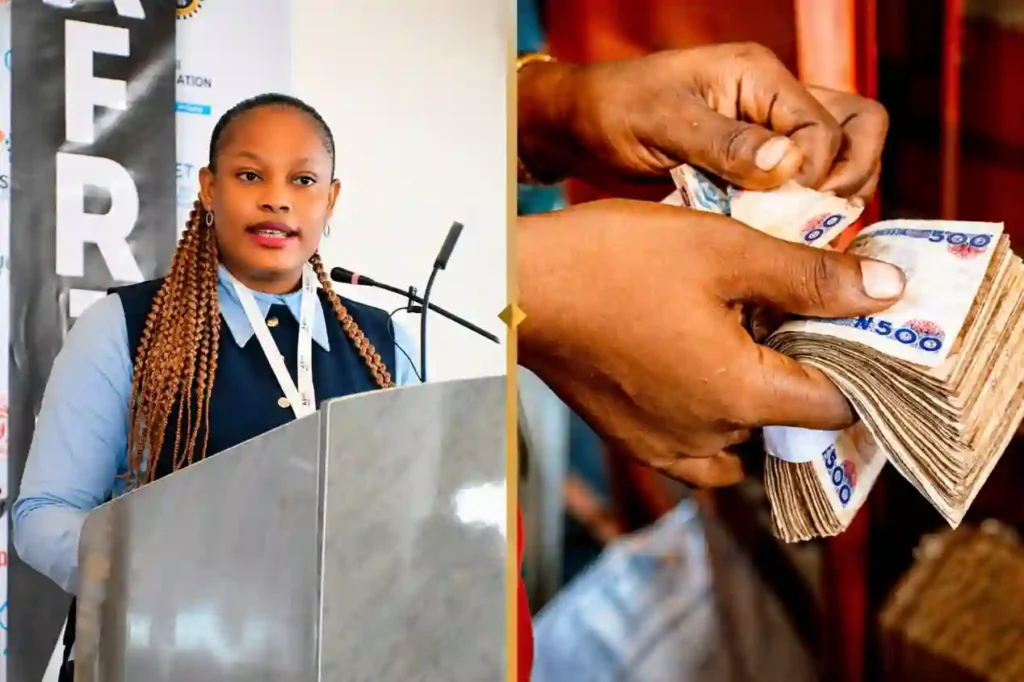
She disclosed that the initiative has already delivered measurable outcomes, including training for over 294,000 individuals, incubation support for 111 startups, activation of more than 21 innovation hubs statewide, and deployment of over ₦364 million in startup funding.
According to her, these efforts are designed to unlock economic opportunities, improve productivity and position Nigeria’s workforce for global competitiveness.
Nigeria Startup News reports that the AfricaX Summit 2026, beyond convening stakeholders, has now set in motion a structured pathway linking innovation to capital and markets, signalling a shift from idea generation to execution and scale within Africa’s growing startup ecosystem.