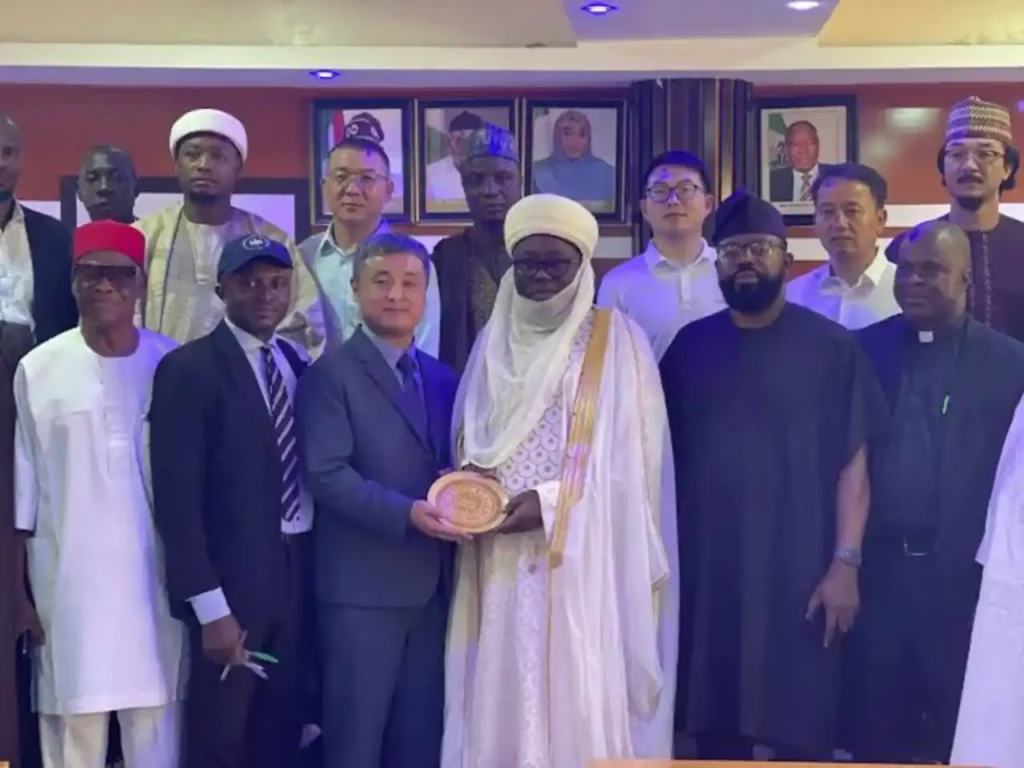
The Global South Research Centre, a think tank at Soochow University in China, has launched a new digital skills initiative in Nigeria to train young people in Artificial Intelligence (AI). The programme, known as the Nigerian Artificial Intelligence Skills Cooperation Alliance (NAISCA), was inaugurated in Abuja in partnership with Nigerian universities and youth organisations.
 Follow us on Google News
Speaking at the event, the Coordinator of the programme, Mr Wenkang Lyu, said that the alliance aims to equip students and youths with AI skills to support sustainable development across Global South countries. Lyu, a researcher at Soochow University’s think tank, explained that the project is designed to introduce modern AI technology and build practical experience that will boost the career competitiveness of young Nigerians.
“Today, we are launching the Nigerian Artificial Intelligence (AI) Skills Cooperation Alliance (NAISCA), together with the Global South Youth Development Alliance (GSYDA),” he said. According to him, the initiative represents more than a symbolic unveiling. “This is not just the launch of a project; it is a strategic action by Global South countries for the future of youth in the digital age.”
He highlighted the close ties between China and Nigeria, noting that both countries face a shared challenge regarding the growing digital skill gap among young people. He said this gap could undermine economic progress if left unaddressed. “Youths are the core engine of economic development. If digital capacity building lags behind, it will directly threaten our economic resilience and innovation capabilities in the digital age,” Lyu said.
Lyu added that enhanced cooperation could remove barriers and open access to opportunity. He emphasised that collaborative knowledge sharing would help build a more equitable and prosperous digital future for young people across developing nations.
In his remarks, Mr Xi Yang, General Manager of the Nigerian branch of China International Services Group Limited, described the programme as a meaningful move in strengthening China-Nigeria relations. Yang said it represents a vital milestone, especially in education and technology, reflecting a shared ambition to grow the digital economy.
He noted that his organisation had always supported friendly cooperation between both nations. “In the future, we will continue our unremitting efforts to build a long-term, mutually-beneficial and digitally-prosperous cooperation framework, opening a new chapter in China-Nigeria digital economy cooperation,” he said.
The Vice-Chancellor of Tansian University, Umunya, Anambra, Prof. Eugene Okoye, also praised the initiative. He described artificial intelligence as the future of development and expressed hope that institutions across Nigeria would fully embrace the opportunities it offers. He further shared optimism that public welfare training in AI and digital technology could support solutions to national security challenges.
The Executive Director of the African Youth Growth Foundation, Dr Arome Salifu, also welcomed the programme, stating that it would create new growth paths for Nigerian youths. He pointed to China’s rapid advancement over the last three decades as evidence of its capacity to share valuable knowledge. Salifu said young people learning AI skills stand to improve work efficiency, decision-making, innovation, cost reduction and performance in sectors like education and healthcare. While assuring continued organisational support, he revealed that youths had already been mobilised to join the programme.
The launch of NAISCA comes months after another major digital skills partnership. In January 2025, China and Nigeria strengthened technology cooperation when Huawei introduced its LEAP digital skills initiative in Abuja. That programme targeted 100,000 Nigerian youths for training in AI, cloud computing, cybersecurity and 5G technologies.
It received the endorsement of the Ministry of Communications and Digital Economy and was presented as a driver for tech talent growth, mirroring rising investment in youth-focused digital capacity building between the two countries.