

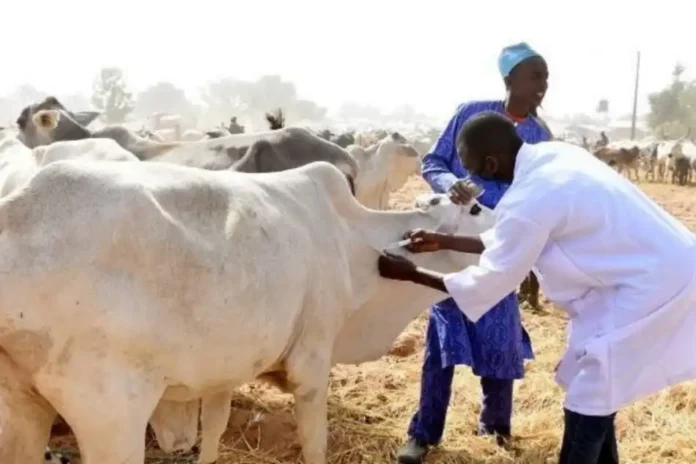
A consortium in the agribusiness industry has unveiled a climate-smart agriculture initiative aimed at equipping no fewer than 4,000 farmers and livestock keepers to boost food security and promote sustainable dairy production in Kano State.
The consortium is led by L&Z Integrated Farms in partnership with the Nigeria Agribusiness Group (NABG), the Commercial Dairy Ranchers Association of Nigeria (CODARAN) and the German development agency, GIZ. The partners said capacity building remains a critical catalyst for sustaining dairy production in Nigeria.
Founder and Managing Director of L&Z Integrated Farms, Muhammadu Damakka Abubakar, disclosed this while speaking on the sidelines of a training programme under the Green Harvest Initiative, an intervention designed to promote sustainable farming practices, improve livestock productivity and reduce herder migration.
Abubakar said the initiative goes beyond classroom instruction and includes the establishment of climate-smart demonstration farms where beneficiaries will receive hands-on training in fodder cultivation and livestock feeding.
“The training is just one component of the project. We also have enhanced climate-smart demonstration farms where beneficiaries will be taught how to cultivate drought-resistant fodder in their backyards and communities for feeding their animals and for commercial purposes,” he said.
He explained that poor access to feed, water and basic social amenities accounts for about 90 per cent of the challenges confronting Nigeria’s local dairy industry, adding that the project seeks to address these gaps through sustainable solutions.
According to him, participants will be trained in climate-friendly fodder production, compost management, use of biodigesters and reduced reliance on inorganic fertilisers to minimise environmental degradation and carbon emissions.
Abubakar said the initiative will also focus on cooperative business management to encourage herders and smallholder farmers to adopt agribusiness models rather than rely solely on traditional livestock rearing practices.
“When animals have good feed, productivity increases, health challenges reduce and farmers can generate more milk and beef. With a business mindset, this translates into economic empowerment and sustainability,” he added.
He disclosed that the project will begin with a Training-of-Trainers (ToT) programme, under which selected participants will subsequently train others at the grassroots level.
“We are starting with 400 trainers, who will each train other farmers. Through this cascading model, we expect to reach about 4,000 farmers in the medium term,” he said.
Abubakar noted that the project, which commenced in 2025, is scheduled to run until December 2026, with impact projections extending into the first half of 2027. The initiative targets dairy and livestock.

