

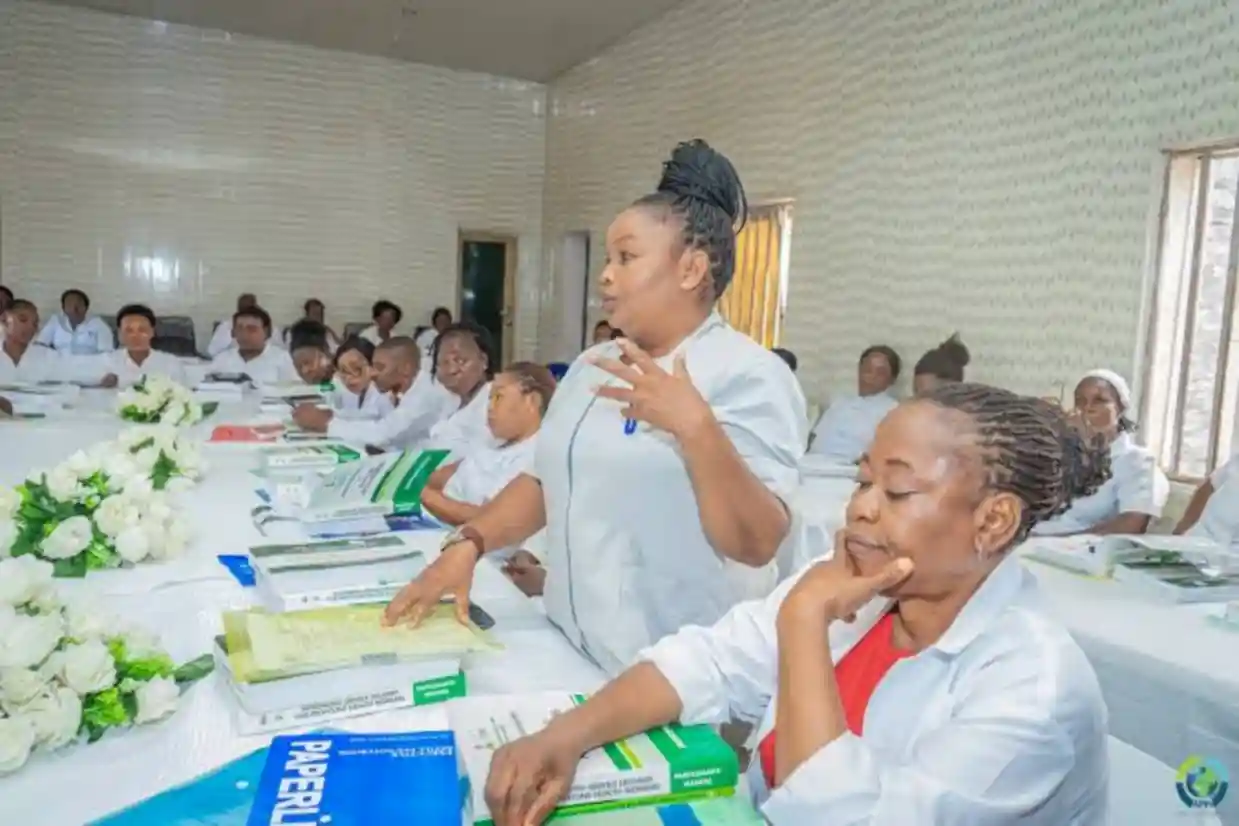
Seven Nigerian global health medical associations and the CONSTANMEDICS Foundation have announced plans to train 5,000 healthcare workers across the country during the 2026 Diaspora Week scheduled for 16 to 26 July. The participating associations include ANPA in the United States, CANPAD in Canada, MANSAG in the United Kingdom, ANDA in Australia, NDF South Africa, NMA Germany, and CONSTANMEDICS Foundation in the United Kingdom. Together, they represent more than 50,000 doctors committed to strengthening Nigeria’s health workforce and improving nationwide healthcare delivery.
A consultant neonatal paediatrician at Hillingdon Hospital in the United Kingdom, Dr Jideofor Menakaya, revealed the plan on Thursday at the opening of the 66th National Council on Health in Calabar, Cross River State. The council’s theme, “My Health, My Right: Accelerating Universal Health Coverage Through Equity, Resilience and Innovation,” places focus on healthcare reforms, fairness in access, and resilience across Nigeria’s health sector.
Mr Menakaya said the programme is built on the vision of the coordinating minister, who approved a major healthcare worker framework aimed at improving collaboration and promoting clinical excellence. He explained that the initiative, known as Farnessing, was inaugurated globally at the Minister of State’s Global Health Partnership Conference in March 2025 and has received backing from the Federal Ministry of Health, the Nigerians in Diaspora Commission, the Nigerian Medical Association, and several state ministries of health.
“It leverages diaspora expertise to co-design programmes aligned with national frameworks, delivering specialist training accessible to professionals both in the UK and Nigeria,” he said while describing the collaborative structure behind the programme.
He outlined how each region would benefit from targeted medical training. “In the Federal Capital Territory, CANPAD (Canada) will focus on medical leadership and accountability, training 75 to 100 healthcare leaders to strengthen management and implement initiatives such as the Health Sector Renewal Initiative,” he stated.
“In the North-West, MANSAG (UK) will provide training to reduce maternal and neonatal mortality, targeting around 1,000 healthcare professionals in LGAs with the highest mortality rates during National Skills Day,” he added.
For the North-East, he said the Concerned Medics Foundation will train 2,000 healthcare workers on screening, training, and managing patients with sickle cell disease to address Nigeria’s high sickle cell burden. “For the North-Central region, NMA Germany will provide training in point-of-care ultrasound and cardiology, preparing up to 200 specialists with ongoing mentorship to expand emergency and critical care expertise,” he noted.
He said ANPA in the United States will train 1,000 healthcare workers in the South-East on emergency life support for adults and children, supported by virtual lessons on chronic disease management. In the South-South, ANDA in Australia will train 200 specialists in early diagnosis of endometriosis using ultrasound to improve reproductive health outcomes.
“For the South-West, NDF South Africa will train 300 specialists in interventional radiology, neurosurgery, and gastro-endoscopy, enhancing specialist clinical capacity and standardising care across the region,” he said.
Mr Menakaya stressed that the initiative would improve service delivery, strengthen workforce retention, promote standardised protocols, and enhance patient outcomes. He encouraged government agencies, NGOs, and global partners to support the plan, noting that it marks a new phase of diaspora engagement that can help reverse brain drain and transfer valuable skills.
The National Council on Health, inaugurated in 1961 after the creation of the Federal Ministry of Health in 1950, was established to improve coordination within the country’s health sector.

