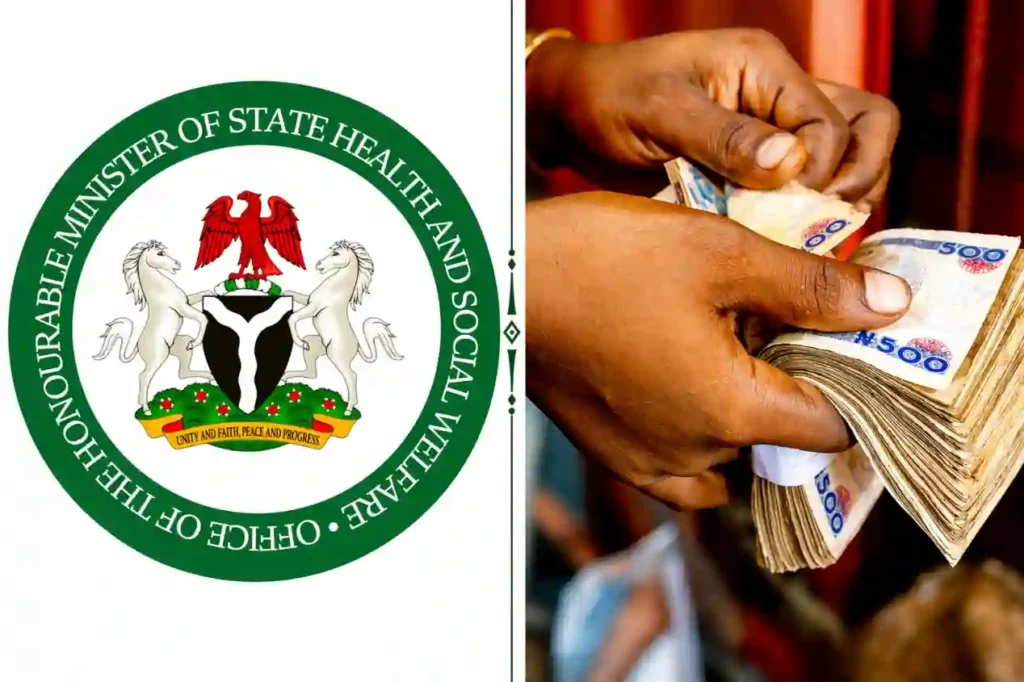
The federal government has approved a ₦17 billion Community-Based National Social Action Fund to support grassroots development across Nigeria’s 8,804 political wards, in a move aimed at deepening local participation in service delivery and improving socio-economic outcomes.
 Follow us on Google News
President Bola Tinubu signed off on the initiative, which was announced in a statement released Wednesday in Abuja by the Federal Ministry of Health and Social Welfare and signed by Ado Bako, Assistant Director of Information and Public Relations.
The programme will be implemented through a newly established task force designed to drive community-led interventions nationwide, with each ward expected to work closely with verified community-based organisations to identify and execute priority projects.
“The initiative will deploy community-driven interventions tailored to local needs, with each ward engaging a verified community-based entity, organisation, or association to implement priority projects,” the statement said.
Coordinating Minister of Health and Social Welfare, Muhammad Ali Pate, described the fund as a deliberate shift towards decentralised development, placing decision-making power closer to communities.
“This approach places communities at the centre of development. By enabling each ward to identify and implement its priority needs, we are unlocking practical solutions that directly improve livelihoods and strengthen service delivery where it matters most,” he said.
He noted that interventions under the scheme will reflect urgent needs at the grassroots level, spanning multiple sectors.
“Interventions may include community nutrition support, provision of essential health commodities such as micronutrients and therapeutic foods, as well as minor infrastructure improvements in schools, health facilities, and sanitation systems,” Pate added.
According to the statement, implementation will run from March to December 2026, with oversight handled by a Programme Management Unit domiciled in the ministry’s Sector-Wide Approach Coordination Office.
“To ensure effective implementation, the President has approved a project timeline commencing March 1, 2026, with delivery expected by December 2026,” the statement noted.
Funding for the initiative will be drawn from a ring-fenced intervention account managed by the Federal Ministry of Finance and the Office of the Accountant-General of the Federation.
“The sum of ₦17 billion will be released into a ring-fenced special intervention account to support implementation, monitoring, communication, and accountability,” it added.
The task force will be chaired by the health minister and include representatives from finance, humanitarian services, procurement, and anti-corruption agencies, signalling an attempt to strengthen oversight and reduce leakages.
The new fund builds on earlier reforms, including the Social Action Fund introduced in 2023 and the Community-Based Procurement Platform launched in January 2026, both designed to simplify access for community organisations executing projects of up to ₦50 million.
Nigeria continues to face disparities in development outcomes across its wards, particularly in rural and underserved communities, where access to basic services remains uneven.
Data from the World Bank underscores the scale of the challenge, with a significant portion of the population lacking access to essential services, reinforcing the need for decentralised, community-driven solutions.
Analysts say the success of the initiative will hinge on strong monitoring systems, transparency safeguards, and the ability of implementing agencies to ensure funds reach intended beneficiaries without diversion.