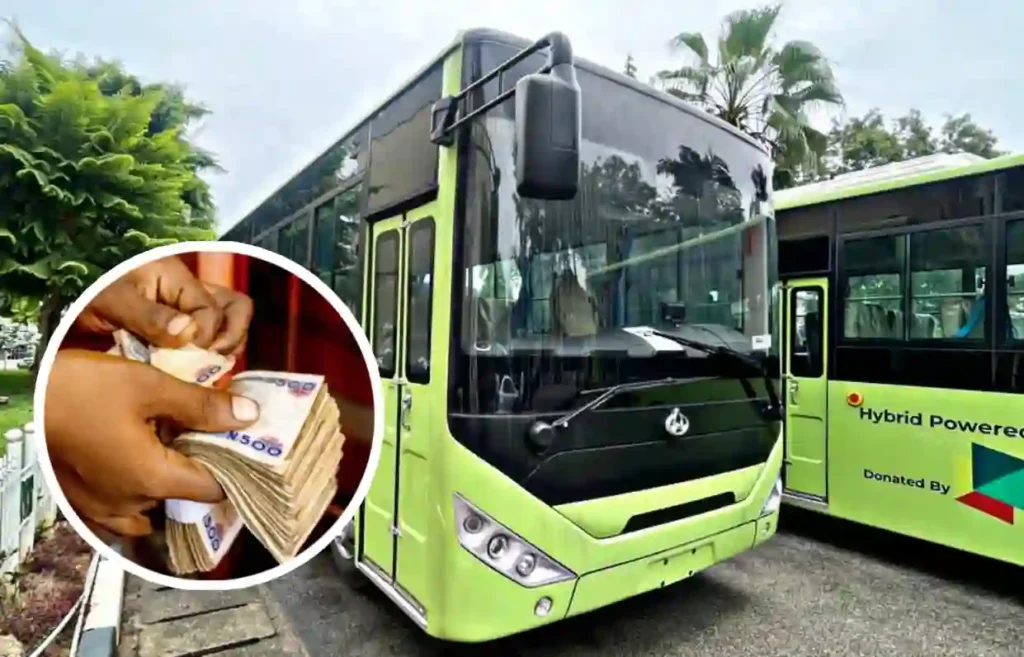
The Federal Government has launched a new financing scheme aimed at enabling Nigerians convert their vehicles to Compressed Natural Gas (CNG), as part of efforts to reduce transportation costs and promote cleaner energy use.
 Follow us on Google News
The initiative is being implemented under the Presidential Initiative on Compressed Natural Gas and Electric Vehicles (Pi-CNG & EV), in partnership with the Nigerian Consumer Credit Corporation (CREDICORP) and a commercial bank. It introduces structured loan options that allow vehicle owners to spread the cost of conversion over a period of up to six months.
Speaking at the official flag-off and strategic partnership event held in Abuja, the Executive Chairman and Chief Executive Officer of Pi-CNG & EV, Ismaeel Ahmed, said the financing model was designed to remove the upfront cost barrier that has limited adoption of CNG across the country.
He disclosed that 100,000 conversion kits have already been secured for rollout in the first phase of the programme, with plans underway to scale distribution nationwide in response to rising demand.
Ahmed also linked the programme to broader economic and environmental objectives, noting that increased adoption of CNG would help cushion the impact of global fuel market disruptions, including tensions in the Middle East, while contributing to reduced emissions and more sustainable transport systems.
On the financing component, Managing Director and Chief Executive Officer of CREDICORP, Engr. Uzoma Nwagba, said the Corporation is offering credit facilities at interest rates as low as nine per cent. He contrasted this with prevailing lending rates from many commercial banks, which can range between 48 and 120 per cent.
According to him, the scheme is structured to ease the financial burden on Nigerians, particularly commercial drivers and transport operators whose livelihoods depend on daily vehicle usage.
Nwagba emphasised that the affordability of the loans, combined with flexible repayment terms, is expected to accelerate the transition to CNG while supporting income stability for beneficiaries.
He further advised transport workers and fleet owners to form cooperative groups to improve their access to the financing window. He noted that such arrangements enhance creditworthiness, promote accountability, and simplify repayment processes.
“Once you convert your petrol vehicle to CNG, the cost of fueling that car comes down by about 75 per cent. That means if I spend N80,000 per week on my vehicle, I would now be spending N20,000 per week,” he said.
The programme signals a coordinated push by the Federal Government to expand consumer credit access while driving a shift towards cheaper and cleaner fuel alternatives in Nigeria’s transport sector.