

The Federal Ministry of Livestock Development has reaffirmed its readiness to partner with the World Bank Group and the African Development Bank to tackle climate change challenges in Nigeria’s livestock sector while unlocking opportunities for sustainable growth, resilience and inclusive development.
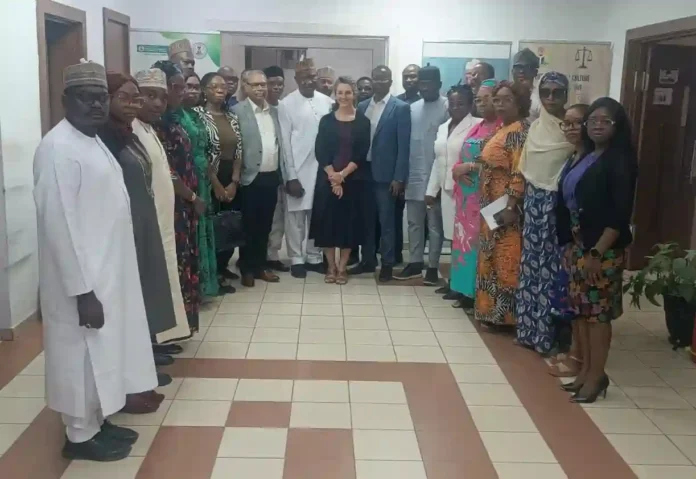
The Permanent Secretary, Dr. Chinyere Ijeoma Akujobi, stated this when she received a delegation from the World Bank Mission and the African Development Bank, alongside members of the Technical Working Group on Climate Change, in Abuja on Tuesday, February 3, 2026.
She explained that the proposed collaboration aligns with the Ministry’s strategic mandate to reduce the adverse impacts of climate change on livestock production, protect livelihoods and promote environmentally responsible practices across the livestock value chain.
Represented by the Director of Planning, Research and Statistics, Mr. Ohaeri Stephen Ezenwa, the Permanent Secretary said the livestock sector remains a key pillar of Nigeria’s economy, contributing to food security, nutrition, employment and rural livelihoods across the country.
“Despite its importance, the sector is highly vulnerable to climate variability and change, with implications for animal health, feed and water availability, productivity, greenhouse gas emissions and overall sustainability,” she said.
According to her, these challenges highlight the urgent need for evidence-based policies, reliable data systems and coordinated national action to drive climate-smart livestock development in Nigeria.
In a presentation, the Director Technical in the Office of the Permanent Secretary and Team Lead of the Technical Working Group on Climate Change, Dr. Alike Peter, said the Working Group was created to support the National Livestock Growth Acceleration Strategy, which aims to double the sector’s contribution to GDP from about $32 billion to $74 billion within ten years.
He noted that whether growth is achieved through improved efficiency of existing stock or through expansion in livestock numbers, both approaches have direct implications for greenhouse gas emissions and feed, water and land use management.
Dr. Alike said the Working Group is prioritising evidence-based national data on short-lived climate pollutants, especially methane and nitrous oxide, to guide policy development and informed decision-making.
He explained that the Ministry is working with partners, including the World Bank, to measure methane emissions using FAO-approved models and direct measurement methods, while collaborating with the National Bureau of Statistics to ensure strong methodology and national ownership.
Dr. Alike added that ongoing efforts are aimed at establishing a national methane baseline, developing mitigation and adaptation measures, and building the capacity of the Working Group and stakeholders.
He said these steps will help Nigeria strengthen its Nationally Determined Contributions, access carbon markets and advance climate-smart livestock systems that support sustainability.
Speaking at the meeting, the World Bank Group Representative and Senior Fisheries Specialist, Dr. Harrison Charo Karisa, outlined three key areas of opportunity, including climate-smart aquaculture to reduce methane emissions while improving productivity.
He also highlighted the blue economy, such as seaweed farming and related value chains that can create employment opportunities for women and youth.
Karisa further identified results-based finance and carbon markets linked to methane reduction and nature-based solutions as areas with strong potential for Nigeria’s livestock and aquaculture sectors.
He added that seaweed, which grows naturally in aquatic environments, can be used as a nutritious livestock feed supplement rich in essential vitamins and minerals.
Also speaking, the Chief Livestock Officer at the African Development Bank, Dr. Youssouf Kabore, praised the Ministry’s proactive approach to climate action and assured the Bank’s full support for scalable interventions in the livestock sector.
Other participants at the meeting included Directors from the Ministry, as well as representatives of GIZ, Netzence Sustainability Limited and 3logy present.

