The Federal Government has announced plans to roll out 10,000 electric tricycles as part of a wider transport reform programme aimed at improving public transportation, reducing transport costs and modernising Nigeria’s logistics system.
 Follow us on Google News
The initiative will be implemented through the North East Development Commission (NEDC), which is expected to begin distribution of the electric tricycles in August 2026, starting from the North East region before expanding to other parts of the country. According to the government, the project is part of a national strategy to strengthen intra-city mobility while supporting cleaner and more efficient energy use in the transport sector.
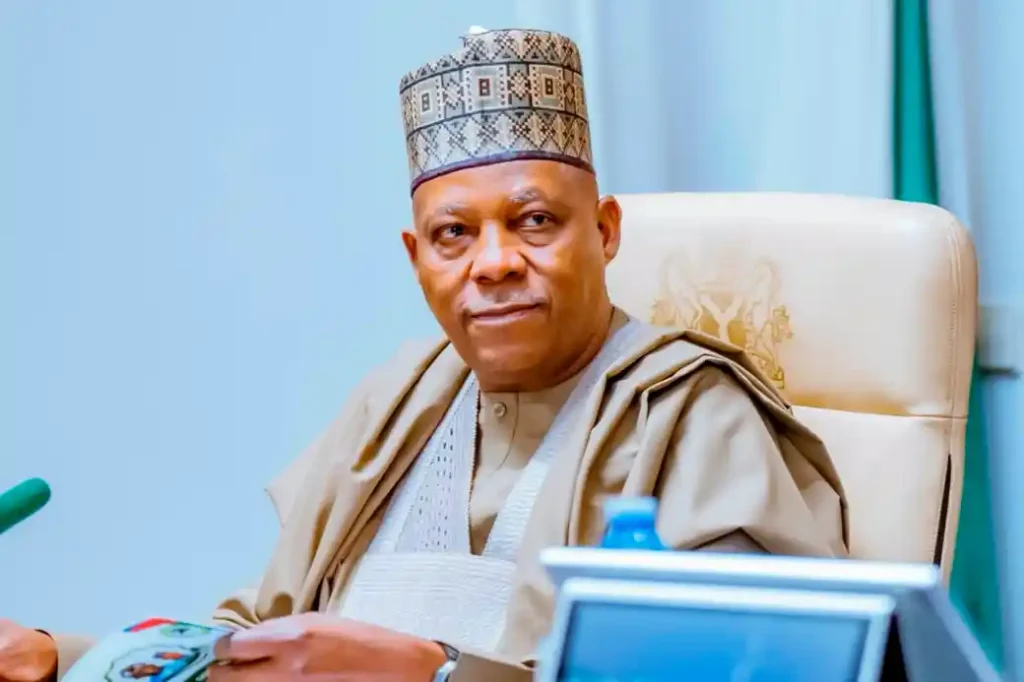
Vice President, Senator Kashim Shettima @officialSKSM, disclosed this during a courtesy visit by The Transporters For Tinubu/Shettima 2027 group, where he explained that President Bola Ahmed Tinubu @officialABAT has approved the replication of the initiative across other regions through the various regional development commissions.
He said the administration is focused on transitioning Nigeria from a fragmented transport structure into an integrated logistics chain that connects key sectors of the economy including ports, rail, aviation, inland waterways, road networks and energy systems.
“The priority of this administration is to move Nigeria from a fragmented transport system to an integrated logistics chain where ports, rail lines, CNG-powered trucks, inland waterways, airports and local feeder roads work together to support commerce, agriculture, industry and national integration,” Shettima said.
He explained that the transport reform agenda is anchored on the nationwide rollout of Compressed Natural Gas (CNG), expansion of port infrastructure, and strengthening of logistics coordination across sectors. According to him, these reforms are designed to reduce inefficiencies that have long increased the cost of transportation and slowed economic activity.
The Vice President noted that the introduction of electric tricycles is aligned with the broader goal of reducing dependence on petrol-powered transport systems while lowering operational costs for transport operators. He added that the administration is also working to improve working conditions across road, rail, maritime, aviation and pipeline transport systems.
“Our vision is an unbroken logistics chain, where a container moves from a deep-sea port to a rail wagon, then to a CNG-powered truck, then to a trader in Ariaria Market or Maiduguri, without delay or policy failure,” he said.
Shettima further highlighted the progress of the Presidential Compressed Natural Gas Initiative (PCNGI), stating that Nigeria is already witnessing reduced transport costs in segments where CNG-powered vehicles are in use. He said the government is aware of infrastructure and technical challenges affecting wider adoption but remains committed to expanding access.
“We said CNG could cut fuel costs by over 60 per cent, and many called it fantasy. Today, heavy-duty trucks run on Nigerian gas, proving sceptics wrong and returning money to your pockets,” he stated.
On maritime and logistics reforms, Shettima said the government is implementing key projects including the operationalisation of Lekki Deep Sea Port, the development of the National Single Window system, and renewed investment in inland waterways. He said these reforms are aimed at improving port efficiency, reducing clearance delays and enhancing Nigeria’s competitiveness in global trade.
“Before this administration, clearing a container could become an encounter with frustration, corruption, and decay. We promised to unlock the blue economy. Today, with Lekki Deep Sea Port operational, the National Single Window taking shape, and inland waterways receiving attention, our ports are preparing to compete with the world’s best,” he said.
He assured transport unions and stakeholders that the Federal Government will continue to support policies that reduce the cost of fuel, improve access to financing for transport operators, and promote more sustainable and structured transport operations nationwide. He added that investments in roads, rail infrastructure, ports and airports will continue to be prioritised under the administration’s economic agenda.
“This administration shall continue to stand with the Nigerian transporter. We shall continue to fight for affordable fuel, insurable fleets, bankable contracts, and dignified working conditions,” he said.
Earlier, the Technical Adviser to the Vice President on Transportation, Logistics and Innovation, Prince Segun Obayendo, said transport sector stakeholders have expressed unified support for the administration ahead of the 2027 general elections, citing ongoing reforms as evidence of progress in the sector.
He explained that representatives across air, maritime, rail and road transport unions have held consultations and concluded that the Tinubu administration has positioned Nigeria on a path of economic and infrastructural growth.
Prince Obayendo added that stakeholders are prepared to mobilise support within their respective unions in backing the continuation of the administration’s policies beyond 2027, noting that consistency in reform implementation is key to achieving long-term development in the transport sector.
Also speaking, the Secretary-General of the Maritime Workers Union of Nigeria (MWUN), Comrade Oniha Erazua, commended the Federal Government for recognising transport unions as key stakeholders in national development. He said workers in the sector are encouraged by ongoing reforms and believe sustained implementation will deliver greater economic benefits.
He stated that transport operators and stakeholders are increasingly confident that the reforms under the Tinubu administration will improve efficiency, reduce operational costs and strengthen Nigeria’s transport economy if maintained over time, adding that they remain committed to supporting the government’s direction in the sector.