

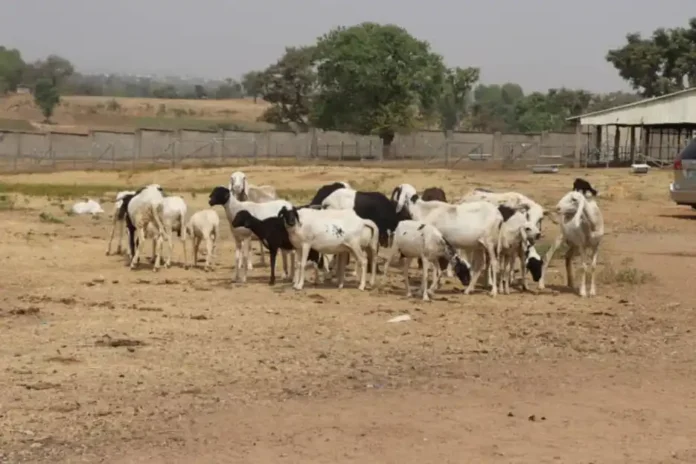
The Federal Government through the Federal Ministry of Livestock Development has organised an on-farm skills training programme for women and youths involved in the sheep and goat value chain across selected states of the country.
The initiative forms part of the Ministry’s efforts to promote sustainable livestock development and strengthen government support for women and youths in Nigeria.
The Director, Livestock Extension and Business Development Department, Joseph Ako, stated this in his opening remarks at Najaoni Farms, Uke, Nasarawa State, on Friday, January 23, 2026.
Ako said the training “underscores the Ministry’s commitment to strengthening small ruminant production as a viable pathway to improved food security, job creation and sustainable livelihoods,” particularly for rural farmers, women and youths.
Represented by an Assistant Director in the Department, Mercy Otiteh, Ako explained that the practical skills to be acquired during the training, especially in feeding, breeding, animal health and housing, are critical to improving productivity and reducing losses in sheep and goat production.
He commended the participants for their contributions to transforming the livestock sector and urged them “to apply the lessons learned and cascade the knowledge to others within their communities,” especially those involved in the sheep and goat value chain.
Ako also emphasised “the importance of networking and collaboration among participants,” noting that shared learning would help strengthen production outcomes.
In his presentation, an Animal Scientist and Nutrition Expert, Alhassan Danlami, explained that semi-intensive rearing is the recommended best practice for sheep and goat production.
According to Danlami, “this system allows animals to be sheltered and fed indoors during unfavourable weather conditions, while permitting grazing within the farm settlement when conditions are favourable.”
He highlighted key considerations for starting a sheep and goat farm, including site selection, choosing suitable breeds, ensuring adequate feed and water supply, maintaining good animal health through vaccination, and adopting sound management practices.
Also speaking, the Nasarawa State Coordinator of the Ministry, Dr. Lazarus Illaubayums, advised farmers “to ensure animals are properly stabilised before vaccination.”
Illaubayums stressed “the importance of maintaining strict biosecurity measures through regular farm sanitation to prevent disease outbreaks and reduce mortality.”
He encouraged farmers to provide adequate care for animals during feeding, grazing and delivery, noting that handling would improve productivity overall.
Read also: FG Says SPIN Irrigation Project in Benue Will Create Youth Jobs

